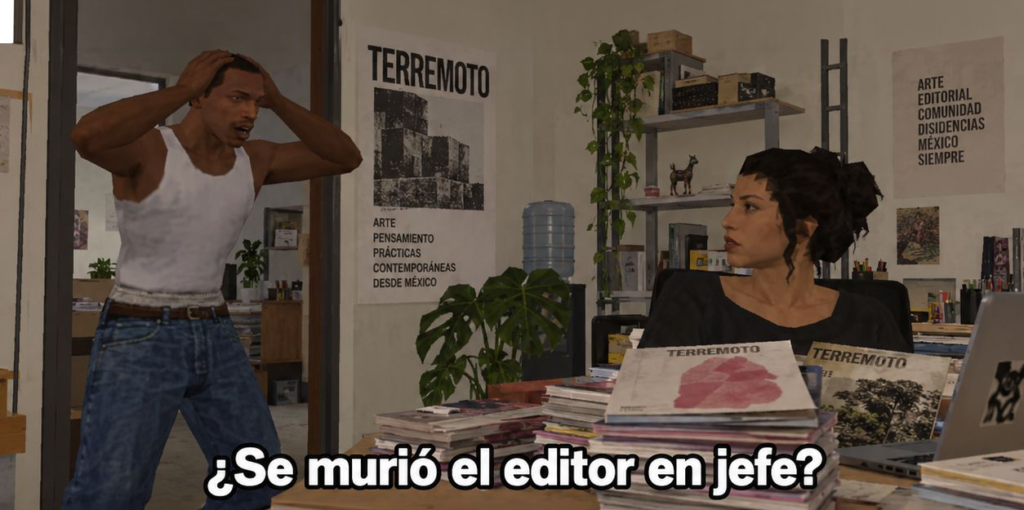
Terremoto reshapes its editorial structure and welcomes Sofía Acosta to continue imagining the magazine’s possibilities.
In recent years, Terremoto has grown, adding voices, territories, and ways of thinking that don’t always align with one another. This expansion has led us to ask whether a single figure–the editor-in-chief—can continue to hold such complexity, and what we expect of that figure when we ask them to represent the whole. Can an institution that defends polyphony remain organized around one person who concentrates editorial decision-making?
The history of Terremoto has undoubtedly been defined by the immense intelligence, brilliance, sensitivity, and critical power of its editors-in-chief1. Each of them has established an editorial vision, sustained a position, opened a conversation, and given the project direction. A magazine is also built from personal affections, intuitions, and convictions. Honoring this history is essential to imagining the future—and to daring to envision an editorial direction shaped by more than one perspective.
For this reason, at Terremoto we have decided to leave behind the figure of the editor-in-chief. What ends is a place within our structure, a particular way of gathering editorial authority and responsibility together. We therefore bid farewell to danie valencia sepúlveda, who steps down from this role to accompany us in the editorial processes of our residency program Travesías. We are deeply grateful for their work, thinking, and companionship over these three years. Their time with us leaves us ways of dreaming and fighting together.
This decision entails loss. With this change, we relinquish the continuity that a singular vision can offer, the clarity of its affinities, and the trust that develops as we follow a voice over time. There is grief in this. Some things we value will have to find other ways to exist; others may be lost. Transforming a structure means accepting uncertainty about what lies ahead. It also means asking ourselves anew what an art magazine in the Americas can do today in the face of the far right’s rise across the region, and which conversations we need to defend through its pages.
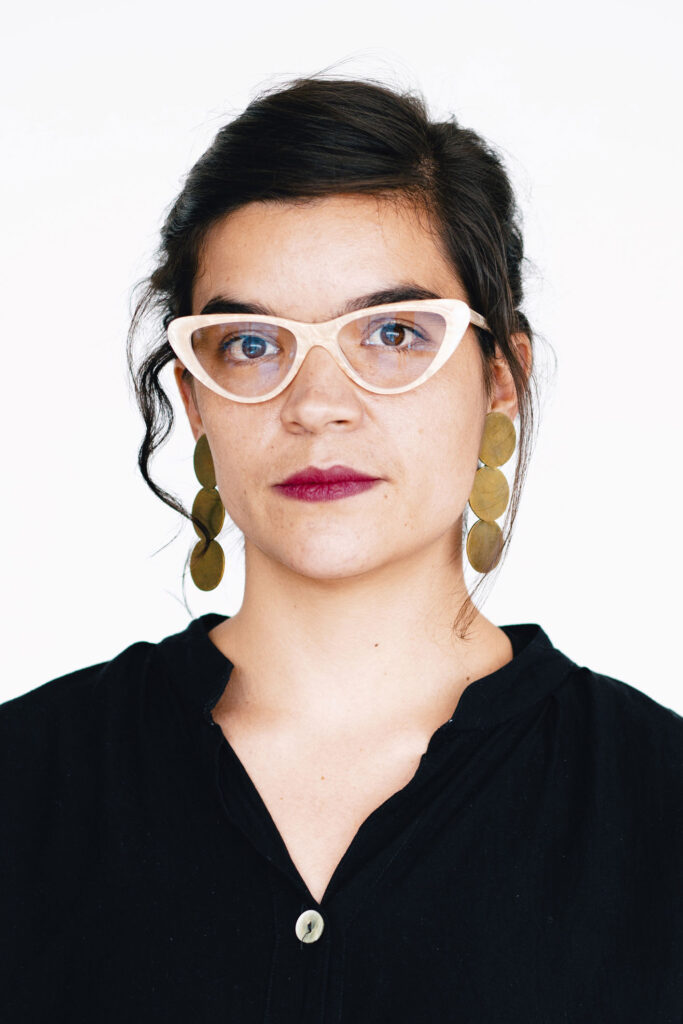
Now we seek another way of bringing into relation different forms of thought, capable of deepening our questions. With the risk and enthusiasm this endeavor entails, we welcome Sofía Acosta, who joins Terremoto as editorial coordinator. Her experience as an artist, her background in print publishing, her intelligence, and her sensitivity will be fundamental to imagining and building a new magazine. Hers will be a work of articulation: working with guest editors, convening points of view, building conversations, and accompanying the processes that allow a text to find its place. The coordination will have judgment and the capacity to decide, but its main task will be to bring different perspectives into relation.
This new role will act as a knot where many threads converge: ideas, texts, and images brought by different contributors. Sofía’s task will be to find ways to weave them together, deciding which threads to loosen and which to pull taut, creating a richer fabric that can take different forms without depending on a single point of anchorage. Tying a knot is a deliberate act: we want to draw it tight where certain ideas must persist, giving structure and meaning to what we publish. Yet we are also drawn to unruly ways of writing, those that resist the straight line and leave room for tangles. Within these entanglements, the knot becomes a place of encounter, rather than merely a means of control.
At the same time, we are inaugurating an editorial board comprised by three great accomplices: independent curator and editor Ana Gabriela García; curator, researcher, and editor Mauricio Marcín; and the director of La Nueva Fábrica, Ilaria Conti. We imagine this board as a compass that allows editorial decisions to be built through conversation and friction, a structure capable of both accompanying and questioning Terremoto’s editorial thinking.
Sofía’s arrival and the formation of the editorial board share a common purpose: to make room at Terremoto for strong voices without asking any one of them to speak for the whole; to have a sense of direction and, at the same time, the freedom to stray. We believe that a publication grounded in critical thought stays alive through its willingness to revisit its ties—to ask, again and again, what still needs to be held together and what it is time to let go.
Our name is Terremoto. Within it lies a premise, perhaps a promise. Making this magazine means accepting that no structure is immovable, and that transforming it sometimes means shaking its foundations. If there is one thing we want to carry forward, it is this willingness to question our certainties, even when that means changing the ways of working that have brought us this far. We want an institution that does not confuse stability with immobility, where what we have learned gives us both solid ground and the freedom to change course.
Welcome, Sofía. Thank you for taking on the challenge of reimagining Terremoto with us.
1. Natalia Valencia (2015–2017), Diego del Valle Ríos (2017–2021), Duen Sacchi (2021–2022), and danie valencia sepúlveda (2023–2026), under the editorial direction of Dorothée Dupuis, Terremoto’s founder and Executive Director from 2013 to 2022.
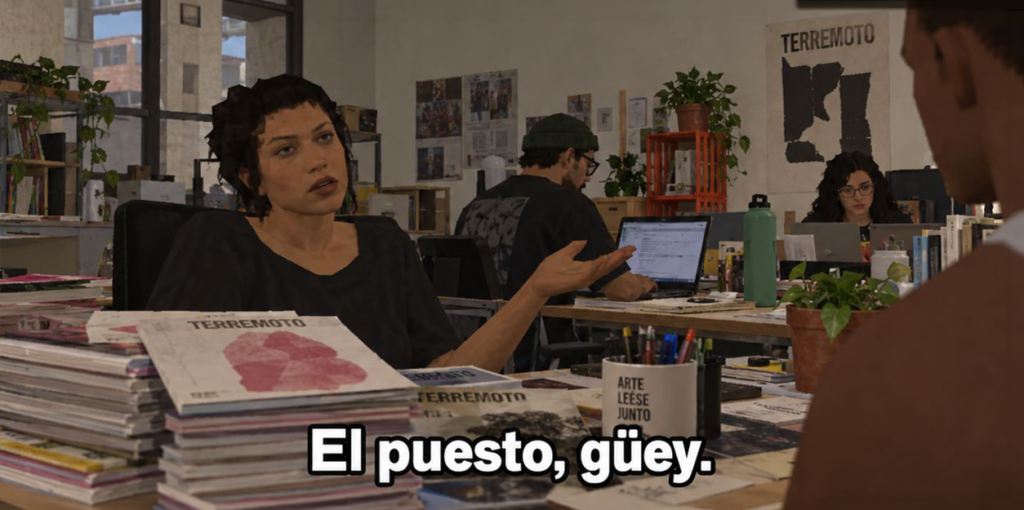
In recent years, Terremoto has grown, adding voices, territories, and ways of thinking that don’t always align with one another. This expansion has led us to ask whether a single figure–the editor-in-chief—can continue to hold such complexity, and what we expect of that figure when we ask them to represent the whole. Can an institution that defends polyphony remain organized around one person who concentrates editorial decision-making?
The history of Terremoto has undoubtedly been defined by the immense intelligence, brilliance, sensitivity, and critical power of its editors-in-chief1. Each of them has established an editorial vision, sustained a position, opened a conversation, and given the project direction. A magazine is also built from personal affections, intuitions, and convictions. Honoring this history is essential to imagining the future—and to daring to envision an editorial direction shaped by more than one perspective.
For this reason, at Terremoto we have decided to leave behind the figure of the editor-in-chief. What ends is a place within our structure, a particular way of gathering editorial authority and responsibility together. We therefore bid farewell to danie valencia sepúlveda, who steps down from this role to accompany us in the editorial processes of our residency program Travesías. We are deeply grateful for their work, thinking, and companionship over these three years. Their time with us leaves us ways of dreaming and fighting together.
This decision entails loss. With this change, we relinquish the continuity that a singular vision can offer, the clarity of its affinities, and the trust that develops as we follow a voice over time. There is grief in this. Some things we value will have to find other ways to exist; others may be lost. Transforming a structure means accepting uncertainty about what lies ahead. It also means asking ourselves anew what an art magazine in the Americas can do today in the face of the far right’s rise across the region, and which conversations we need to defend through its pages.
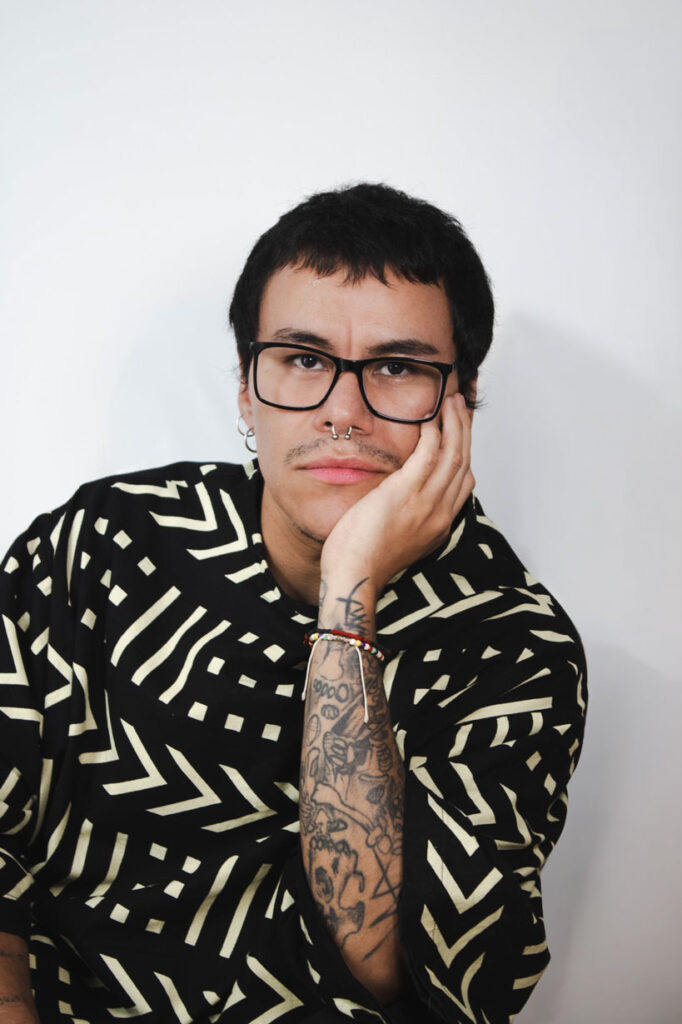
Now we seek another way of bringing into relation different forms of thought, capable of deepening our questions. With the risk and enthusiasm this endeavor entails, we welcome Sofía Acosta, who joins Terremoto as editorial coordinator. Her experience as an artist, her background in print publishing, her intelligence, and her sensitivity will be fundamental to imagining and building a new magazine. Hers will be a work of articulation: working with guest editors, convening points of view, building conversations, and accompanying the processes that allow a text to find its place. The coordination will have judgment and the capacity to decide, but its main task will be to bring different perspectives into relation.
This new role will act as a knot where many threads converge: ideas, texts, and images brought by different contributors. Sofía’s task will be to find ways to weave them together, deciding which threads to loosen and which to pull taut, creating a richer fabric that can take different forms without depending on a single point of anchorage. Tying a knot is a deliberate act: we want to draw it tight where certain ideas must persist, giving structure and meaning to what we publish. Yet we are also drawn to unruly ways of writing, those that resist the straight line and leave room for tangles. Within these entanglements, the knot becomes a place of encounter, rather than merely a means of control.
At the same time, we are inaugurating an editorial board comprised by three great accomplices: independent curator and editor Ana Gabriela García; curator, researcher, and editor Mauricio Marcín; and the director of La Nueva Fábrica, Ilaria Conti. We imagine this board as a compass that allows editorial decisions to be built through conversation and friction, a structure capable of both accompanying and questioning Terremoto’s editorial thinking.
Sofía’s arrival and the formation of the editorial board share a common purpose: to make room at Terremoto for strong voices without asking any one of them to speak for the whole; to have a sense of direction and, at the same time, the freedom to stray. We believe that a publication grounded in critical thought stays alive through its willingness to revisit its ties—to ask, again and again, what still needs to be held together and what it is time to let go.
Our name is Terremoto. Within it lies a premise, perhaps a promise. Making this magazine means accepting that no structure is immovable, and that transforming it sometimes means shaking its foundations. If there is one thing we want to carry forward, it is this willingness to question our certainties, even when that means changing the ways of working that have brought us this far. We want an institution that does not confuse stability with immobility, where what we have learned gives us both solid ground and the freedom to change course.
Welcome, Sofía. Thank you for taking on the challenge of reimagining Terremoto with us.
1. Natalia Valencia (2015–2017), Diego del Valle Ríos (2017–2021), Duen Sacchi (2021–2022), and danie valencia sepúlveda (2023–2026), under the editorial direction of Dorothée Dupuis, Terremoto’s founder and Executive Director from 2013 to 2022.