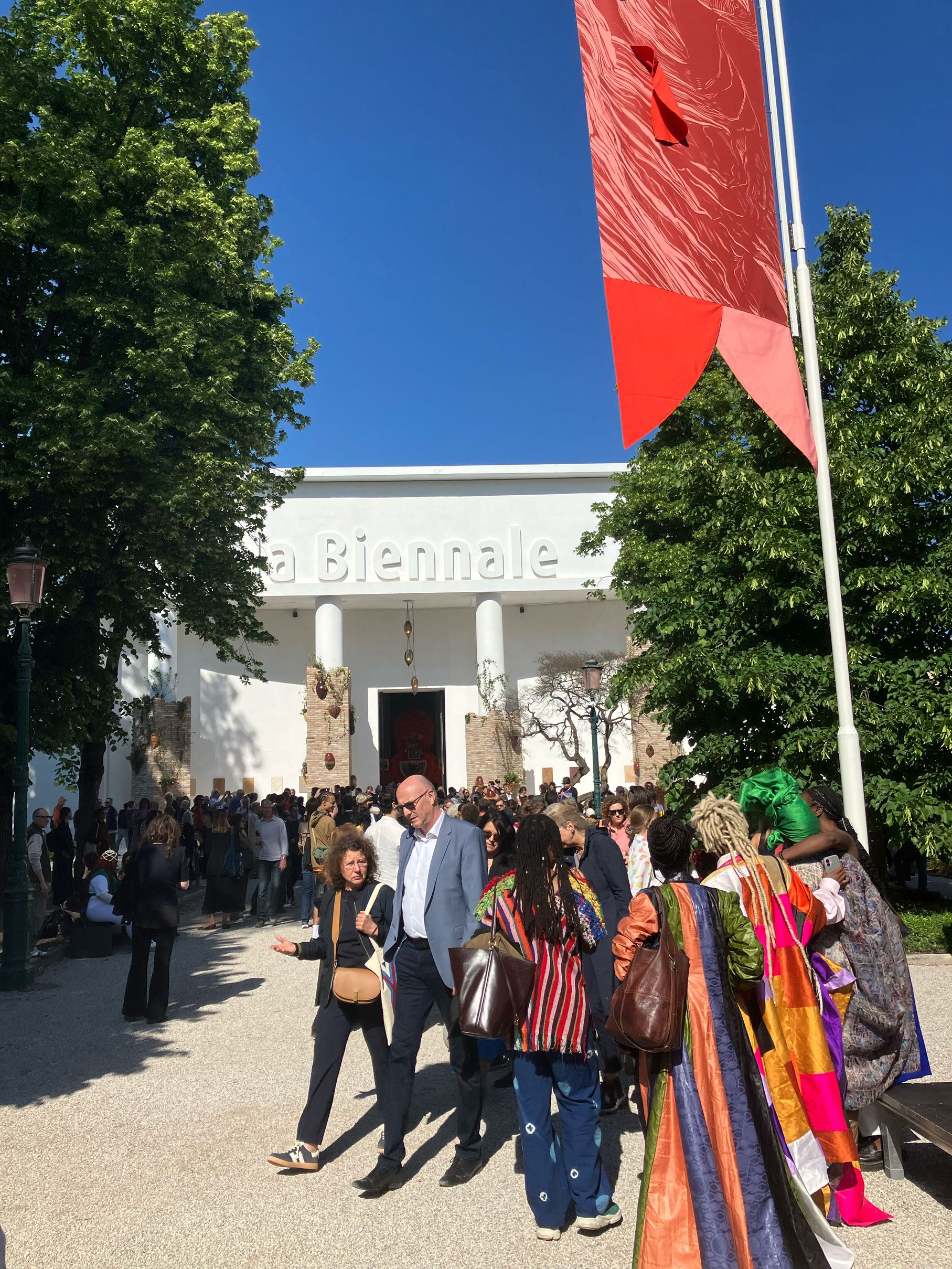
Tomorrow the 61st Venice Biennale, ´In Minor Keys´, comes to a close. It is the final project of curator Koyo Kouoh and brings together the largest number of African, Afro-diasporic and Global South artists in the event's history. Daniela Labra acknowledges its tenderness, but sees a crowded installation and a debate overshadowed by protests and Bvlgari. She warns that visibility is not enough: Europe must listen to the low tones.
I begin this belated text—about an event that opened four months ago—by reminding readers of what is already known: the Venice Biennale is the great iconic event of the global art system. And so, as a new edition unfolds, its ephemeral existence must be recalled. The Biennale, founded in 1895, maintains an old structure that, in 2026, proves to be anachronistic despite still holding its prestige. To participate in it or in the national pavilion exhibitions is to receive uncontestable legitimation and some guarantee of leaving a trace on a history of art. This essay, in turn, departs from the understanding that writing about the Biennale means thinking about an ungraspable whole in order to bring particular perspectives, reiterate opinions, and reflect—beyond art, aesthetics, and ethics—on the current state of the arts and our complicated historical moment.
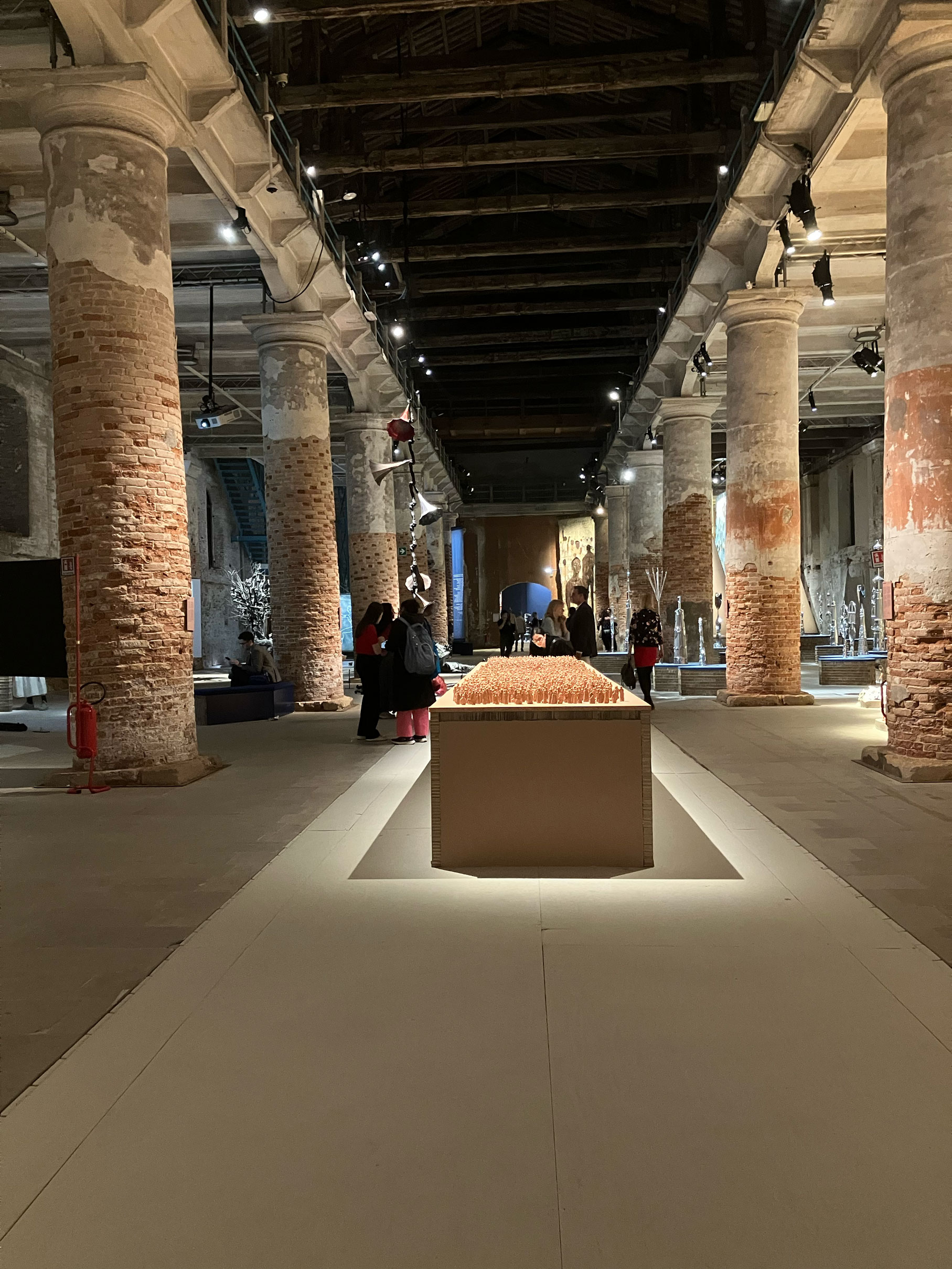
The 61st Biennale, In Minor Keys, opened in May with a project by Cameroonian curator Koyo Kouoh (1967–2025), developed by her team: Gabe Beckhurst Feijoo, Marie Hélène Pereira and Rasha Salti (advisors); Siddhartha Mitter (editor-in-chief); Rory Tsapayi (research assistant). The proposal promotes a galaxy of artists, collectivities, and propositions, spatially organizing artists and works into “oases”. This edition features the largest number of African and Afro-diasporic artists in the history of the event, and among the 110 names in the collective exhibition, only eight are European and none is Italian. More than a headcount, the general exhibition can be considered, so far, a landmark in the legitimation—in Europe—of practices guided by thoughts and cosmogonies that escape Western aesthetic conventions and projections. The exhibition, with its low lighting and muted palettes, proposes a rhythm to the visitor through an organization that suggests the spiritual and physical rest afforded by these oases—“the keys or small islands of the artists’ universes.”1
In Minor Keys evokes a pedagogy of sensory experience and glimpses, in its roster of artists and authors, a radical reconnection with art’s natural habitat and its role in society. The proposal carries a warm appeal, valuing the emotional, the visual, the sensorial, the affective, and the subjective. The tenderness and care of the project—carried forward by the team that accompanied Koyo Kouoh throughout its conception—was, to some extent, overshadowed by criticisms of the exhibition design which, in several areas, is indeed cluttered by too many works and too few connections between them, revealing an unavoidable problem: the absence of the conductor leading the orchestra.
Beyond questions of exhibition formatting, several events marked the opening of this Biennale, which coincided with the first anniversary of Koyo’s passing. In the curatorial text left as her legacy, she explained that In Minor Keys does not intend to be “a litany of comments on world events, nor an indifference or escape from the growing and continuously interlinked crises.” However, the event—structured around national representations to this day—inevitably echoes power struggles, visibility disputes, and geopolitical tensions that unfold outside the exhibition halls. This edition was no different, opening amid protests that reflect the convulsive state of our quarter century.
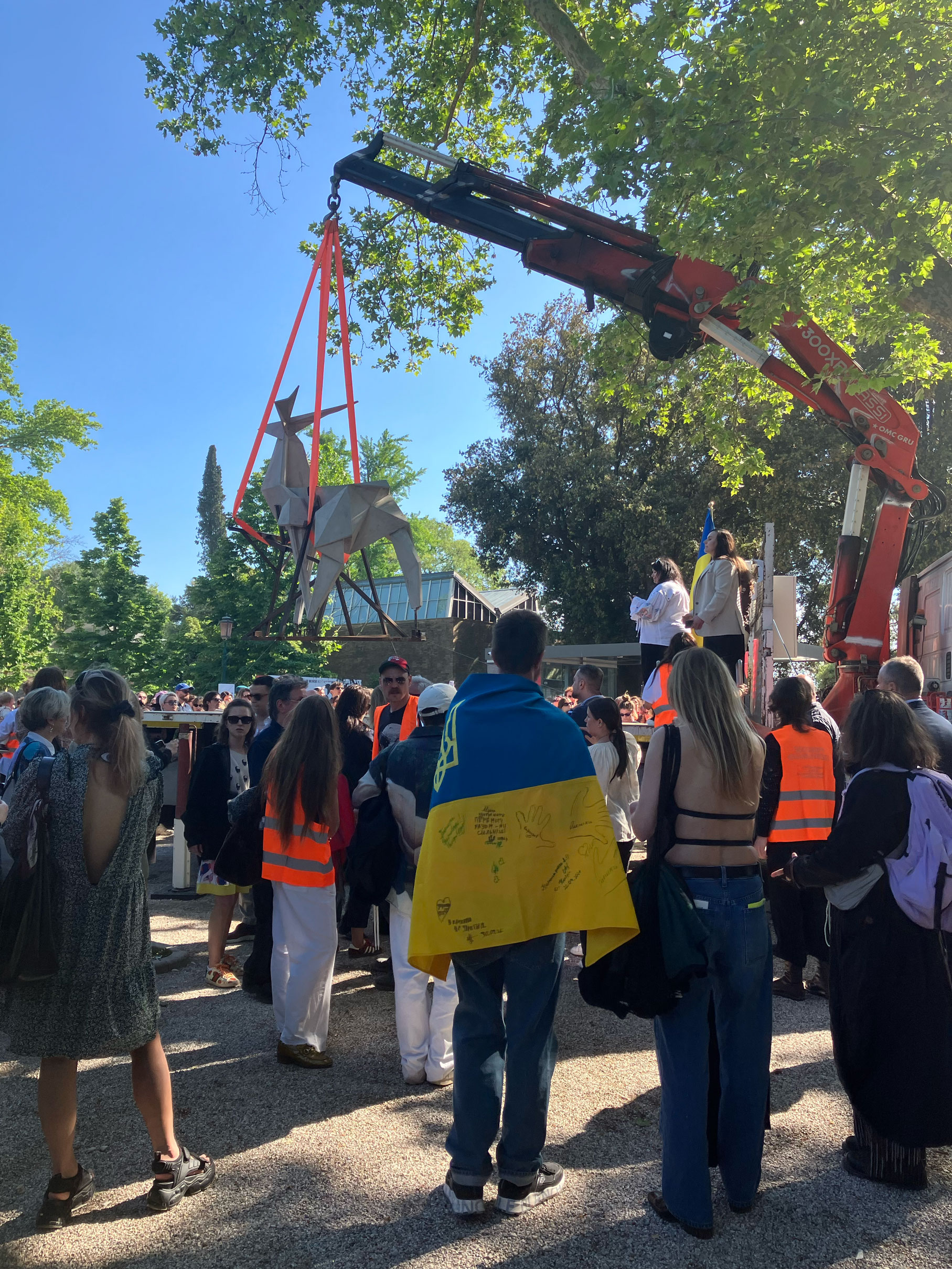
During the opening week for invited guests, the reflective silence of the exhibition was invaded by the noise of demonstrations against the opening of pavilions from nations involved in wars and genocides—such as Russia, Israel, and the United States—as well as acts against the censoring measures of nations like South Africa and Kazakhstan. Another significant development was the resignation of the artists’ jury—presided over this year by Brazilian curator Solange Farkas, alongside Zoe Butt, Elvira Dyangani Ose, Marta Kuzma, and Giovanna Zapperi—who decided not to nominate artists from countries accused of humanitarian crimes. At the same time, arts workers seized the climate of protest to demand better working conditions, staging a march and a historic staff strike. With no curatorial authority to manage the ensuing crisis, what emerged was less discussion about the exhibition and its artists, and more about boycotts, resignations, open letters, and petitions exploding throughout a packed week in Venice.
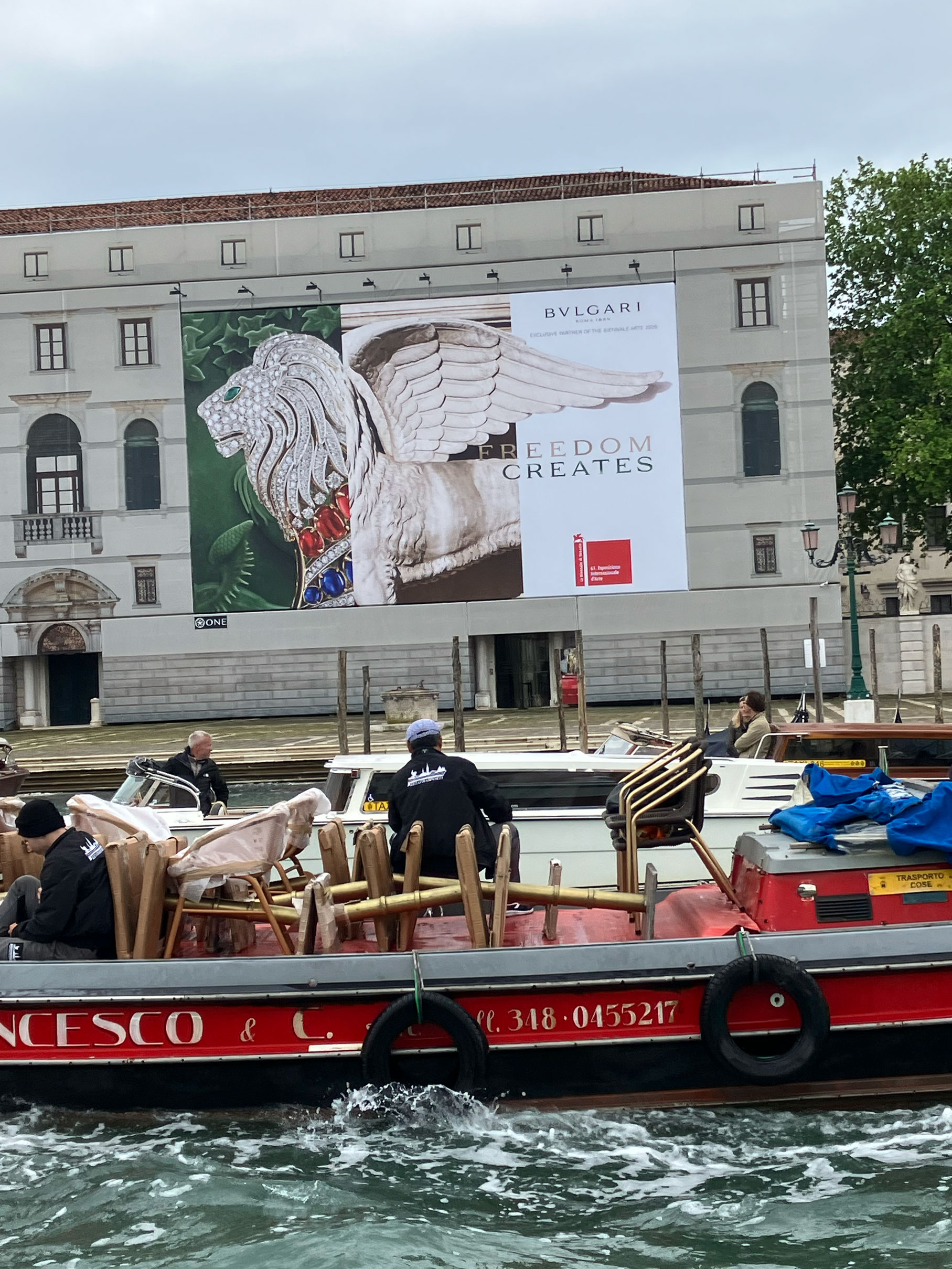
While some demanded visibility and rights, the Bvlgari brand was inaugurating its role as the Biennale Arte’s exclusive commercial partner for the next three editions, connecting art with luxury consumption under the slogan “Freedom Creates.” The phrase—displayed on a giant billboard on the Grand Canal alongside a photo of a Venetian Lion-shaped jewel—made many uncomfortable. Even though the company promotes an artistic vision and maintains social initiatives, its raw materials continue to be mined by underpaid labor in Africa, Asia, and Latin America. Ironically, In Minor Keys gestures toward a critique of the extractivist notions of civilization, progress, and accumulation that remain present in many of the nations gathered at this Biennale. Where there is food and financial insecurity, the mantra “Freedom Creates” works differently.
In Minor Keys evokes non-Cartesian knowledge systems and non-Western artistic modes of thought, foregrounding African artists whose presence has historically been inconsistent—generally framed within ethnographic or exoticizing approaches. Remy Mallet, editor-in-chief of Dakar Art News, notes that African and Afro-diasporic participation in Venice grew stronger since the 2015 edition curated by Okwui Enwezor, becoming somewhat more consistent since then. He observes, however, that this still depends on the nationality and ethnicity of the curators—as seen in the previous edition curated by Brazilian Adriano Pedrosa, which featured the largest participation of Latin American artists in history. For Mallet,
“This correlation undoubtedly enriches perspectives and embraces the multiplicity of ways of being in the world. Yet it also exposes the limits of what a single appointment can achieve. (…) As long as African representation at Venice depends on an African being in the room, it remains contingent, fragile, reversible.”2
On the other hand, for French theorist Nicolas Bourriaud, the exhibition “opens no new paths. Instead, it actually completes a historical sequence that began in 1989, that of globalization, by radicalizing curatorial positions that were then against the grain.”3
In Bourriaud’s view, “one must acknowledge that what emerges intellectually is the triumph of identity politics”—even if unintentionally so on the part of the curators. For Bourriaud, the 61st Biennale completes a cycle that began notably with the Havana Biennial (1984) and the exhibition Magiciens de la Terre (Centre Georges Pompidou and the Grande Halle de la Villette, 1989)—and I would add The Other Story (Hayward Gallery, 1989).
On one hand, In Minor Keys is indeed the institutionalization of the decolonial critique and its practices by the global, actually deterritorialized art system. According to Mallet, however, “a real question is no longer whether African art is seen in Venice. What matters is slower, less glamorous work: building robust institutions on African soil and understanding that art cannot thrive in conditions of economic precarity.” And this holds equally true for Latin America.
Beyond the label of “identity politics,” the visibility—and acceptance—of Global South histories, aesthetics, and professionals within the Eurocentric axis of the arts is part of a complex mechanism of international circulation, markets, and historical narratives in repositioning. Yet hegemonic power structures change more slowly than the long lists of artists at biennials suggest. Even if it amounts to “the triumph of identity politics” for Bourriaud, the consistency and insertion of critical decolonial thought on colonial soil still depends on the resilience of its spokespersons—which is the case here. Indigenous, Afro-diasporic, Latin American, and Southeast Asian arts find themselves confronting a market that transforms dissidence into the status quo, bringing visibility alongside new dilemmas, since market presence alone does not guarantee the decentralization of a system of thought.
In Minor Keys, in turn, brings together artists and thinkers from the Global South in a section of the program dedicated to Schools that carry a sense of “both localism and transnationalism, in generative symbiosis.” These are artist-centered independent institutions in which energy and resources are directed toward a social purpose grounded in humanizing, non-commercial pedagogical and philosophical foundations—pointing toward ecosystems, networks of sharing, knowledge exchange, and the seeding of ideas. Such is the case of RAW Material Company, founded by Koyo Kouoh in Dakar in 2008, fundamental to the way she conceived her own curatorial practice. Also included are other artist-created initiatives represented by Denniston Hill (Southern Catskills, New York), blaxTARLINES KUMASI (Kumasi, Ghana), G.A.S. Foundation (Lagos/Ijebu Ode, Nigeria), lugar a dudas (Cali, Colombia), and the Nairobi Contemporary Art Institute (Nairobi, Kenya).
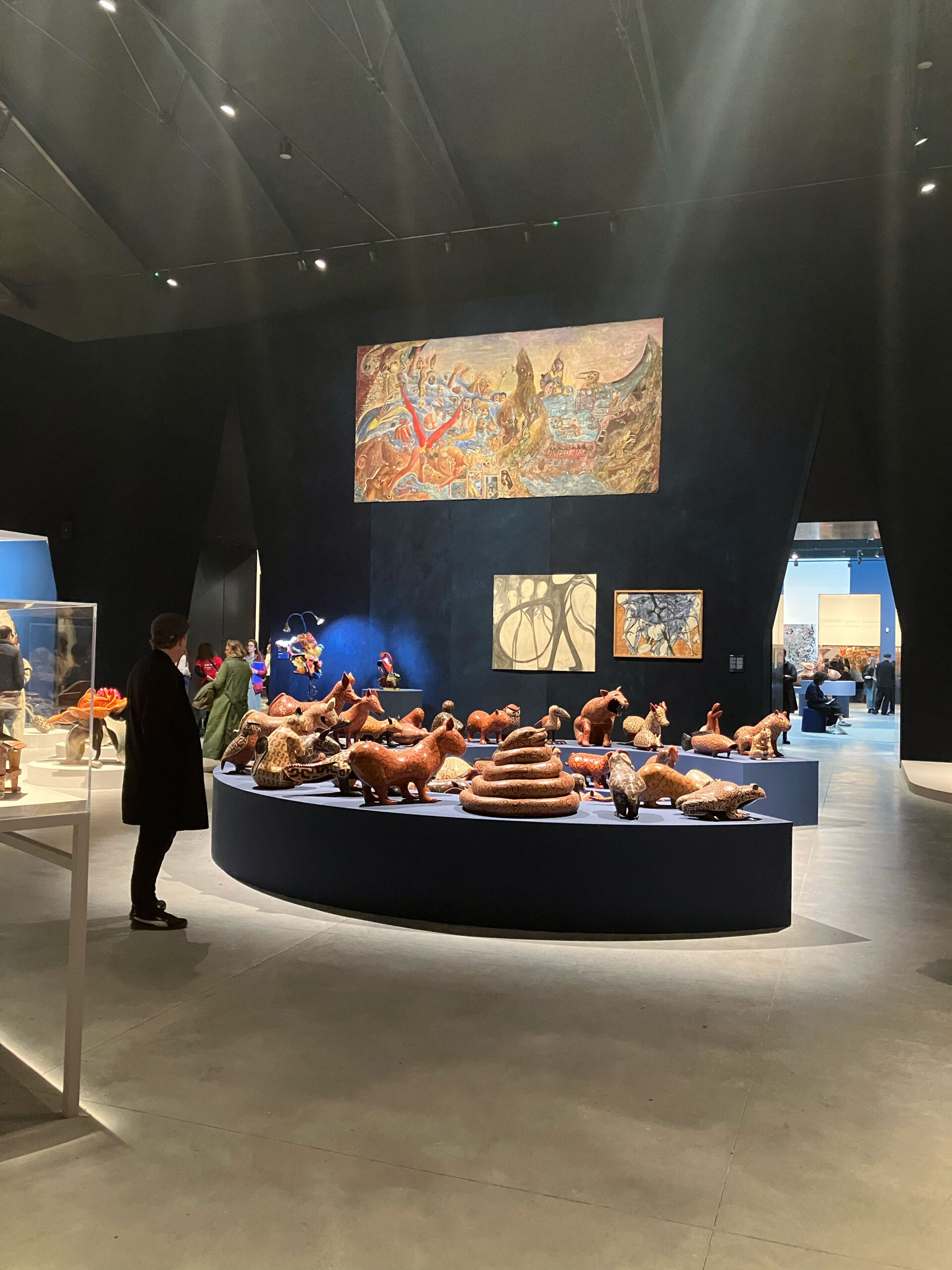
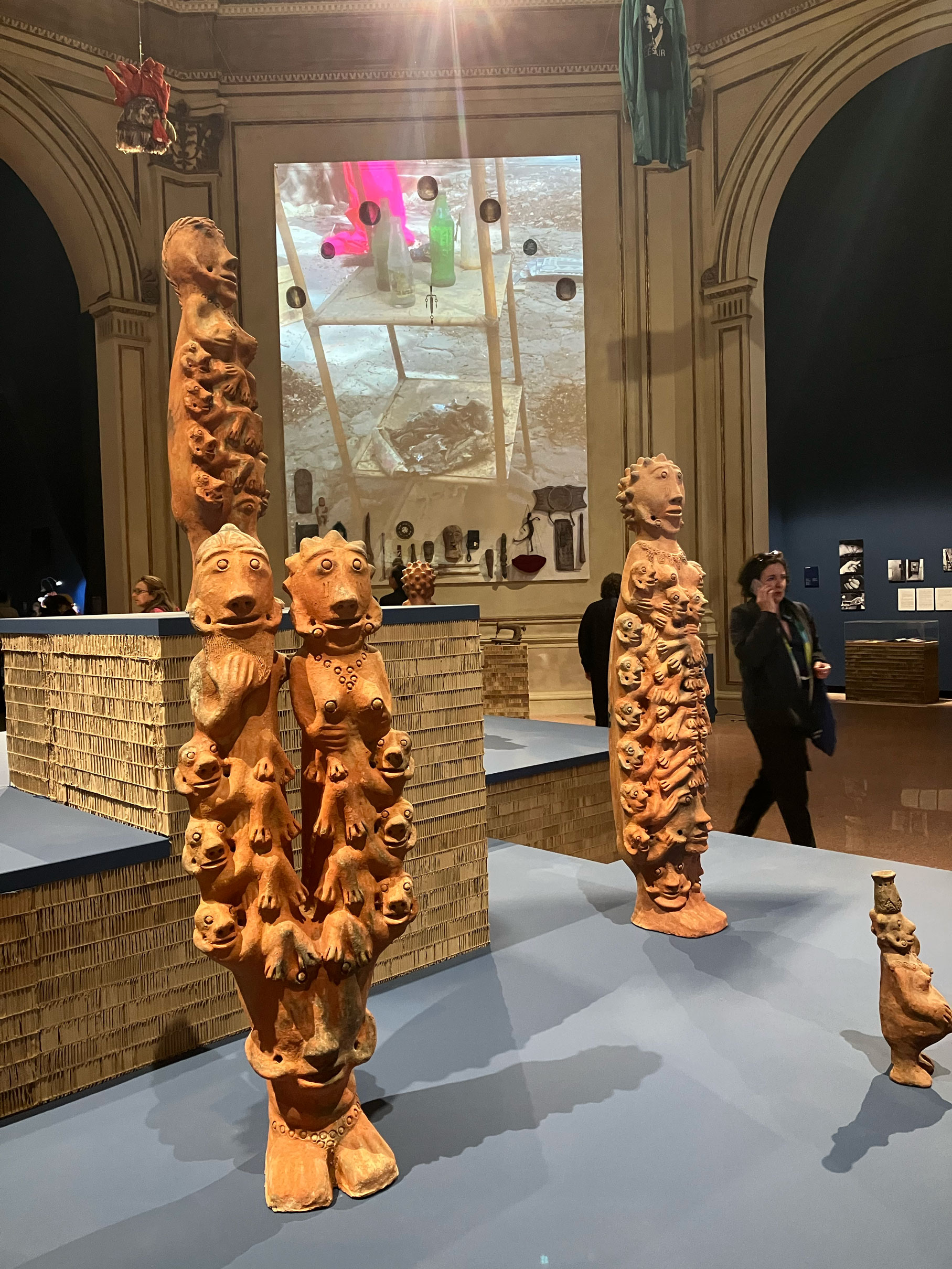
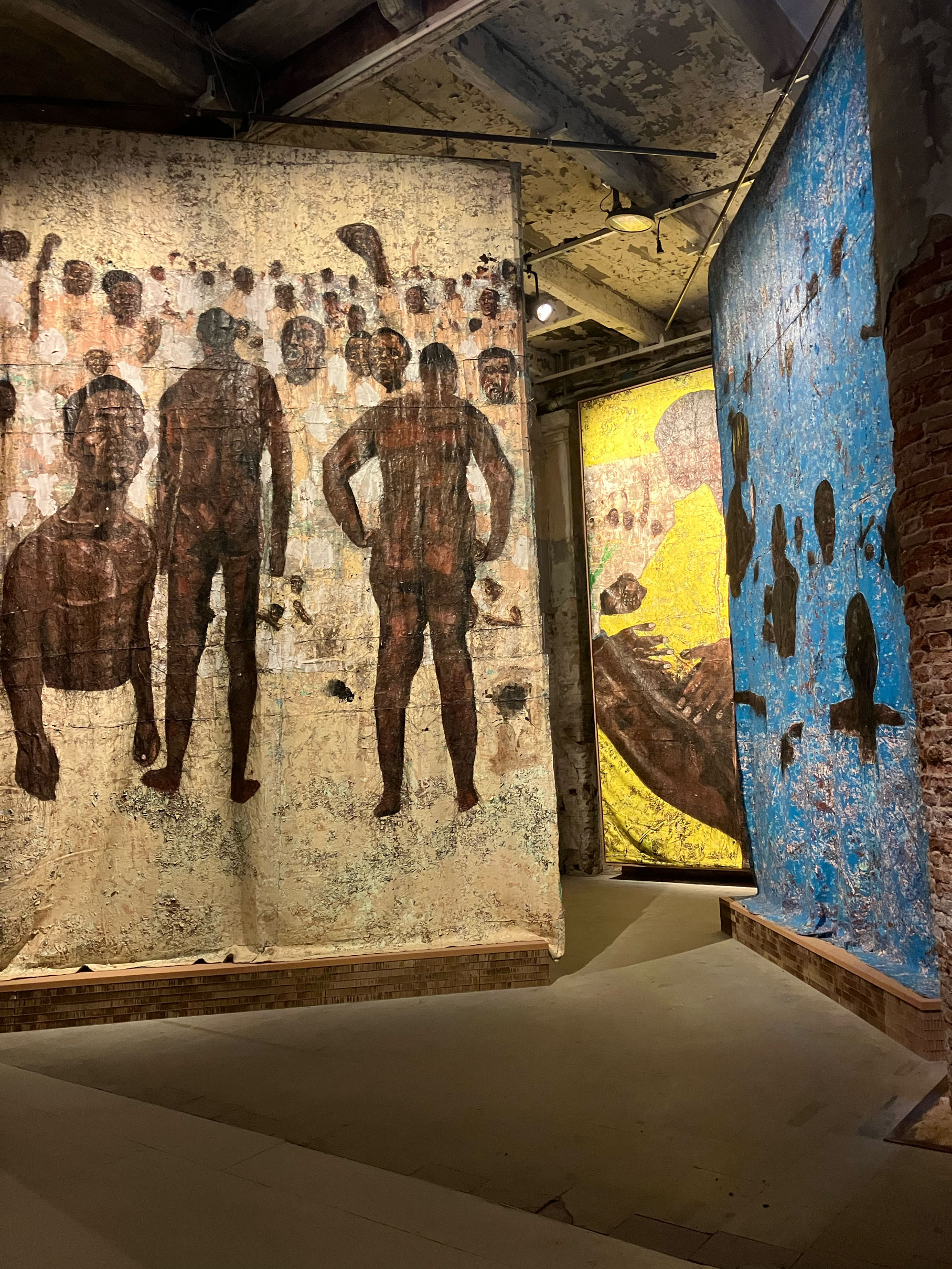
Regarding the general exhibition, on view through November, the absence of curatorial interlocution following the opening has left questions unanswered. In the display design envisioned by Koyo, we encounter a pathway of oases marked by points of object overload and visual cluttering—whether within a single artist’s space or among different works. In the main exhibition at the Giardini, for example, we see a sequence of terracotta sculptures by Seyni Awa Camara in a room adjacent to the ceramics of the Peruvian artist, activist and shaman Célia Vazques Yui, which are in turn surrounded by the object installations of Daniel Ramos-Lind and the large drawings and resin flowers by Maria Magdalena Campos-Pons & Kamaal Malak. These works further compete for attention with the vibrant sculptures of Ebony G. Patterson, and the environment is intense. Particularly problematic is the textile installation 33 Letters of Knowing You Will Reply, 2026, by Georgina Maxim, placed in a passageway between the mezzanine and the main hall in a way that seems to make little sense. This is not a question of challenging the beauty of the works or the quality of the artists, but of pointing to the contradiction between the curatorial thinking—which evokes a harmonious oasis-exhibition—and its heavy materialization, in which works tend to blur together through materiality and color, creating a repetitive landscape.
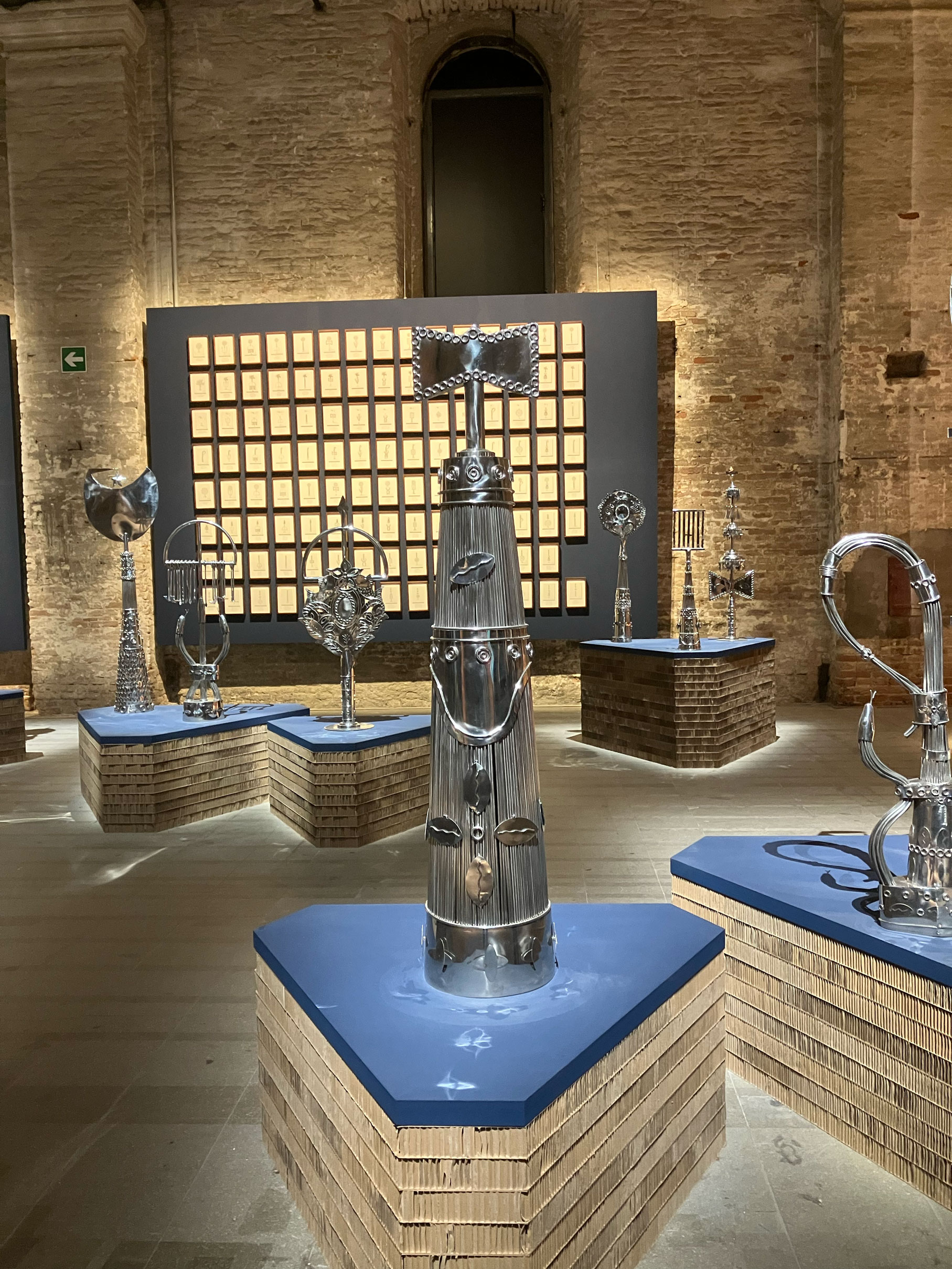
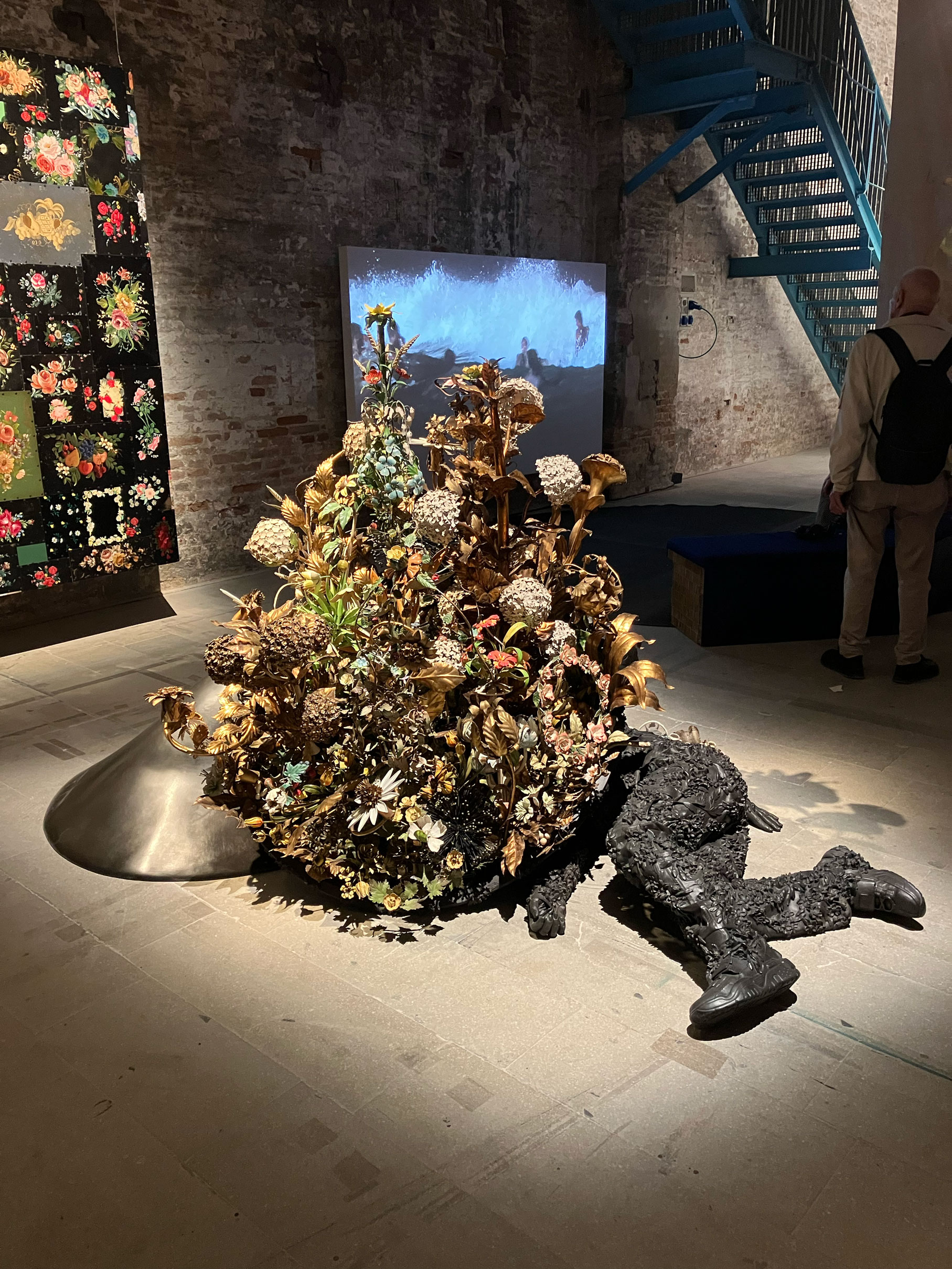
In any case, the show calls for contemplation, poetry, moods, spectre-like figures, and light in the shadows. Spirits of nature and the superhuman feature in works such as The Council of the Mother Spirits of Animals by Célia Vasquez Yui, or in the olfactory work by the Belgian artist Carsten Höller, who diffuses into the space a scent chemically extracted from his parents’ worn clothes, creating an unpleasant sensation of absent bodies. Dan Lie presents monumental floral arrangements, alluding to cycles of visual exuberance and gradual putrefaction of matter that bursts into life with microorganisms, fungi, larvae and odour. Ayrson Heráclito, in an installation featuring metal sculptures whose forms are inspired by orixás and drawings, invites viewers to an Afro-Brazilian cosmological perception.
In Minor Keys and its record number of Indigenous and African artists is not just about identity politics as Bourriaud suggests. Its project may represent the peak of decolonial theory put into practice within the hegemonic art system over the past few decades, revealing the decline of an artistic legitimation model tied to colonialist thinking. However, this critique does not guarantee the necessary change in Eurocentric institutional structures, not only in Venice. The decolonial turn, now translated into artworks in galleries, blockbuster museums, and mega-exhibitions, reveals the success of a critical project that has not yet been fully understood by the colonizer.
The proposal of In Minor Keys points toward a brighter, more inspiring philosophical horizon, full of poetic, collective, and ethical possibilities engendered outside the Biennale, thousands of kilometers away. Paraphrasing Alfredo Jaar, who is also part of the exhibition, “other people think”4—and perhaps that is the main message of Koyo Kouoh’s curatorship. After so many centuries of domination and extractivism, Europe still resists learning from the thoughts it subjugated, which understand the future not as a concept of linear progress, of boundless growth, but as a spiral connecting antiquity and the present while preserving life in the here and now.
Our historical moment sees the rise of global neo-fascism while performances of anticoloniality are toasted before the very same sea where boats carrying immigrants sink—a reality that cannot be hidden behind the veneer of inclusion and visibility of international exhibitions. Theaters of representation and power struggles in the name of art will not save the Biennale from anachronism. To reinvent itself, the institution, like all of Europe, needs to listen to the low tones of the world’s peoples.
1. La Biennale di Venezia, “Biennale Arte 2026: In Minor Keys,” June 15, 2026, accessed August 10, 2026, https://www.labiennale.org/en/news/biennale-arte-2026-minor-keys-0.
2. Remy Mallet, “The Post-Visibility Blues: On Venice 2026 and the Limits of Representation—Review,” DakArtNews, June 5, 2026, accessed August 10, 2026, https://dakartnews.com/2026/06/05/the-post-visibility-blues-on-venice-2026-and-the-limits-of-representation-review/.
3. Nicolas Bourriaud, “Review: ‘In Minor Keys’ at La Biennale di Venezia 2026,” Spike Art Magazine, no. 88 (Summer 2026), accessed September 28, 2026, https://spikeartmagazine.com/articles/review-in-minor-keys-la-biennale-di-venezia-2026.
4. Alfredo Jaar, Other People Think / Andere Menschen Denken, 2012.
I begin this belated text—about an event that opened four months ago—by reminding readers of what is already known: the Venice Biennale is the great iconic event of the global art system. And so, as a new edition unfolds, its ephemeral existence must be recalled. The Biennale, founded in 1895, maintains an old structure that, in 2026, proves to be anachronistic despite still holding its prestige. To participate in it or in the national pavilion exhibitions is to receive uncontestable legitimation and some guarantee of leaving a trace on a history of art. This essay, in turn, departs from the understanding that writing about the Biennale means thinking about an ungraspable whole in order to bring particular perspectives, reiterate opinions, and reflect—beyond art, aesthetics, and ethics—on the current state of the arts and our complicated historical moment.
The 61st Biennale, In Minor Keys, opened in May with a project by Cameroonian curator Koyo Kouoh (1967–2025), developed by her team: Gabe Beckhurst Feijoo, Marie Hélène Pereira and Rasha Salti (advisors); Siddhartha Mitter (editor-in-chief); Rory Tsapayi (research assistant). The proposal promotes a galaxy of artists, collectivities, and propositions, spatially organizing artists and works into “oases”. This edition features the largest number of African and Afro-diasporic artists in the history of the event, and among the 110 names in the collective exhibition, only eight are European and none is Italian. More than a headcount, the general exhibition can be considered, so far, a landmark in the legitimation—in Europe—of practices guided by thoughts and cosmogonies that escape Western aesthetic conventions and projections. The exhibition, with its low lighting and muted palettes, proposes a rhythm to the visitor through an organization that suggests the spiritual and physical rest afforded by these oases—“the keys or small islands of the artists’ universes.”1
In Minor Keys evokes a pedagogy of sensory experience and glimpses, in its roster of artists and authors, a radical reconnection with art’s natural habitat and its role in society. The proposal carries a warm appeal, valuing the emotional, the visual, the sensorial, the affective, and the subjective. The tenderness and care of the project—carried forward by the team that accompanied Koyo Kouoh throughout its conception—was, to some extent, overshadowed by criticisms of the exhibition design which, in several areas, is indeed cluttered by too many works and too few connections between them, revealing an unavoidable problem: the absence of the conductor leading the orchestra.
Beyond questions of exhibition formatting, several events marked the opening of this Biennale, which coincided with the first anniversary of Koyo’s passing. In the curatorial text left as her legacy, she explained that In Minor Keys does not intend to be “a litany of comments on world events, nor an indifference or escape from the growing and continuously interlinked crises.” However, the event—structured around national representations to this day—inevitably echoes power struggles, visibility disputes, and geopolitical tensions that unfold outside the exhibition halls. This edition was no different, opening amid protests that reflect the convulsive state of our quarter century.
During the opening week for invited guests, the reflective silence of the exhibition was invaded by the noise of demonstrations against the opening of pavilions from nations involved in wars and genocides—such as Russia, Israel, and the United States—as well as acts against the censoring measures of nations like South Africa and Kazakhstan. Another significant development was the resignation of the artists’ jury—presided over this year by Brazilian curator Solange Farkas, alongside Zoe Butt, Elvira Dyangani Ose, Marta Kuzma, and Giovanna Zapperi—who decided not to nominate artists from countries accused of humanitarian crimes. At the same time, arts workers seized the climate of protest to demand better working conditions, staging a march and a historic staff strike. With no curatorial authority to manage the ensuing crisis, what emerged was less discussion about the exhibition and its artists, and more about boycotts, resignations, open letters, and petitions exploding throughout a packed week in Venice.
While some demanded visibility and rights, the Bvlgari brand was inaugurating its role as the Biennale Arte’s exclusive commercial partner for the next three editions, connecting art with luxury consumption under the slogan “Freedom Creates.” The phrase—displayed on a giant billboard on the Grand Canal alongside a photo of a Venetian Lion-shaped jewel—made many uncomfortable. Even though the company promotes an artistic vision and maintains social initiatives, its raw materials continue to be mined by underpaid labor in Africa, Asia, and Latin America. Ironically, In Minor Keys gestures toward a critique of the extractivist notions of civilization, progress, and accumulation that remain present in many of the nations gathered at this Biennale. Where there is food and financial insecurity, the mantra “Freedom Creates” works differently.
In Minor Keys evokes non-Cartesian knowledge systems and non-Western artistic modes of thought, foregrounding African artists whose presence has historically been inconsistent—generally framed within ethnographic or exoticizing approaches. Remy Mallet, editor-in-chief of Dakar Art News, notes that African and Afro-diasporic participation in Venice grew stronger since the 2015 edition curated by Okwui Enwezor, becoming somewhat more consistent since then. He observes, however, that this still depends on the nationality and ethnicity of the curators—as seen in the previous edition curated by Brazilian Adriano Pedrosa, which featured the largest participation of Latin American artists in history. For Mallet,
“This correlation undoubtedly enriches perspectives and embraces the multiplicity of ways of being in the world. Yet it also exposes the limits of what a single appointment can achieve. (…) As long as African representation at Venice depends on an African being in the room, it remains contingent, fragile, reversible.”2
On the other hand, for French theorist Nicolas Bourriaud, the exhibition “opens no new paths. Instead, it actually completes a historical sequence that began in 1989, that of globalization, by radicalizing curatorial positions that were then against the grain.”3
In Bourriaud’s view, “one must acknowledge that what emerges intellectually is the triumph of identity politics”—even if unintentionally so on the part of the curators. For Bourriaud, the 61st Biennale completes a cycle that began notably with the Havana Biennial (1984) and the exhibition Magiciens de la Terre (Centre Georges Pompidou and the Grande Halle de la Villette, 1989)—and I would add The Other Story (Hayward Gallery, 1989).
On one hand, In Minor Keys is indeed the institutionalization of the decolonial critique and its practices by the global, actually deterritorialized art system. According to Mallet, however, “a real question is no longer whether African art is seen in Venice. What matters is slower, less glamorous work: building robust institutions on African soil and understanding that art cannot thrive in conditions of economic precarity.” And this holds equally true for Latin America.
Beyond the label of “identity politics,” the visibility—and acceptance—of Global South histories, aesthetics, and professionals within the Eurocentric axis of the arts is part of a complex mechanism of international circulation, markets, and historical narratives in repositioning. Yet hegemonic power structures change more slowly than the long lists of artists at biennials suggest. Even if it amounts to “the triumph of identity politics” for Bourriaud, the consistency and insertion of critical decolonial thought on colonial soil still depends on the resilience of its spokespersons—which is the case here. Indigenous, Afro-diasporic, Latin American, and Southeast Asian arts find themselves confronting a market that transforms dissidence into the status quo, bringing visibility alongside new dilemmas, since market presence alone does not guarantee the decentralization of a system of thought.
In Minor Keys, in turn, brings together artists and thinkers from the Global South in a section of the program dedicated to Schools that carry a sense of “both localism and transnationalism, in generative symbiosis.” These are artist-centered independent institutions in which energy and resources are directed toward a social purpose grounded in humanizing, non-commercial pedagogical and philosophical foundations—pointing toward ecosystems, networks of sharing, knowledge exchange, and the seeding of ideas. Such is the case of RAW Material Company, founded by Koyo Kouoh in Dakar in 2008, fundamental to the way she conceived her own curatorial practice. Also included are other artist-created initiatives represented by Denniston Hill (Southern Catskills, New York), blaxTARLINES KUMASI (Kumasi, Ghana), G.A.S. Foundation (Lagos/Ijebu Ode, Nigeria), lugar a dudas (Cali, Colombia), and the Nairobi Contemporary Art Institute (Nairobi, Kenya).
Regarding the general exhibition, on view through November, the absence of curatorial interlocution following the opening has left questions unanswered. In the display design envisioned by Koyo, we encounter a pathway of oases marked by points of object overload and visual cluttering—whether within a single artist’s space or among different works. In the main exhibition at the Giardini, for example, we see a sequence of terracotta sculptures by Seyni Awa Camara in a room adjacent to the ceramics of the Peruvian artist, activist and shaman Célia Vazques Yui, which are in turn surrounded by the object installations of Daniel Ramos-Lind and the large drawings and resin flowers by Maria Magdalena Campos-Pons & Kamaal Malak. These works further compete for attention with the vibrant sculptures of Ebony G. Patterson, and the environment is intense. Particularly problematic is the textile installation 33 Letters of Knowing You Will Reply, 2026, by Georgina Maxim, placed in a passageway between the mezzanine and the main hall in a way that seems to make little sense. This is not a question of challenging the beauty of the works or the quality of the artists, but of pointing to the contradiction between the curatorial thinking—which evokes a harmonious oasis-exhibition—and its heavy materialization, in which works tend to blur together through materiality and color, creating a repetitive landscape.
In any case, the show calls for contemplation, poetry, moods, spectre-like figures, and light in the shadows. Spirits of nature and the superhuman feature in works such as The Council of the Mother Spirits of Animals by Célia Vasquez Yui, or in the olfactory work by the Belgian artist Carsten Höller, who diffuses into the space a scent chemically extracted from his parents’ worn clothes, creating an unpleasant sensation of absent bodies. Dan Lie presents monumental floral arrangements, alluding to cycles of visual exuberance and gradual putrefaction of matter that bursts into life with microorganisms, fungi, larvae and odour. Ayrson Heráclito, in an installation featuring metal sculptures whose forms are inspired by orixás and drawings, invites viewers to an Afro-Brazilian cosmological perception.
In Minor Keys and its record number of Indigenous and African artists is not just about identity politics as Bourriaud suggests. Its project may represent the peak of decolonial theory put into practice within the hegemonic art system over the past few decades, revealing the decline of an artistic legitimation model tied to colonialist thinking. However, this critique does not guarantee the necessary change in Eurocentric institutional structures, not only in Venice. The decolonial turn, now translated into artworks in galleries, blockbuster museums, and mega-exhibitions, reveals the success of a critical project that has not yet been fully understood by the colonizer.
The proposal of In Minor Keys points toward a brighter, more inspiring philosophical horizon, full of poetic, collective, and ethical possibilities engendered outside the Biennale, thousands of kilometers away. Paraphrasing Alfredo Jaar, who is also part of the exhibition, “other people think”4—and perhaps that is the main message of Koyo Kouoh’s curatorship. After so many centuries of domination and extractivism, Europe still resists learning from the thoughts it subjugated, which understand the future not as a concept of linear progress, of boundless growth, but as a spiral connecting antiquity and the present while preserving life in the here and now.
Our historical moment sees the rise of global neo-fascism while performances of anticoloniality are toasted before the very same sea where boats carrying immigrants sink—a reality that cannot be hidden behind the veneer of inclusion and visibility of international exhibitions. Theaters of representation and power struggles in the name of art will not save the Biennale from anachronism. To reinvent itself, the institution, like all of Europe, needs to listen to the low tones of the world’s peoples.
1. La Biennale di Venezia, “Biennale Arte 2026: In Minor Keys,” June 15, 2026, accessed August 10, 2026, https://www.labiennale.org/en/news/biennale-arte-2026-minor-keys-0.
2. Remy Mallet, “The Post-Visibility Blues: On Venice 2026 and the Limits of Representation—Review,” DakArtNews, June 5, 2026, accessed August 10, 2026, https://dakartnews.com/2026/06/05/the-post-visibility-blues-on-venice-2026-and-the-limits-of-representation-review/.
3. Nicolas Bourriaud, “Review: ‘In Minor Keys’ at La Biennale di Venezia 2026,” Spike Art Magazine, no. 88 (Summer 2026), accessed September 28, 2026, https://spikeartmagazine.com/articles/review-in-minor-keys-la-biennale-di-venezia-2026.
4. Alfredo Jaar, Other People Think / Andere Menschen Denken, 2012.