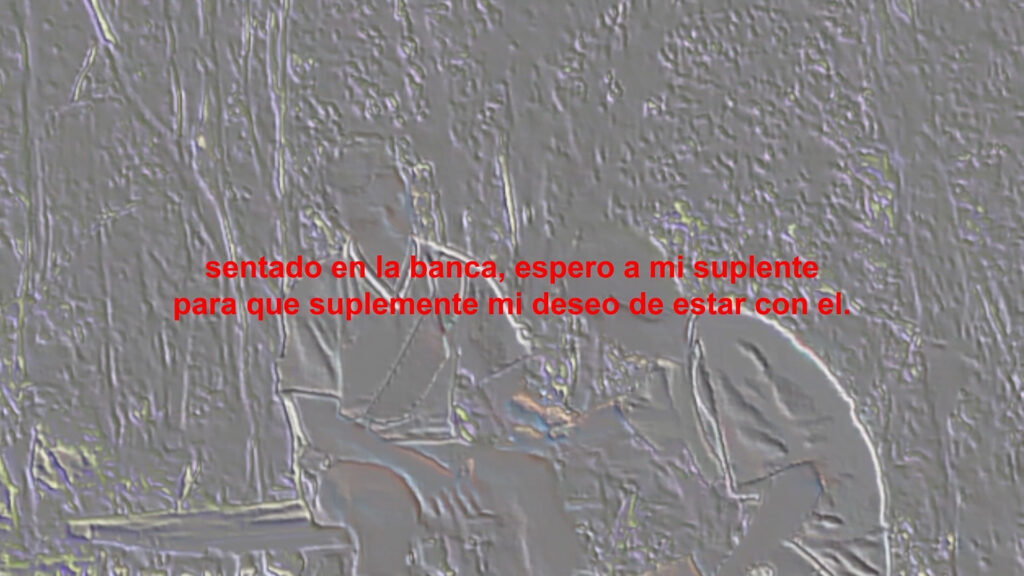
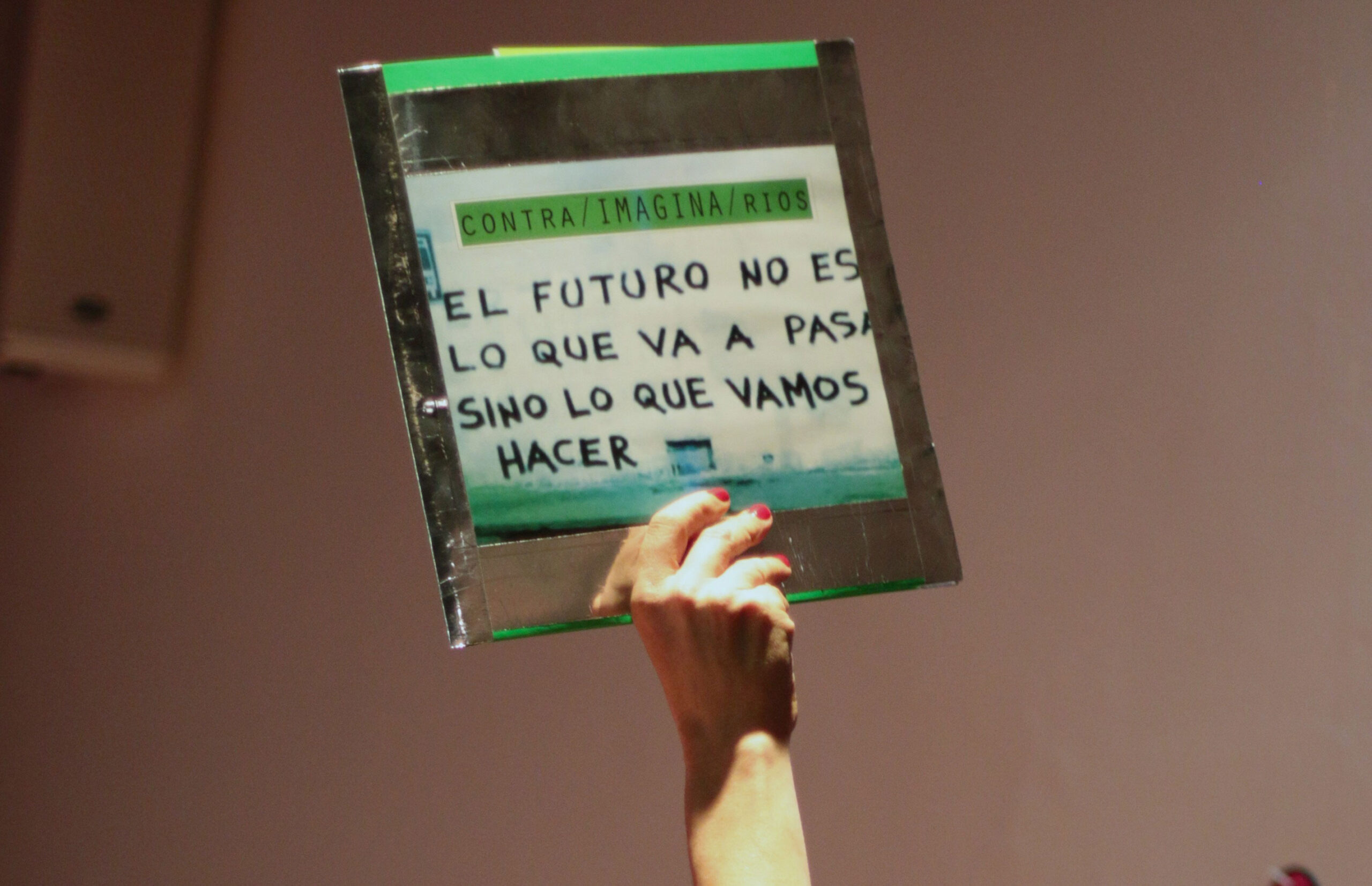
This text reclaims the counter-archives built by social movements and dissidents as living memories that contest the hegemonic narrative, set against the visual and memorial regime that neoliberalism has used to silence and control historical narrative through dictatorships and negotiated transitions. In doing so, it recovers collective memory as a political act through which possible futures can be imagined.
“This impoverished era we are living through was prepared through prolonged violence; it was also prepared by the technicians of language.”
— G. Santa Cruz
Time and again, we have heard expressions such as “we’ve never lived through anything like this,” “what we are experiencing is entirely new,” or “how is it possible that we are seeing, hearing, and living through all of this.” And yet, when we speak of this, we are referring to new/old forms of democratic/authoritarian governance—something that, far from being new, is in fact, as Walter Benjamin would say, a continuum of history 1.
We are witnessing the apparent renewed return of forms of violence presumed to have been overcome: colonial, patriarchal, capitalist, racist, and extractivist violences. In reality, these violences never disappeared, and the policies aimed at erasing our memories have become even more explicit: those memories that bear witness to all resistance against the capitalist, patriarchal, and colonial normative framework; those that have preserved the memory of every attempt at transformation.
What is commonly referred to today as the “world order” has only ever been a momentary fiction among the powers of the Global North following their two great wars of the twentieth century, when they found themselves submerged in the very regime of violence through which, for centuries, they had subjugated the rest of the planet: a negotiated order that prevailed only within the context of the liberal democracies of that Global North. Today, the term “civilizational crisis” is often used to describe this way of life—founded on dispossession and violence—established from the West. This civilization, forged through modernity and the Enlightenment, imposed a single way of inhabiting life and the world, nullifying everything that fell outside its terms. In order to do so, it has also required the systematic erasure of the memories of what existed before, and of all that has resisted the system.
For this reason, the struggle over narrative is more necessary today than ever before: to articulate from personal and collective memory/memories; from artistic, social, and political practices together with our alliances and genealogies, which emerge at the intersection of social struggle and aesthetic experimentation; from the question of the image as a political force; from the need to imagine together, shaped and affected by history; and from the need to collectivize imagination—not as an empty slogan, but as a vital commitment.
The Contemporary Visual Regime
There are images that mark the beginning of entire eras, and the 1973 bombing of the Palacio de La Moneda in Chile is one of them, encapsulating the beginning of a new political and visual regime: the neoliberalization of the world. The Chilean civic-military coup was conceived and executed both as a military operation and as a communicational operation, through an instantaneous and exemplary image that freezes and activates the moment while signaling what is to come. In military terms, the bombing was unnecessary;2 what was necessary, however, was its visual effect, as it created a new vision of reality for the emerging world order. Here, Napoleon’s phrase, “to monarchically direct the energy of memories,” later revisited by Guy Debord3, becomes flesh.
Beginning in the 1980s, with the accelerated growth of audiovisual media, this new regime of image production and circulation profoundly reorganized contemporary visuality. This transformation intensified with the development of digital media, reaching a decisive point in the 1990s amid the expansion of so-called globalization—a process that, while promising boundless connection and the dissolution of borders, ultimately became the global expansion of neoliberalism.
The internet and the unlimited flow of information were promises of democratic equality left unfulfilled by the global world-system.4 For those of us working around the reproducibility of the image and media production, the abrupt leap from the analog to the digital unfolded at a temporality almost impossible to grasp, rapidly transforming ways of making and the practices tied to the fields of art and visuality.
Today, everything is image. We live submerged in uninterrupted flows circulating across screens of every size, saturating perception, slowing critical thought, and fragmenting social bonds.
The Neoliberal Memory Regime
Memory is not synonymous with recollection. Memory is the collective construction through which a society engages with certain events—political and social—that have been traumatic, transformative, or deeply significant for that society. Memory, therefore, is always a collective action that enables the construction of the present and the possibility of futures.
The institutional policies of recent decades have understood this all too well, managing memory in order to shape a specific economic, political, social, and cultural model: neoliberal, colonial, and patriarchal capitalism. As Pilar Cordeira points out:
If every form of memory entails the dual difficulty of understanding the meanings attached to the past in order to connect them with those of the present, in the case at hand—the transition from the bipolar model to globalization—the difficulty is multiplied precisely because what distinguishes one from the other is a hegemonic reconfiguration that implies, as noted at the outset, an economic, social, and political reorganization, but also a reorganization of value systems and of what we might call constellations of meaning.5
Along these same lines, art critic Nelly Richard states:
To exercise memory is to expose the maneuvers of erasure that daily manufacture passive forgetting and its indifference. It also serves to reanimate the seemingly defeated remnants of a past filled with broken symbolizations, ideological ruptures, and utopian traces of a historicity that could still be reimagined through desire, in order to break free from the monotony of a present routinized by the technocracy of experts.6
Following the fall of the Fall of the Berlin Wall, and during the establishment of the new post–Cold War world order, social democracies around the world promoted investigations aimed at constructing narratives and memories aligned with the new model. To this end, they built monuments, memorials, museums, and specific sites where such narratives could be consumed.
Germany, for example, reunified under a discourse of reconciliation, recreating a new nation-state through a collective amnesia surrounding a century of traumatic processes and resistance. As artist Alice Creischer observes:
[…] after the reunification of the two Germanys, a new and shameless reconstruction began, as if those responsible had finally acquired the right to openly express their mutual satisfaction… We never understood the events that followed as a chain of causalities. We always believed that here, within our sphere, we were all leftists, or at least progressives. But much later we came to understand that progressivism had taken another direction.7
At the same time, the states of the Soviet bloc began making public hundreds of archives belonging to their national intelligence apparatuses. One of these was the archive of the Stasi in East Germany, which operated from 1950 to 1990. In 1995, after having been nearly destroyed during reunification, efforts to recover the archive began. Lawyer John Koeller exposed the vast network of informants woven into everyday life, composed of hundreds of anonymous citizens. This led to attempts to prevent the documents from being made public, under the argument that doing so was necessary to preserve the social peace of the reunification process. Today, the archive is housed in the memorial museum located in the former Stasi prison in Berlin.
In 1989, the Socialist International convened in Stockholm under the slogan “One Hundred Years of Struggle for Peace and Freedom—Towards a New Century.” In this way, it consolidated its social democratic turn, distancing itself from its Marxist-Leninist foundations and aligning with pluralist democracy, under the idea of a “more humane capitalism” and the premise of coexistence between the public and private spheres.
Shortly thereafter, in 1993, in Budapest and amid the post–Soviet bloc transformation process, magnate George Soros founded the Open Society Archives. Through supposedly philanthropic projects, the foundation came to monopolize a significant portion of research, documentation, and archival projects not only in Hungary, but also across Central and Eastern Europe, as well as Central Africa and South Africa during the Cold War, advancing its own interpretation of the geopolitical processes that shaped these regions throughout the twentieth century.
Following the death of Francisco Franco, Spain underwent a transition between 1976 and 1982 marked by the signing of the Pactos de la Moncloa [Moncloa Pacts] and the emergence of a constitutional framework—including the 1977 Amnesty Law—with clear traces of Francoism, which equated the victors and the defeated of the Spanish Civil War and relativized the forty-year dictatorship, relegating the memory of its victims to the private sphere. It was not until 2022 that the Ley de Momoria Democrática [Democratic Memory Law]8 was introduced, though it remained decidedly insufficient, limiting its function to certain forms of support for those directly affected and to a long list of symbolic gestures. Today, with the resurgence of right-wing movements and fascisms worldwide, this law is once again under threat of disappearance.
While the democratic transitions in the Southern Cone each possess their own particular narratives, all of them respond to the same global process of normalizing neoliberalization. Chile, for example, represents a case of the refinement of the European transition model: “For seventeen years, politics, democracy, and civil rights were criminalized, generating an irrational fear of political engagement, of thinking differently, of debating ideas, of imagining change. We all became ‘politically correct’ subjects—we only felt.”9 The Chilean transition thus served to foreclose the collective desire for transformation in the aftermath of the dictatorship.
This democratic normalization had to be “established through a consensus capable of controlling the heterogeneous plurality of the social,” making it necessary to “discipline antagonisms and confrontations, setting limits designed to protect the agreement from anything liable to overflow the formal structure of its constitutive act.”10 Rountable discussions held without the presence of all those directly affected, memorials, “justice as far as possible,”11 unifying discourses, and a museum all contributed to constructing a singular, conflict-free account of resistance to the dictatorship.12 Not everyone was invited to the democratic ball, and the discourse of fear continued to operate.13
In the case of Argentina, the rise to power in 1983 of Raúl Alfonsín, a member of the centrist Unión Cívica Radical [Radical Civic Union], marked the beginning of the period of democratic transition. The government followed the guidelines of the new world order, and its administration became known for the ambiguity of its economic agreements and for formalizing policies of impunity regarding the systematic human rights violations committed during the dictatorship.14 The democratic transition also served as a roadmap for the deepening of neoliberal policies. From the mid-1990s onward, Argentina underwent a process of privatization and attempted state reduction under the two governments of Carlos Saúl Menem (1989–1999).15 During this period, pardon laws were approved, granting freedom to members of the armed forces who had been prosecuted for crimes against humanity committed during the last dictatorship.
Thus, it becomes evident that impunity functions as a guarantee for the continuity of forms of violence. As Rita Laura Segato points out: “The state terror of the dictatorships has given way to a diffuse terror that installs itself capillarily throughout society, with new ways of exercising violence through its legal apparatus.”16
The Appropiation of the Archives
One of the events most anticipated by hundreds of researchers, historians, and members of social movements opposing the dictatorships and authoritarian regimes of the Cold War in the Global South was the declassification of the archives of the Central Intelligence Agency (CIA). This act was seen as a promise: the possibility of accessing information that had long been denied and that could help reconstruct the memory of what took place during the sinister years of Operation Condor.
The great surprise was that these archives were almost entirely redacted, granting access to very little information. This constitutes one of the clearest expressions of the archive’s character as a state machine of ordering, as described by Maximiliano Tello in Anarchivismo [Anarchivism].17 The gesture of redaction is, in itself, an archive of those millions who were disappeared, executed, exiled, murdered, and persecuted by the power of the state.
For their part, international foundations such as the Ford Foundation, Rockefeller Foundation, and Open Society18 began funding projects and research around memory in Latin America, Eastern Europe, and Africa. Although both the Ford Foundation and the Rockefeller Foundation had already been present in Latin America since the 1960s, the emphasis placed on programs related to culture, art, archives, memory, and human rights became especially significant during the 1980s and 1990s in shaping a political framework to be consolidated.19 Cultural, academic, and artistic institutions from European countries likewise showed strong interest in acquiring the archives of social movements, collectives, intellectuals, cultural projects, and artists from the past fifty years.20
Sustaining and Recovering Collective Memory
“It is not that the past casts its light on the present, or the present its light on the past; rather, image is that wherein what has been comes together in a flash with the now to form a constellation. In other words: image is dialectics at a standstill. For while the relation of the present to the past is a purely temporal, continuous one, the relation of what-has-been to the now is dialectical: is not progression but image, suddenly emergent.”
— Walter Benjamin21
While the declassification of archives, the creation of institutions funding research, the recovery of archives, and the construction of memorials and public archives were essential to reconstructing the history of more than half a century of violence, they also helped consolidate a hegemonic memory that, through omission and denial, erased a vast range of narratives that have underpinned the new neoliberal world order. But memory is stubborn, and archives are not merely documents; in parallel, other processes and methodologies have emerged—ones that escape the logic of official archival systems and contest the hegemonic narration of memory.
Against the installation and radicalization of neoliberalism and neocolonialism, the work of reconstructing our memories has been sustained by activists, militants, survivors, researchers, cultural agents, and generations of artists and creators. The most emblematic examples have been upheld by the very survivors of crimes against humanity and genocides in different corners of the planet.
From Argentina to Indonesia, from Colombia to Mexico, from Philippines to Mozambique, from Chile to Palestine, the work carried out by these organizations has been fundamental. The sustained efforts of human rights organizations such as the Archivo Vicaría de la Solidaridad [Vicariate of Solidarity Archive] in Chile,22 the Madres de Plaza de Mayo [Mothers of the Plaza de Mayo] in Argentina,23 and the Archivos de la Represión [Archives of Repression]24 have made it possible, among many other things, to identify those directly responsible, as well as the millions affected by state violence and the millions who were detained and disappeared.
Social movements and artistic practices alike have sustained the search for information, the preservation of documents and archives, and the gathering of testimonies, images, and evidence—all with the intention of giving support and substance to their narratives. Within this context, forms of memory began to emerge that are woven from the biographical to the collective, from the everyday to fiction, and from possible pasts that challenge the hegemonic foundation of memory. Hache Mau states:
When the racist, classist, sexist question is repeated generation after generation, the response can no longer be merely individual; it becomes a collective narrative. Everyday life, family symbols, conversations, and photographs become pieces of a political essay that reveals the persistence of slavery in the present. The question of why one is the way one is becomes an interrogation directed at society as a whole, a dismantling of its structural violence. Here, Black, trans, Indigenous, and migrant memory inscribes itself as irreducible and necessary, impossible to erase from collective narratives.25
From social and political movements, it is possible to witness the emergence and development of other ways of engaging the archive—tracing new genealogies and giving life to narratives that have been erased, rendered invisible, or denied. Fundamentally, these are active, affected, and affective archives: situated, precarious, and dissident archives. Here, the assemblage between spaces of political action, art, and counter-pedagogy has been crucial in bringing these counter-narratives to life.
These archives bear witness to other narratives, presenting them as part of the social, cultural, and vital processes within which they unfold, while linking those processes to their broader contexts. They have served as concrete tools in the pursuit of justice and in restoring political subjecthood to communities that have historically been dispossessed of such agency.
Here, we would like to name two vital examples…
The Archivo de la Memoria Trans Argentina [Argentine Trans Memory Archive] stands as a profoundly powerful case, materializing the difficult and painful history of the struggles of sex-gender dissident communities. The archive was conceived by Claudia Pía Baudracco and María Belén Correa with the aim of protecting, constructing, and reclaiming Argentine trans memory. It houses a collection of more than 6,000 pieces—including letters, documents, photographs, and objects—spanning from the beginning of the twentieth century through the 1990s.
It unfolds as an unofficial history of repression, life, political struggle, pleasure, and love; of the symbol of the carnival as a festive exception through which bodies otherwise denied access to public space could inhabit it; of celebration and joy as forms of affirmation in the face of violence, repression, and death; of exile lived through invisibility, solitude, and silence—narrated through everyday images that reveal another history, one that even the social movements resisting the dictatorship failed to register. In 2024, thanks to the work of the Archivo de la Memoria Trans Argentina and the testimonies of trans survivors of state terrorism, the first ruling for crimes against humanity committed against the trans community at Pozo de Banfield—a clandestine detention and torture center—was issued.26
In Ecuador, the Asociación Gay Transgénero Coccinelle [Coccinelle Gay Transgender Association] was one of the pioneering organizations in the struggle for the rights of sexual dissident communities in the country. Its legacy and activism were preserved through photographs and documents that, almost out of an instinct for survival, were safeguarded and archived by one of its spokespersons, Purita Pelayo, who had the foresight to photograph and preserve information from every activity, event, and piece of news generated around the years of Coccinelle’s struggle. Thanks to these efforts, in 1997 Article 516 was abolished and homosexuality was decriminalized in Ecuador.
Today, this archive is not only the repository of the movement’s memory, but also an effective tool in an ongoing struggle. In May 2019, in the context of the commemoration of the International Day Against Homophobia, Transphobia, and Biphobia, human rights organizations and activists filed a lawsuit denouncing grave human rights violations committed against the LGBTI community in Ecuador during the years of struggle for the decriminalization of homosexuality. The evidentiary records submitted were those that the archive itself had preserved and safeguarded over time.
These personal and collective archives seek to safeguard the legacies of social movements and processes, guided by principles that challenge institutional and hegemonic understandings of the archive. Hache Mau writes that: “Counter-archives recognize themselves as living bodies, insurgent fragments, untamed traces. They remind us that narrating is not about accumulation, but about sustaining memory as a vital force. They teach us that the echo of the past is never neutral, that its reverberation in the present is also struggle, and that imagining other futures requires inhabiting the counter-archive as a battlefield, constellation, and song.”27 These are archives that seek to remain active in the present for those who research them and for those who are part of them. They are situated archives28 that aim to transform the role of the researcher, as well as the conditions of access and preservation, emerging through exchanges of knowledge rather than through processes of extraction.
Philippe Artières points out that these archives are “precarious and fragile by their very nature,”29 constituted through the difficulty of locating documents and records. Their narratives are fragmented, dispersed, and heterogeneous, refusing the normalizing logic of the state’s machinery of ordering. These are archives approached through spaces of subjectivity, framed by processes of trauma and violence, yet grounded in a political position of struggle and social transformation—or, as Ann Cvetkovich calls them, archives of feeling.
Hache Mau states that: “Photographs of marches, parties, audio recordings, bodies in transit, and shared affections narrate the struggle of those who chose to exist even when everything denied them that possibility. These are not nostalgic images; they are insurgent traces, insistences that living—simply living—is already a form of vengeance against systematic erasure.”
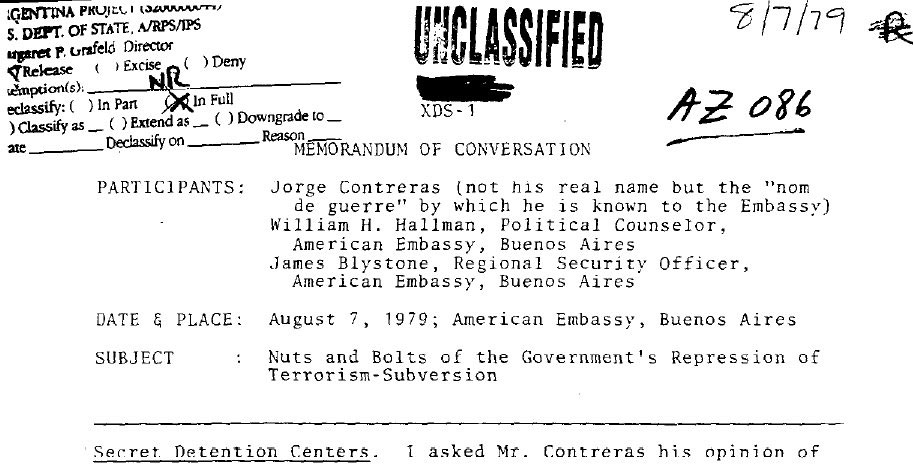
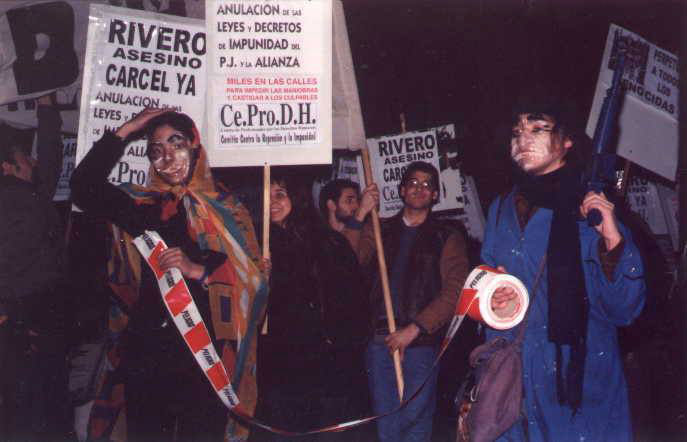
Image courtesy of Fernanda Errada.
“This impoverished era we are living through was prepared through prolonged violence; it was also prepared by the technicians of language.”
— G. Santa Cruz
Time and again, we have heard expressions such as “we’ve never lived through anything like this,” “what we are experiencing is entirely new,” or “how is it possible that we are seeing, hearing, and living through all of this.” And yet, when we speak of this, we are referring to new/old forms of democratic/authoritarian governance—something that, far from being new, is in fact, as Walter Benjamin would say, a continuum of history 1.
We are witnessing the apparent renewed return of forms of violence presumed to have been overcome: colonial, patriarchal, capitalist, racist, and extractivist violences. In reality, these violences never disappeared, and the policies aimed at erasing our memories have become even more explicit: those memories that bear witness to all resistance against the capitalist, patriarchal, and colonial normative framework; those that have preserved the memory of every attempt at transformation.
What is commonly referred to today as the “world order” has only ever been a momentary fiction among the powers of the Global North following their two great wars of the twentieth century, when they found themselves submerged in the very regime of violence through which, for centuries, they had subjugated the rest of the planet: a negotiated order that prevailed only within the context of the liberal democracies of that Global North. Today, the term “civilizational crisis” is often used to describe this way of life—founded on dispossession and violence—established from the West. This civilization, forged through modernity and the Enlightenment, imposed a single way of inhabiting life and the world, nullifying everything that fell outside its terms. In order to do so, it has also required the systematic erasure of the memories of what existed before, and of all that has resisted the system.
For this reason, the struggle over narrative is more necessary today than ever before: to articulate from personal and collective memory/memories; from artistic, social, and political practices together with our alliances and genealogies, which emerge at the intersection of social struggle and aesthetic experimentation; from the question of the image as a political force; from the need to imagine together, shaped and affected by history; and from the need to collectivize imagination—not as an empty slogan, but as a vital commitment.
The Contemporary Visual Regime
There are images that mark the beginning of entire eras, and the 1973 bombing of the Palacio de La Moneda in Chile is one of them, encapsulating the beginning of a new political and visual regime: the neoliberalization of the world. The Chilean civic-military coup was conceived and executed both as a military operation and as a communicational operation, through an instantaneous and exemplary image that freezes and activates the moment while signaling what is to come. In military terms, the bombing was unnecessary;2 what was necessary, however, was its visual effect, as it created a new vision of reality for the emerging world order. Here, Napoleon’s phrase, “to monarchically direct the energy of memories,” later revisited by Guy Debord3, becomes flesh.
Beginning in the 1980s, with the accelerated growth of audiovisual media, this new regime of image production and circulation profoundly reorganized contemporary visuality. This transformation intensified with the development of digital media, reaching a decisive point in the 1990s amid the expansion of so-called globalization—a process that, while promising boundless connection and the dissolution of borders, ultimately became the global expansion of neoliberalism.
The internet and the unlimited flow of information were promises of democratic equality left unfulfilled by the global world-system.4 For those of us working around the reproducibility of the image and media production, the abrupt leap from the analog to the digital unfolded at a temporality almost impossible to grasp, rapidly transforming ways of making and the practices tied to the fields of art and visuality.
Today, everything is image. We live submerged in uninterrupted flows circulating across screens of every size, saturating perception, slowing critical thought, and fragmenting social bonds.
The Neoliberal Memory Regime
Memory is not synonymous with recollection. Memory is the collective construction through which a society engages with certain events—political and social—that have been traumatic, transformative, or deeply significant for that society. Memory, therefore, is always a collective action that enables the construction of the present and the possibility of futures.
The institutional policies of recent decades have understood this all too well, managing memory in order to shape a specific economic, political, social, and cultural model: neoliberal, colonial, and patriarchal capitalism. As Pilar Cordeira points out:
If every form of memory entails the dual difficulty of understanding the meanings attached to the past in order to connect them with those of the present, in the case at hand—the transition from the bipolar model to globalization—the difficulty is multiplied precisely because what distinguishes one from the other is a hegemonic reconfiguration that implies, as noted at the outset, an economic, social, and political reorganization, but also a reorganization of value systems and of what we might call constellations of meaning.5
Along these same lines, art critic Nelly Richard states:
To exercise memory is to expose the maneuvers of erasure that daily manufacture passive forgetting and its indifference. It also serves to reanimate the seemingly defeated remnants of a past filled with broken symbolizations, ideological ruptures, and utopian traces of a historicity that could still be reimagined through desire, in order to break free from the monotony of a present routinized by the technocracy of experts.6
Following the fall of the Fall of the Berlin Wall, and during the establishment of the new post–Cold War world order, social democracies around the world promoted investigations aimed at constructing narratives and memories aligned with the new model. To this end, they built monuments, memorials, museums, and specific sites where such narratives could be consumed.
Germany, for example, reunified under a discourse of reconciliation, recreating a new nation-state through a collective amnesia surrounding a century of traumatic processes and resistance. As artist Alice Creischer observes:
[…] after the reunification of the two Germanys, a new and shameless reconstruction began, as if those responsible had finally acquired the right to openly express their mutual satisfaction… We never understood the events that followed as a chain of causalities. We always believed that here, within our sphere, we were all leftists, or at least progressives. But much later we came to understand that progressivism had taken another direction.7
At the same time, the states of the Soviet bloc began making public hundreds of archives belonging to their national intelligence apparatuses. One of these was the archive of the Stasi in East Germany, which operated from 1950 to 1990. In 1995, after having been nearly destroyed during reunification, efforts to recover the archive began. Lawyer John Koeller exposed the vast network of informants woven into everyday life, composed of hundreds of anonymous citizens. This led to attempts to prevent the documents from being made public, under the argument that doing so was necessary to preserve the social peace of the reunification process. Today, the archive is housed in the memorial museum located in the former Stasi prison in Berlin.
In 1989, the Socialist International convened in Stockholm under the slogan “One Hundred Years of Struggle for Peace and Freedom—Towards a New Century.” In this way, it consolidated its social democratic turn, distancing itself from its Marxist-Leninist foundations and aligning with pluralist democracy, under the idea of a “more humane capitalism” and the premise of coexistence between the public and private spheres.
Shortly thereafter, in 1993, in Budapest and amid the post–Soviet bloc transformation process, magnate George Soros founded the Open Society Archives. Through supposedly philanthropic projects, the foundation came to monopolize a significant portion of research, documentation, and archival projects not only in Hungary, but also across Central and Eastern Europe, as well as Central Africa and South Africa during the Cold War, advancing its own interpretation of the geopolitical processes that shaped these regions throughout the twentieth century.
Following the death of Francisco Franco, Spain underwent a transition between 1976 and 1982 marked by the signing of the Pactos de la Moncloa [Moncloa Pacts] and the emergence of a constitutional framework—including the 1977 Amnesty Law—with clear traces of Francoism, which equated the victors and the defeated of the Spanish Civil War and relativized the forty-year dictatorship, relegating the memory of its victims to the private sphere. It was not until 2022 that the Ley de Momoria Democrática [Democratic Memory Law]8 was introduced, though it remained decidedly insufficient, limiting its function to certain forms of support for those directly affected and to a long list of symbolic gestures. Today, with the resurgence of right-wing movements and fascisms worldwide, this law is once again under threat of disappearance.
While the democratic transitions in the Southern Cone each possess their own particular narratives, all of them respond to the same global process of normalizing neoliberalization. Chile, for example, represents a case of the refinement of the European transition model: “For seventeen years, politics, democracy, and civil rights were criminalized, generating an irrational fear of political engagement, of thinking differently, of debating ideas, of imagining change. We all became ‘politically correct’ subjects—we only felt.”9 The Chilean transition thus served to foreclose the collective desire for transformation in the aftermath of the dictatorship.
This democratic normalization had to be “established through a consensus capable of controlling the heterogeneous plurality of the social,” making it necessary to “discipline antagonisms and confrontations, setting limits designed to protect the agreement from anything liable to overflow the formal structure of its constitutive act.”10 Rountable discussions held without the presence of all those directly affected, memorials, “justice as far as possible,”11 unifying discourses, and a museum all contributed to constructing a singular, conflict-free account of resistance to the dictatorship.12 Not everyone was invited to the democratic ball, and the discourse of fear continued to operate.13
In the case of Argentina, the rise to power in 1983 of Raúl Alfonsín, a member of the centrist Unión Cívica Radical [Radical Civic Union], marked the beginning of the period of democratic transition. The government followed the guidelines of the new world order, and its administration became known for the ambiguity of its economic agreements and for formalizing policies of impunity regarding the systematic human rights violations committed during the dictatorship.14 The democratic transition also served as a roadmap for the deepening of neoliberal policies. From the mid-1990s onward, Argentina underwent a process of privatization and attempted state reduction under the two governments of Carlos Saúl Menem (1989–1999).15 During this period, pardon laws were approved, granting freedom to members of the armed forces who had been prosecuted for crimes against humanity committed during the last dictatorship.
Thus, it becomes evident that impunity functions as a guarantee for the continuity of forms of violence. As Rita Laura Segato points out: “The state terror of the dictatorships has given way to a diffuse terror that installs itself capillarily throughout society, with new ways of exercising violence through its legal apparatus.”16
The Appropiation of the Archives
One of the events most anticipated by hundreds of researchers, historians, and members of social movements opposing the dictatorships and authoritarian regimes of the Cold War in the Global South was the declassification of the archives of the Central Intelligence Agency (CIA). This act was seen as a promise: the possibility of accessing information that had long been denied and that could help reconstruct the memory of what took place during the sinister years of Operation Condor.
The great surprise was that these archives were almost entirely redacted, granting access to very little information. This constitutes one of the clearest expressions of the archive’s character as a state machine of ordering, as described by Maximiliano Tello in Anarchivismo [Anarchivism].17 The gesture of redaction is, in itself, an archive of those millions who were disappeared, executed, exiled, murdered, and persecuted by the power of the state.
For their part, international foundations such as the Ford Foundation, Rockefeller Foundation, and Open Society18 began funding projects and research around memory in Latin America, Eastern Europe, and Africa. Although both the Ford Foundation and the Rockefeller Foundation had already been present in Latin America since the 1960s, the emphasis placed on programs related to culture, art, archives, memory, and human rights became especially significant during the 1980s and 1990s in shaping a political framework to be consolidated.19 Cultural, academic, and artistic institutions from European countries likewise showed strong interest in acquiring the archives of social movements, collectives, intellectuals, cultural projects, and artists from the past fifty years.20
Unclassified CIA files.
Sustaining and Recovering Collective Memory
“It is not that the past casts its light on the present, or the present its light on the past; rather, image is that wherein what has been comes together in a flash with the now to form a constellation. In other words: image is dialectics at a standstill. For while the relation of the present to the past is a purely temporal, continuous one, the relation of what-has-been to the now is dialectical: is not progression but image, suddenly emergent.”
— Walter Benjamin21
While the declassification of archives, the creation of institutions funding research, the recovery of archives, and the construction of memorials and public archives were essential to reconstructing the history of more than half a century of violence, they also helped consolidate a hegemonic memory that, through omission and denial, erased a vast range of narratives that have underpinned the new neoliberal world order. But memory is stubborn, and archives are not merely documents; in parallel, other processes and methodologies have emerged—ones that escape the logic of official archival systems and contest the hegemonic narration of memory.
Against the installation and radicalization of neoliberalism and neocolonialism, the work of reconstructing our memories has been sustained by activists, militants, survivors, researchers, cultural agents, and generations of artists and creators. The most emblematic examples have been upheld by the very survivors of crimes against humanity and genocides in different corners of the planet.
From Argentina to Indonesia, from Colombia to Mexico, from Philippines to Mozambique, from Chile to Palestine, the work carried out by these organizations has been fundamental. The sustained efforts of human rights organizations such as the Archivo Vicaría de la Solidaridad [Vicariate of Solidarity Archive] in Chile,22 the Madres de Plaza de Mayo [Mothers of the Plaza de Mayo] in Argentina,23 and the Archivos de la Represión [Archives of Repression]24 have made it possible, among many other things, to identify those directly responsible, as well as the millions affected by state violence and the millions who were detained and disappeared.
Social movements and artistic practices alike have sustained the search for information, the preservation of documents and archives, and the gathering of testimonies, images, and evidence—all with the intention of giving support and substance to their narratives. Within this context, forms of memory began to emerge that are woven from the biographical to the collective, from the everyday to fiction, and from possible pasts that challenge the hegemonic foundation of memory. Hache Mau states:
When the racist, classist, sexist question is repeated generation after generation, the response can no longer be merely individual; it becomes a collective narrative. Everyday life, family symbols, conversations, and photographs become pieces of a political essay that reveals the persistence of slavery in the present. The question of why one is the way one is becomes an interrogation directed at society as a whole, a dismantling of its structural violence. Here, Black, trans, Indigenous, and migrant memory inscribes itself as irreducible and necessary, impossible to erase from collective narratives.25
From social and political movements, it is possible to witness the emergence and development of other ways of engaging the archive—tracing new genealogies and giving life to narratives that have been erased, rendered invisible, or denied. Fundamentally, these are active, affected, and affective archives: situated, precarious, and dissident archives. Here, the assemblage between spaces of political action, art, and counter-pedagogy has been crucial in bringing these counter-narratives to life.
These archives bear witness to other narratives, presenting them as part of the social, cultural, and vital processes within which they unfold, while linking those processes to their broader contexts. They have served as concrete tools in the pursuit of justice and in restoring political subjecthood to communities that have historically been dispossessed of such agency.
Here, we would like to name two vital examples…
The Archivo de la Memoria Trans Argentina [Argentine Trans Memory Archive] stands as a profoundly powerful case, materializing the difficult and painful history of the struggles of sex-gender dissident communities. The archive was conceived by Claudia Pía Baudracco and María Belén Correa with the aim of protecting, constructing, and reclaiming Argentine trans memory. It houses a collection of more than 6,000 pieces—including letters, documents, photographs, and objects—spanning from the beginning of the twentieth century through the 1990s.
It unfolds as an unofficial history of repression, life, political struggle, pleasure, and love; of the symbol of the carnival as a festive exception through which bodies otherwise denied access to public space could inhabit it; of celebration and joy as forms of affirmation in the face of violence, repression, and death; of exile lived through invisibility, solitude, and silence—narrated through everyday images that reveal another history, one that even the social movements resisting the dictatorship failed to register. In 2024, thanks to the work of the Archivo de la Memoria Trans Argentina and the testimonies of trans survivors of state terrorism, the first ruling for crimes against humanity committed against the trans community at Pozo de Banfield—a clandestine detention and torture center—was issued.26
In Ecuador, the Asociación Gay Transgénero Coccinelle [Coccinelle Gay Transgender Association] was one of the pioneering organizations in the struggle for the rights of sexual dissident communities in the country. Its legacy and activism were preserved through photographs and documents that, almost out of an instinct for survival, were safeguarded and archived by one of its spokespersons, Purita Pelayo, who had the foresight to photograph and preserve information from every activity, event, and piece of news generated around the years of Coccinelle’s struggle. Thanks to these efforts, in 1997 Article 516 was abolished and homosexuality was decriminalized in Ecuador.
Today, this archive is not only the repository of the movement’s memory, but also an effective tool in an ongoing struggle. In May 2019, in the context of the commemoration of the International Day Against Homophobia, Transphobia, and Biphobia, human rights organizations and activists filed a lawsuit denouncing grave human rights violations committed against the LGBTI community in Ecuador during the years of struggle for the decriminalization of homosexuality. The evidentiary records submitted were those that the archive itself had preserved and safeguarded over time.
These personal and collective archives seek to safeguard the legacies of social movements and processes, guided by principles that challenge institutional and hegemonic understandings of the archive. Hache Mau writes that: “Counter-archives recognize themselves as living bodies, insurgent fragments, untamed traces. They remind us that narrating is not about accumulation, but about sustaining memory as a vital force. They teach us that the echo of the past is never neutral, that its reverberation in the present is also struggle, and that imagining other futures requires inhabiting the counter-archive as a battlefield, constellation, and song.”27 These are archives that seek to remain active in the present for those who research them and for those who are part of them. They are situated archives28 that aim to transform the role of the researcher, as well as the conditions of access and preservation, emerging through exchanges of knowledge rather than through processes of extraction.
Philippe Artières points out that these archives are “precarious and fragile by their very nature,”29 constituted through the difficulty of locating documents and records. Their narratives are fragmented, dispersed, and heterogeneous, refusing the normalizing logic of the state’s machinery of ordering. These are archives approached through spaces of subjectivity, framed by processes of trauma and violence, yet grounded in a political position of struggle and social transformation—or, as Ann Cvetkovich calls them, archives of feeling.
Hache Mau states that: “Photographs of marches, parties, audio recordings, bodies in transit, and shared affections narrate the struggle of those who chose to exist even when everything denied them that possibility. These are not nostalgic images; they are insurgent traces, insistences that living—simply living—is already a form of vengeance against systematic erasure.”
Escrache against Santiago Omar Rivero, 1998. Courtesy of the Archivo Etcétera…