
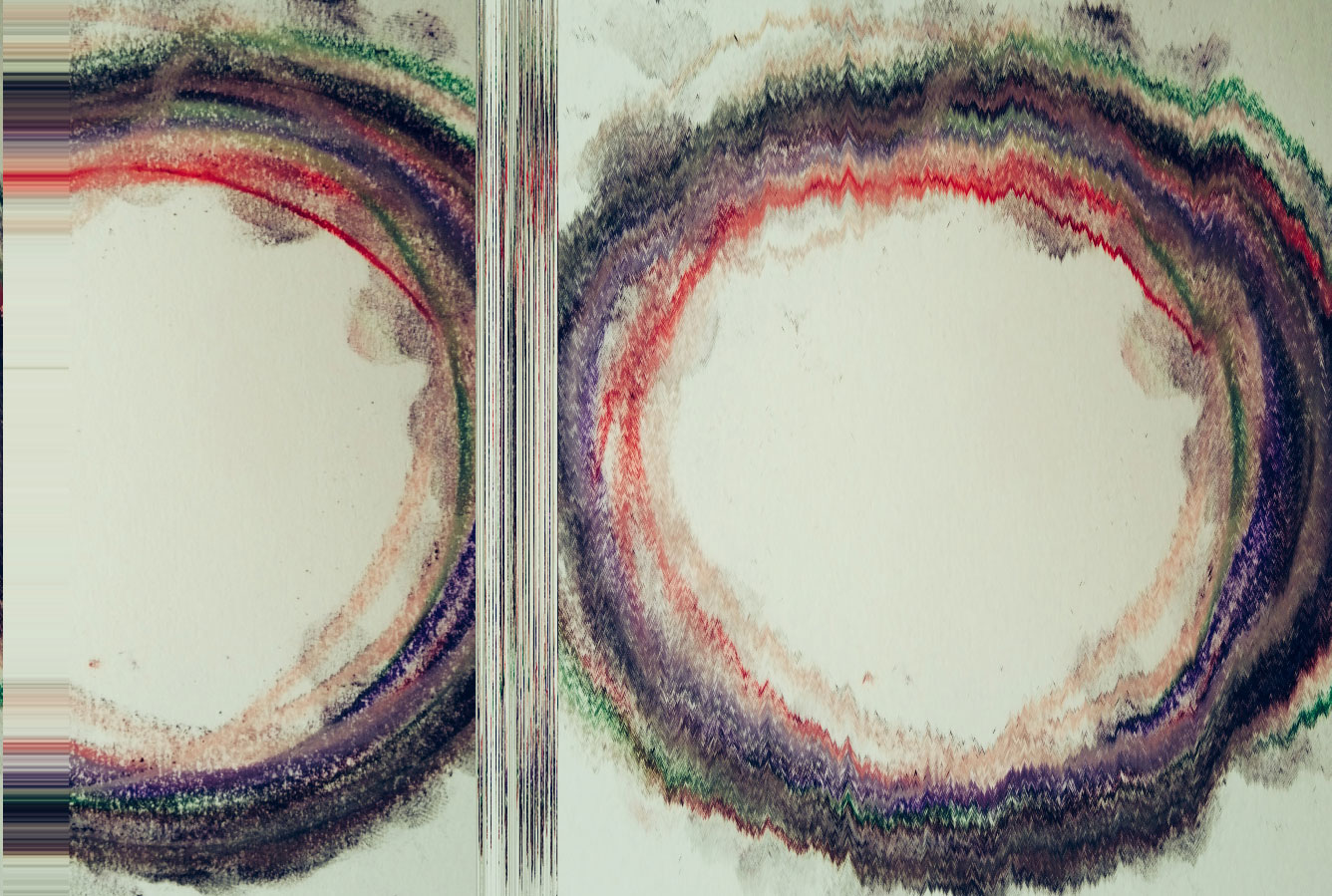
Eugenio Tisselli writes from loss, grief, and rage: a rage that arises from watching so-called artificial intelligence simulate the dead, perhaps its most harmful application. Letting go, the author says, not surrendering to the machine, is the most human act left to us. May the memory of our dead remain alive in bodies and in the earth, and not in data centers.
First Part (which could easily be the second, or the third)
On February 2, 2026, the Italian philosopher Giorgio Agamben wrote these brief lines to accompany the West’s sunset:
“As in Naples on New Year’s Eve, throw everything out the window. Then, in the street, gather a few fragments from the street: fragments bring good luck. The new is made from fragments of the old.”1
The vast Western desert is expanding rapidly, and within its devastating hunger stirs the boundless rage of fascism and its machines. The vast white desert threatens to spread across the rest of the planet. It threatens to sow death while pretending to drive it away. Indeed, it already does. That eternal and empty present, blind to death and to memory, is the great curse that the West casts upon the Earth.
Death Without Death: Endless Death.
“The word West, with which we define our culture, derives etymologically from the verb cadere (to fall) and means, quite literally, that which falls, that which never ceases to fall. The terms chance (from the Latin casus) and casualty are also related to this verb. That which never ceases to fall, fade into dusk (occasus in Latin means “sunset” or “decline”) is therefore also at the mercy of chance, of unceasing contingency. It is therefore no surprise that today the government of men and things takes the form of intervention protocols, regardless of particular outcomes, in a world conceived as available and calculable precisely because it is random. The West exists and governs itself only in the time of its own end and its relentless fall and, like its God, is forever dying. Yet this is precisely where its strength lies: a death that never ceases is truly without end; it is an infinite transience, an infinite contingency that presents itself as unstoppable.”
“A strategy that seeks to confront this perpetual decline must find within it a breach or interruption through which the West loses its continuity and finally collapses. This abyssal interruption is memory. The West, being random and fleeting, has no memory of itself; it knows no opening or space in which something like remembrance might emerge, even momentarily. Certainly, it can construct—as it does—archives and records in order to continuously organize the events (the cases) of its history, but it lacks the capacity to truly experience a past, to open itself to something that might rupture the uniform fabric of its representations. Anamnesis, memory, by contrast, takes the form of an interstice where decline (chance) comes to a halt for an instant, allowing a heterogeneous and unrepresentable past to appear as though it had never existed. “O past, abyss of thought” (Schelling): only a thought willing to descend resolutely into this abyss can lead the West, once and for all, to its end.”2
Second Part (which could just as easily be the first, or the third)
w, information warfare, counter-information warfare, counter–anti-disinformation operations, cognitive warfare, psychological warfare, psychological operations, psycho-affective hacking, military disinformation support operations, perception management, emotion management, algorithmic manipulation of public affect, influence operations, strategic communications, classified communications, strategic declassification, narrative warfare, narrative guerrilla wars, narrative engineering, algorithmic narrativity, generative text, narrative control, narrative manipulation, automated discourse generation, propaganda, subliminal propaganda, computational propaganda, algorithmic propaganda, political warfare, algorithmic politics, algorithmic ideology, algorithmic guerrilla, memetic guerrilla, memetic flooding, the proliferation of algorithmic paradoxes, fractalization, culture war, semiotic warfare, neural deprogramming, neural reprogramming, symbolic guerrilla, manipulation of the information environment, operations in the cognitive domain, behavior influence operations, data integration, surveillance, operational intelligence, opinion engineering, dissent engineering, memory engineering, erasure, erasure, erasure, false memory implantation, vulnerability exploitation, public diplomacy operations, damage control, strategic persuasion, isolation of dissent, disinformation, malinformation, post-truth, dynamic deterrence measures, real-time monitoring, tracking, datafication, cognitive extractivism, semantic extractivism, neuroextractivism, neurohacking, neural computing, noosphere, infosphere, activation, deactivation, reactivation, distraction operations, mass deterrence operations, military deterrence, operational security, cybersecurity, cryptographic operations, anti-cryptographic operations, intelligence, counterintelligence, dis-intelligence, mass idiotization, strategic interference, induced stupefaction, emission of contradictory signals, emission of false signals, information hacking, covert deterrence tactics, information denial, information concealment, shadowbanning, doxxing, coercion, cooperation, narrative suppression, reputation smear networks of influence, social assassination campaigns, narrative assassination campaigns, cancellation, destruction of reputation, destruction of memory, targeted distraction, normalization of cynicism, normalization of anxiety, hypernormalization, psychological manipulation, social engineering, rumor propagation, rewriting of history, distortion of the event horizon, glitching, rumor warfare, narrative seeding, narrative amplification, rumor networks, false rumors, true rumors, media manipulation, induced perplexity, induced powerlessness, erasure of the self, erasure of the we, erasure of erasure, memory lapses, induced amnesia, engineering of amnesia, induction of collective amnesia, media framing operations, agenda-setting operations, perception hacking, hidden agendas, ulterior motives, attention guerrillas, attention competitions, acceleration of the semiosphere, neurosis, psychosis, paranoia, schizophrenia, induced neurodivergence, induction of social rage, media pacification of social rage, engineering of outrage, engineering of polarization, fear management, erosion of trust, induction of autistic behaviors, false autism, false dichotomies, algorithmic correlations, engineering of confusion, institutional delegitimization campaigns, engineering of powerlessness, wars of legitimacy, cognitive overload operations, information flooding, distraction campaigns, bombardments, manipulation of knowledge, manipulation of information, manipulation of data, biased representations, epistemic capture, epistemic sabotage, ontological guerrilla, ridicule campaigns, public shaming campaigns, leaks, jamming, falsely labeled content, unlabeled content, content overload, algorithmically generated content, misleading content, content that is neither true nor false, disruption of discourse, fragmentation of discourse, delegitimization of truth, suppression of truth-value, mass publication of generated texts, belief-engineering campaigns, perception-engineering campaigns, worldview-engineering campaigns, panic, propagation of ideologies, de-ideologization, selective delegitimization of ideologies, political delegitimization campaigns, manipulation of cultural narratives, propagation of computational functionalism, sowing doubt, incitement to hatred, mythopoetic operations, storytelling, storytelling guerrillas, narrative de-framings, narrative re-framings, hijackings of discourse, counter-narrative developments, false-flag operations, algorithmic image generation, strategic indeterminacy, counter-propaganda, delegitimization of counter-propaganda, public statements, leaked recordings, militarization of storytelling, militarized symbolic engineering, counter-influence operations, counter-disinformation, anti-counter-disinformation, media literacy campaigns, sabotage of media literacy campaigns, cognitive resilience operations, neuroresilience, opinion inoculation, physiological inoculation, campaigns to lie, campaigns to debunk, campaigns to pre-bunk, post-campaigns, reputation defense operations, psychological inoculation, engineering of collective forgetting, desensitization, noise engineering, psychological noise, informational noise, silence, media silence, manipulation of social networks, bot campaigns, bot networks, dark networks, algorithmic manipulation, algorithmic amplification campaigns, algorithmic attenuation campaigns, virality, engineering of virality, politicization, depoliticization, erosion, astroturfing, gaslighting, networks of intelligent agents, overflow of algorithmic agency, regulations, deregulations, autonomous operations, personification, indeterminability, management of false persons, identity impersonation campaigns, attacks, troll farms, coordinated behaviors, deviations, false organizations, engineering of social causes, engineering of events, engineering of numbness, narrative swarms, meme propagation, monetization of dissent, monetization of outrage, crypto-monetization of engagement, engagement farming, aura farming, search engine optimization, infiltration of deceptive advertising, infiltration of propaganda, outcome engineering, digital reputation management, virtue signaling, hashtag guerrilla, memetic saturation campaigns, trend manipulation, trend engineering, search engine poisoning, data poisoning, community infiltration operations, forum manipulation, comment guerrillas, opinion guerrillas, disconnection, narrative feedback loops, engineering of social bubbles, strategic abuse of recommendation systems, filter poisoning, manipulation of digital governance, synthetic propaganda, algorithmic opinions, algorithmization of collective memory, algorithmization of individual memory, deepfakes, manipulation of training data, erasure, erasure, erasure, eras, eras, e,
Third Part (which could easily be the first, or the second)
By what impossibly thin thread does memory hang? And what are the dimensions of that which is lost when the thread breaks?
When my mother left us, a world left with her as well—a life of memories. An immensity of recollections. Years earlier, a degenerative illness had begun eroding the surface of her brain, slowly gnawing its way inward. First came the forgetfulness and the moments of confusion. Then came the silence, the stillness, and finally death. Her time and her voice departed from us: the delicate mist from which the thread of her memory hung.
Memories: the thread that weaves together the heart and the world. Recollections: the thread that binds the mind to the world.
With my mother’s silence came paralysis. Her body ceased to walk, to grasp, to embrace. Her presence and movement in the world, and her memory, faded away together.
What I mean is that body and memory, embrace and voice, legs and brain, are not separate things that one might study as if taking apart a clock to examine its components. Memory is embodied; memories are movement; the voice is the embrace. The hand that squeezes, the eye that suddenly fills with tears, the mouth that smiles and finally laughs. That is what memory is made of.
What is lost when memory disappears, when it falls from the thread that sustains it, are many other memories as well. Mine among them. There are so many things I do not remember, and that perhaps I might have known had I asked my mother. Now I never will. I will never know the true extent of what I have lost.
The threads that bind memory, body, and bodies together are made of flesh and of the invisible substance of words, of images. They are made of sensations, of an ineffable material sustained by breath and sunlight. This is how we are intertwined and weave ourselves together through remembrance. This is how we remain alive.
Some cognitive scientists call this entanglement embodied cognition. Cognition—that process through which we grasp the world and render it intelligible—takes place throughout the body, and within the atmosphere that surrounds it and brings it into relation with other bodies.
Some scientists say that the roots of what we call consciousness lie in the sensations of the body. Consciousness emerges in living beings: in that which feels hunger, in that which sleeps and wakes, in that which, with or without fear, resists death and yet, in the end, lets itself go. I say this, too, because I lived it. I accompanied my mother through the slow erasure of her bodymind. No one needs to explain any of this to me anymore.
Consciousness pulses within bodies that remember and recollect, within selves that give meaning and significance to what has already been lived. This is why the digital simulacra of living intelligence are merely metaphors. They are deceptions that lure us into the trap of language, leading us to believe that a machine—with neither body nor sensations nor life, but only an immense repository of words—can possess intelligence.
One of the most harmful applications3 of so-called artificial intelligence is the simulation of people who have died. The technology does not yet exist as a commercial product, but it will. It would work something like this: an algorithm gathers the digital traces those individuals left online during their lifetimes—texts, images, voice recordings, and videos (my mother left me only an invisible embrace, one that cannot be digitized). Other algorithms extract words and expressions, while still others analyze the patterns and styles embedded in the collected data. Finally, the application spews the processed material back into social networks in the form of disjointed fragments, fragments that collide with our irrepressible tendency to perceive patterns and presences in everything we read and encounter. This is how a sophisticated logical-mathematical operation leads us into deception when we believe we recognize the voice of the deceased in posts that impersonate them after death.
But the thread must break, the photograph must gradually lose its colors, fade, and those of us who remain alive must learn to let go. Painful though it may be, letting go is perhaps the deepest lesson we can receive during our time in the world. Those who cling to their dead out of fear of that pain, and set machines of impersonation in motion so as not to feel it, will, in doing so, renounce that which makes life worth living.
May the memory of our dead remain alive in bodies and in the earth, in its beautiful imprecision. And not in data centers.
I write this from a place of loss, pain, and rage. Loss and pain are slowly turning into a mist of tenderness and remembrance. But the rage—the rage rises through my body when I see how voracious technology companies turn absence and memory into commodities. Infinite rage. They do not even deserve to be called vultures. They are automatons without strings, memoryless machines that lost their heart somewhere in the vast western desert.



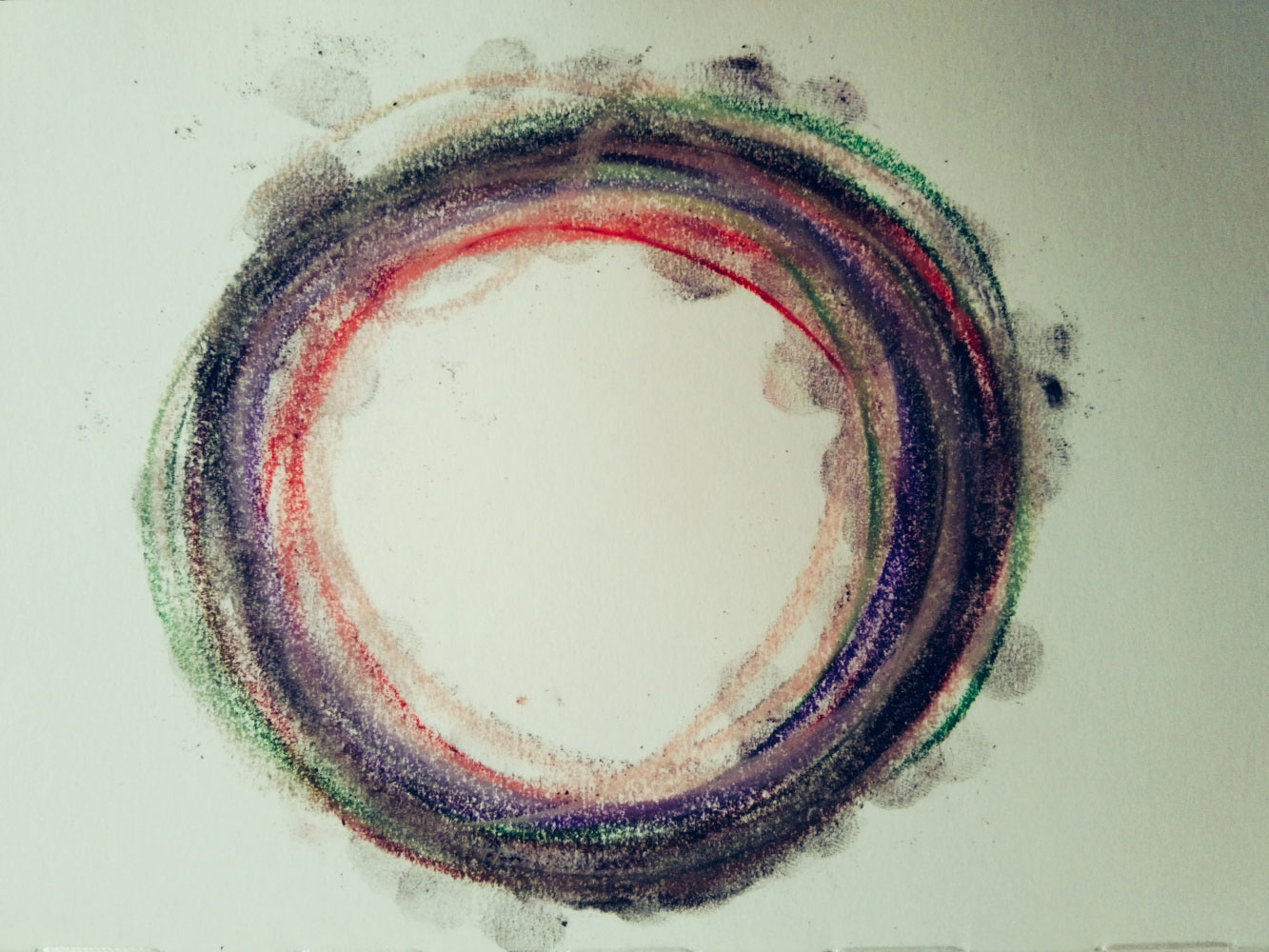
Images drawn and digitally manipulated by Eugenio Tisselli.
First Part (which could easily be the second, or the third)
On February 2, 2026, the Italian philosopher Giorgio Agamben wrote these brief lines to accompany the West’s sunset:
“As in Naples on New Year’s Eve, throw everything out the window. Then, in the street, gather a few fragments from the street: fragments bring good luck. The new is made from fragments of the old.”1
The vast Western desert is expanding rapidly, and within its devastating hunger stirs the boundless rage of fascism and its machines. The vast white desert threatens to spread across the rest of the planet. It threatens to sow death while pretending to drive it away. Indeed, it already does. That eternal and empty present, blind to death and to memory, is the great curse that the West casts upon the Earth.
Death Without Death: Endless Death.
“The word West, with which we define our culture, derives etymologically from the verb cadere (to fall) and means, quite literally, that which falls, that which never ceases to fall. The terms chance (from the Latin casus) and casualty are also related to this verb. That which never ceases to fall, fade into dusk (occasus in Latin means “sunset” or “decline”) is therefore also at the mercy of chance, of unceasing contingency. It is therefore no surprise that today the government of men and things takes the form of intervention protocols, regardless of particular outcomes, in a world conceived as available and calculable precisely because it is random. The West exists and governs itself only in the time of its own end and its relentless fall and, like its God, is forever dying. Yet this is precisely where its strength lies: a death that never ceases is truly without end; it is an infinite transience, an infinite contingency that presents itself as unstoppable.”
“A strategy that seeks to confront this perpetual decline must find within it a breach or interruption through which the West loses its continuity and finally collapses. This abyssal interruption is memory. The West, being random and fleeting, has no memory of itself; it knows no opening or space in which something like remembrance might emerge, even momentarily. Certainly, it can construct—as it does—archives and records in order to continuously organize the events (the cases) of its history, but it lacks the capacity to truly experience a past, to open itself to something that might rupture the uniform fabric of its representations. Anamnesis, memory, by contrast, takes the form of an interstice where decline (chance) comes to a halt for an instant, allowing a heterogeneous and unrepresentable past to appear as though it had never existed. “O past, abyss of thought” (Schelling): only a thought willing to descend resolutely into this abyss can lead the West, once and for all, to its end.”2
Second Part (which could just as easily be the first, or the third)
w, information warfare, counter-information warfare, counter–anti-disinformation operations, cognitive warfare, psychological warfare, psychological operations, psycho-affective hacking, military disinformation support operations, perception management, emotion management, algorithmic manipulation of public affect, influence operations, strategic communications, classified communications, strategic declassification, narrative warfare, narrative guerrilla wars, narrative engineering, algorithmic narrativity, generative text, narrative control, narrative manipulation, automated discourse generation, propaganda, subliminal propaganda, computational propaganda, algorithmic propaganda, political warfare, algorithmic politics, algorithmic ideology, algorithmic guerrilla, memetic guerrilla, memetic flooding, the proliferation of algorithmic paradoxes, fractalization, culture war, semiotic warfare, neural deprogramming, neural reprogramming, symbolic guerrilla, manipulation of the information environment, operations in the cognitive domain, behavior influence operations, data integration, surveillance, operational intelligence, opinion engineering, dissent engineering, memory engineering, erasure, erasure, erasure, false memory implantation, vulnerability exploitation, public diplomacy operations, damage control, strategic persuasion, isolation of dissent, disinformation, malinformation, post-truth, dynamic deterrence measures, real-time monitoring, tracking, datafication, cognitive extractivism, semantic extractivism, neuroextractivism, neurohacking, neural computing, noosphere, infosphere, activation, deactivation, reactivation, distraction operations, mass deterrence operations, military deterrence, operational security, cybersecurity, cryptographic operations, anti-cryptographic operations, intelligence, counterintelligence, dis-intelligence, mass idiotization, strategic interference, induced stupefaction, emission of contradictory signals, emission of false signals, information hacking, covert deterrence tactics, information denial, information concealment, shadowbanning, doxxing, coercion, cooperation, narrative suppression, reputation smear networks of influence, social assassination campaigns, narrative assassination campaigns, cancellation, destruction of reputation, destruction of memory, targeted distraction, normalization of cynicism, normalization of anxiety, hypernormalization, psychological manipulation, social engineering, rumor propagation, rewriting of history, distortion of the event horizon, glitching, rumor warfare, narrative seeding, narrative amplification, rumor networks, false rumors, true rumors, media manipulation, induced perplexity, induced powerlessness, erasure of the self, erasure of the we, erasure of erasure, memory lapses, induced amnesia, engineering of amnesia, induction of collective amnesia, media framing operations, agenda-setting operations, perception hacking, hidden agendas, ulterior motives, attention guerrillas, attention competitions, acceleration of the semiosphere, neurosis, psychosis, paranoia, schizophrenia, induced neurodivergence, induction of social rage, media pacification of social rage, engineering of outrage, engineering of polarization, fear management, erosion of trust, induction of autistic behaviors, false autism, false dichotomies, algorithmic correlations, engineering of confusion, institutional delegitimization campaigns, engineering of powerlessness, wars of legitimacy, cognitive overload operations, information flooding, distraction campaigns, bombardments, manipulation of knowledge, manipulation of information, manipulation of data, biased representations, epistemic capture, epistemic sabotage, ontological guerrilla, ridicule campaigns, public shaming campaigns, leaks, jamming, falsely labeled content, unlabeled content, content overload, algorithmically generated content, misleading content, content that is neither true nor false, disruption of discourse, fragmentation of discourse, delegitimization of truth, suppression of truth-value, mass publication of generated texts, belief-engineering campaigns, perception-engineering campaigns, worldview-engineering campaigns, panic, propagation of ideologies, de-ideologization, selective delegitimization of ideologies, political delegitimization campaigns, manipulation of cultural narratives, propagation of computational functionalism, sowing doubt, incitement to hatred, mythopoetic operations, storytelling, storytelling guerrillas, narrative de-framings, narrative re-framings, hijackings of discourse, counter-narrative developments, false-flag operations, algorithmic image generation, strategic indeterminacy, counter-propaganda, delegitimization of counter-propaganda, public statements, leaked recordings, militarization of storytelling, militarized symbolic engineering, counter-influence operations, counter-disinformation, anti-counter-disinformation, media literacy campaigns, sabotage of media literacy campaigns, cognitive resilience operations, neuroresilience, opinion inoculation, physiological inoculation, campaigns to lie, campaigns to debunk, campaigns to pre-bunk, post-campaigns, reputation defense operations, psychological inoculation, engineering of collective forgetting, desensitization, noise engineering, psychological noise, informational noise, silence, media silence, manipulation of social networks, bot campaigns, bot networks, dark networks, algorithmic manipulation, algorithmic amplification campaigns, algorithmic attenuation campaigns, virality, engineering of virality, politicization, depoliticization, erosion, astroturfing, gaslighting, networks of intelligent agents, overflow of algorithmic agency, regulations, deregulations, autonomous operations, personification, indeterminability, management of false persons, identity impersonation campaigns, attacks, troll farms, coordinated behaviors, deviations, false organizations, engineering of social causes, engineering of events, engineering of numbness, narrative swarms, meme propagation, monetization of dissent, monetization of outrage, crypto-monetization of engagement, engagement farming, aura farming, search engine optimization, infiltration of deceptive advertising, infiltration of propaganda, outcome engineering, digital reputation management, virtue signaling, hashtag guerrilla, memetic saturation campaigns, trend manipulation, trend engineering, search engine poisoning, data poisoning, community infiltration operations, forum manipulation, comment guerrillas, opinion guerrillas, disconnection, narrative feedback loops, engineering of social bubbles, strategic abuse of recommendation systems, filter poisoning, manipulation of digital governance, synthetic propaganda, algorithmic opinions, algorithmization of collective memory, algorithmization of individual memory, deepfakes, manipulation of training data, erasure, erasure, erasure, eras, eras, e,
Third Part (which could easily be the first, or the second)
By what impossibly thin thread does memory hang? And what are the dimensions of that which is lost when the thread breaks?
When my mother left us, a world left with her as well—a life of memories. An immensity of recollections. Years earlier, a degenerative illness had begun eroding the surface of her brain, slowly gnawing its way inward. First came the forgetfulness and the moments of confusion. Then came the silence, the stillness, and finally death. Her time and her voice departed from us: the delicate mist from which the thread of her memory hung.
Memories: the thread that weaves together the heart and the world. Recollections: the thread that binds the mind to the world.
With my mother’s silence came paralysis. Her body ceased to walk, to grasp, to embrace. Her presence and movement in the world, and her memory, faded away together.
What I mean is that body and memory, embrace and voice, legs and brain, are not separate things that one might study as if taking apart a clock to examine its components. Memory is embodied; memories are movement; the voice is the embrace. The hand that squeezes, the eye that suddenly fills with tears, the mouth that smiles and finally laughs. That is what memory is made of.
What is lost when memory disappears, when it falls from the thread that sustains it, are many other memories as well. Mine among them. There are so many things I do not remember, and that perhaps I might have known had I asked my mother. Now I never will. I will never know the true extent of what I have lost.
The threads that bind memory, body, and bodies together are made of flesh and of the invisible substance of words, of images. They are made of sensations, of an ineffable material sustained by breath and sunlight. This is how we are intertwined and weave ourselves together through remembrance. This is how we remain alive.
Some cognitive scientists call this entanglement embodied cognition. Cognition—that process through which we grasp the world and render it intelligible—takes place throughout the body, and within the atmosphere that surrounds it and brings it into relation with other bodies.
Some scientists say that the roots of what we call consciousness lie in the sensations of the body. Consciousness emerges in living beings: in that which feels hunger, in that which sleeps and wakes, in that which, with or without fear, resists death and yet, in the end, lets itself go. I say this, too, because I lived it. I accompanied my mother through the slow erasure of her bodymind. No one needs to explain any of this to me anymore.
Consciousness pulses within bodies that remember and recollect, within selves that give meaning and significance to what has already been lived. This is why the digital simulacra of living intelligence are merely metaphors. They are deceptions that lure us into the trap of language, leading us to believe that a machine—with neither body nor sensations nor life, but only an immense repository of words—can possess intelligence.
One of the most harmful applications3 of so-called artificial intelligence is the simulation of people who have died. The technology does not yet exist as a commercial product, but it will. It would work something like this: an algorithm gathers the digital traces those individuals left online during their lifetimes—texts, images, voice recordings, and videos (my mother left me only an invisible embrace, one that cannot be digitized). Other algorithms extract words and expressions, while still others analyze the patterns and styles embedded in the collected data. Finally, the application spews the processed material back into social networks in the form of disjointed fragments, fragments that collide with our irrepressible tendency to perceive patterns and presences in everything we read and encounter. This is how a sophisticated logical-mathematical operation leads us into deception when we believe we recognize the voice of the deceased in posts that impersonate them after death.
But the thread must break, the photograph must gradually lose its colors, fade, and those of us who remain alive must learn to let go. Painful though it may be, letting go is perhaps the deepest lesson we can receive during our time in the world. Those who cling to their dead out of fear of that pain, and set machines of impersonation in motion so as not to feel it, will, in doing so, renounce that which makes life worth living.
May the memory of our dead remain alive in bodies and in the earth, in its beautiful imprecision. And not in data centers.
I write this from a place of loss, pain, and rage. Loss and pain are slowly turning into a mist of tenderness and remembrance. But the rage—the rage rises through my body when I see how voracious technology companies turn absence and memory into commodities. Infinite rage. They do not even deserve to be called vultures. They are automatons without strings, memoryless machines that lost their heart somewhere in the vast western desert.