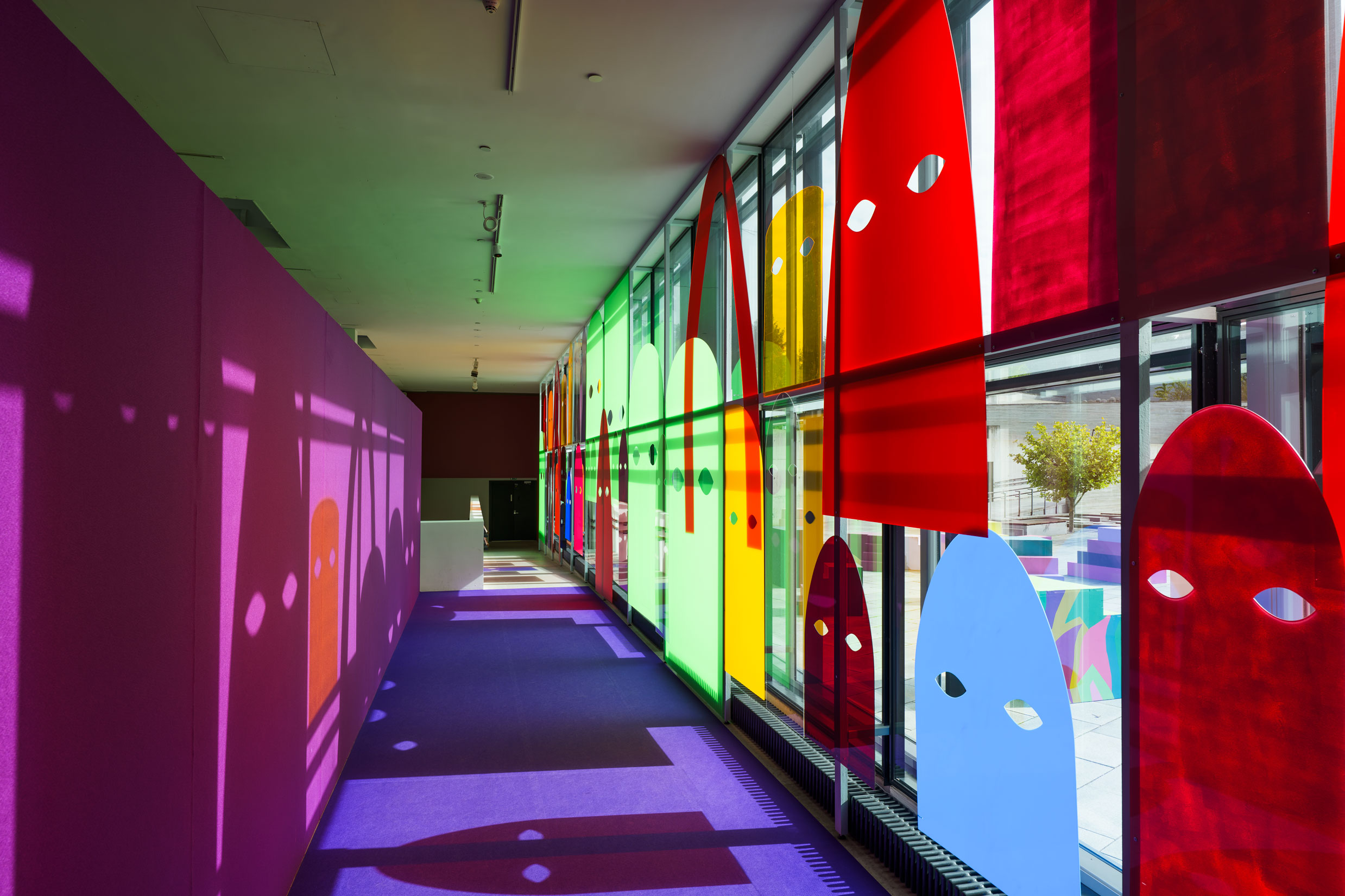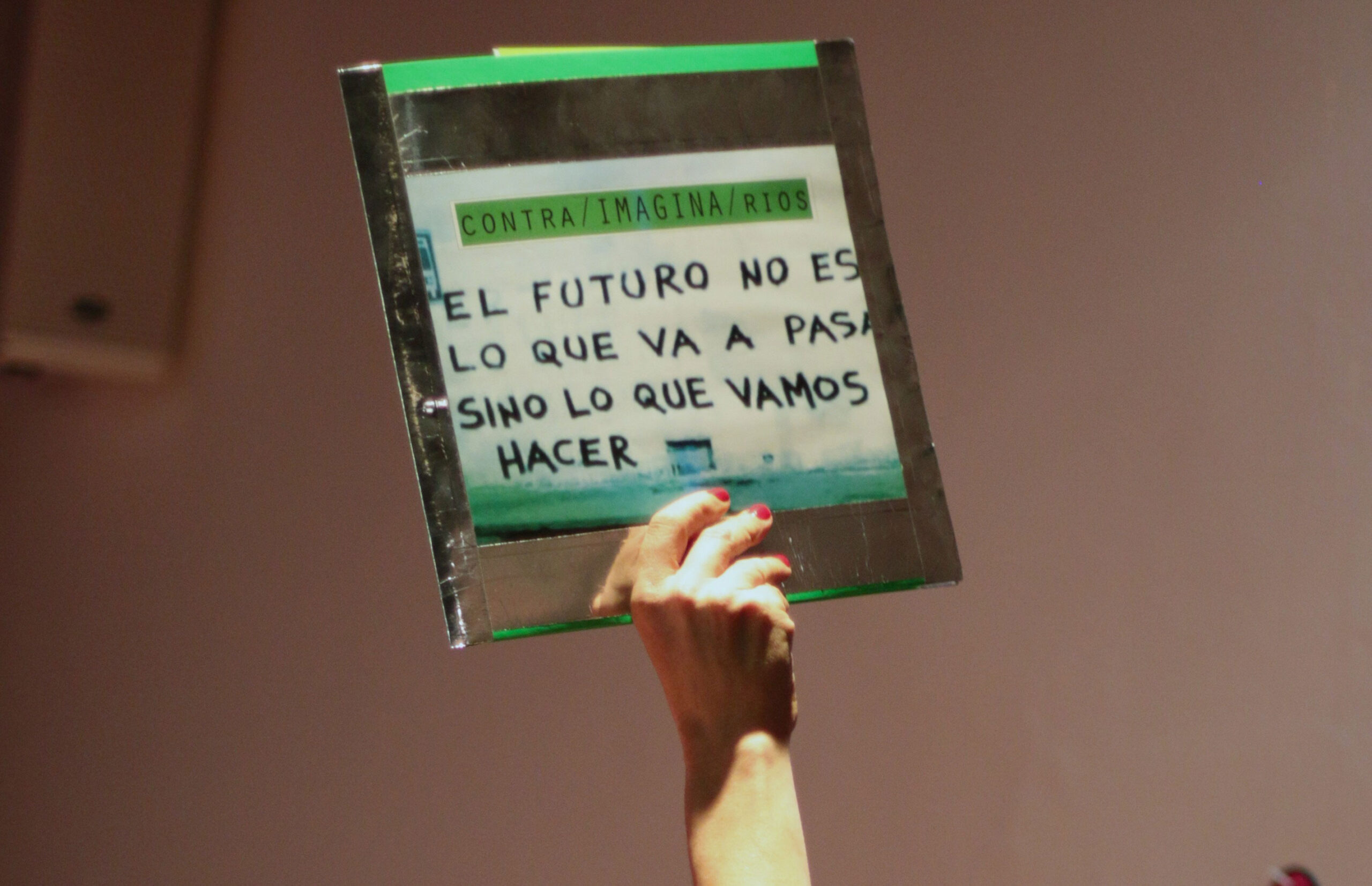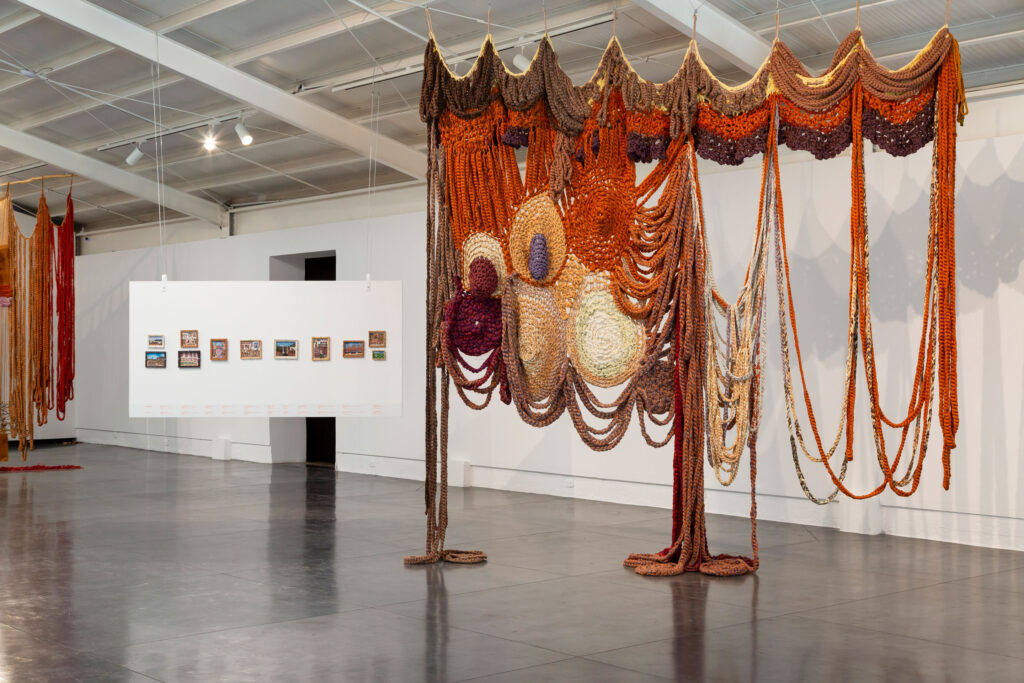
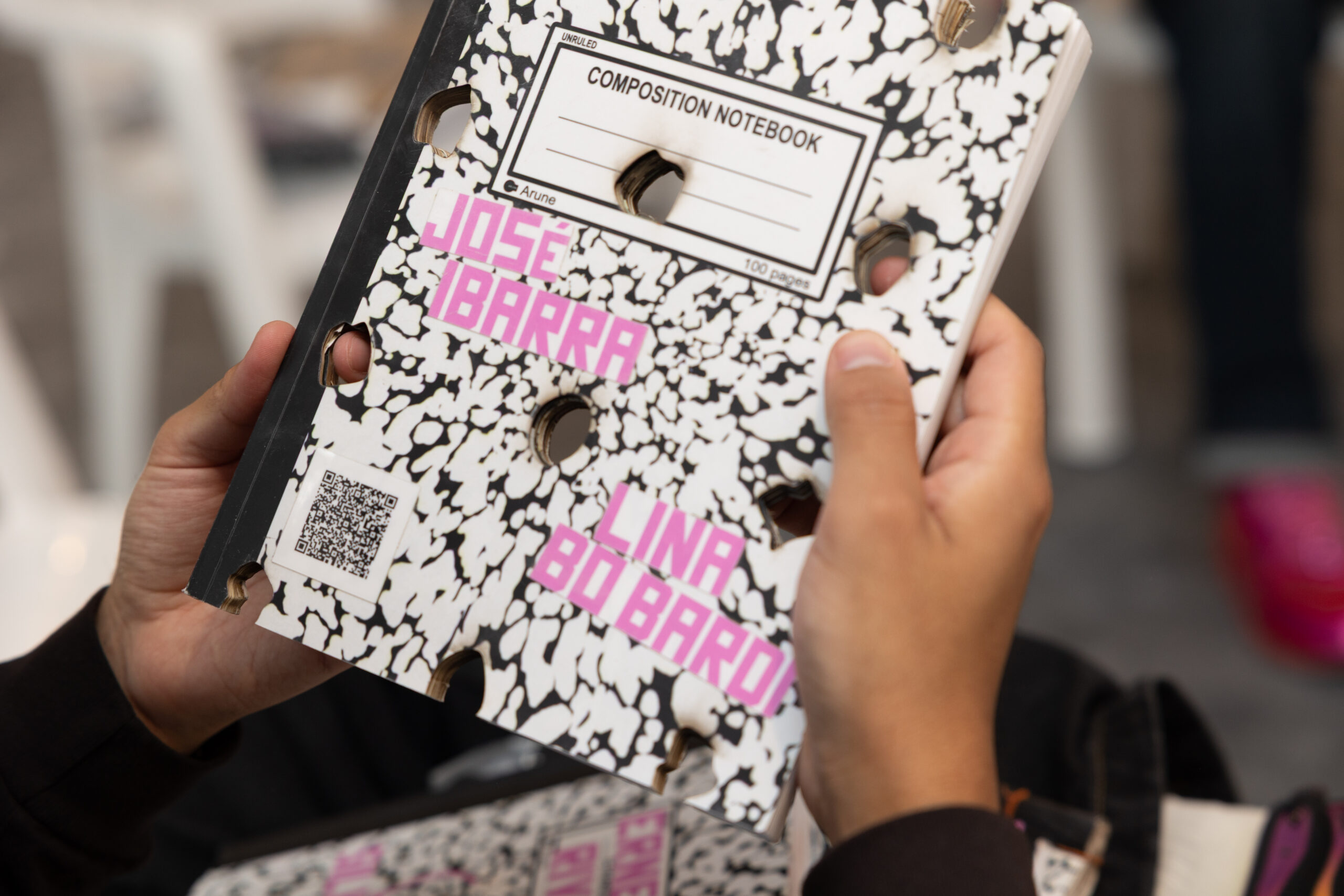
Maya Juracán challenges traditional educational models through LA ESCUELA_, a collective and decolonial platform that proposes other ways of understanding education. Here, art and education function as practices of resistance, care, autonomy, and transformation, bringing together community-based, territorial, and situated forms of knowledge to generate new forms of collaboration and collective knowledge production.
What are schools for? According to Gustavo Esteva, schools are a systematization of violence and control within society. This can be understood through their origins in Western traditions, where their initial purpose was not to provide students with a broad processes of learning and knowledge, but rather to impose a single worldview—the one that was considered the “correct” ona.
Thus, Esteva argues, we came to believe in the capitalist fiction of schooling: the idea that the more institutionalized or professionalized education one receives—understanding a “professional” solely as someone trained at a prestigious institution and validated by nation-states—the greater one’s chances of succeeding in prestigious and socially recognized spaces.
Positioning myself from a space that is only loosely institutionalized, and seeking to challenge the white myth of schooling, I ask: What are schools for? What might a school look like if it were conceived according to our own standards?
These questions mark the beginning of Miguel Braceli’s artistic project, which would later become LA ESCUELA___: a proposal that sought to challenge dominant models of arts education in the United States, particularly those designed for a Latin American subject. Why do we assume that all education should look the same? Is education a universal process, or a systematized form of whitened knowledge?
It is from this position that LA ESCUELA ___ emerges: a space grounded in questions. It also required acknowledging that there was no absolute understanding of what a school is. Through the idea of the “naked school”—a school without walls, born in and for the street—a different vision of education began to emerge.
By engaging with traditional educational protocols while pushing them to their limits, LA ESCUELA___ proposes a collective, decolonial, and non-hierarchical approach to learning, free from rigid structures.
This led to the inclusion of artist-pedagogical research projects focused on Latin America, fostering spaces of exchange among thinkers and makers engaged with education through art. The initiative emerged with the intention of building bridges between different regions—as Miguel puts it—but also of opening pathways into “ravines”: spaces where those involved can immerse themselves in diverse practices of learning, work toward deprofessionalizing structures of knowledge, and cultivate collective forms of knowing.
LA ESCUELA___ began as an artistic project, but it evolved into a community. This gives rise to another question: what does it mean to develop an artistic project as part of a community, rather than for one?
In fact, it is a question many artists and thinkers ask without realizing that, in doing so, they position themselves as outsiders to the very communities they seek to engage. In LA ESCUELA___, by contrast, the premise was that one already belonged to a community; what was being built was a platform.
In this way, the project began to develop situated pedagogical and artistic practices. It does not emerge from the logic of traditional institutions—whether museums or cultural organizations—but from a way of thinking through art itself. For that reason, it both disrupts established protocols and playfully engages with them.
Miguel argues that one of the project’s aims was to reconfigure roles: participants are referred to as “professors,” regardless of the extent of their contribution or the form their collaboration takes across different levels of engagement. Case studies are incorporated, and conventional hierarchies of knowledge are subverted. In this sense, LA ESCUELA___ reimagines education according to an artistic logic rather than an institutional one.
LA ESCUELA___ also reconfigures schooled, institutionalized, and whitened conceptions of art. It proposes its own field of knowledge, grounded in the subjects, spaces, and conversations that already exist—in other words, in a living theory and a living memory.
To date, LA ESCUELA___ has brought together more than 331 texts in a publicly accessible library, while also producing 31 documentary processes and interviews with people from different regions of Latin America: artists, thinkers, community organizers, activists, curators, cultural managers, historians, and advocates.
In doing so, LA ESCUELA___ has become a space of critical exchange and multiple ways of thinking. It resists the academic urge to classify and define knowledge endlessly—as though one might eventually uncover a single “gold nugget” of truth. Instead, it activates learning as an ongoing process, broadening the category of “professor” to encompass anyone with something to share, teach, or contribute.
For LA ESCUELA___, situated community practices hold the same value as historical analysis. Both forms of knowledge can intersect, be collectively shared, and acquire new meanings when approached from other positions and places.
The Community
Rooted in principles of autonomy and freedom, LA ESCUELA___ operates outside traditional structures of institutional power. It is shaped through self-managed initiatives led by artists responding to the realities of their own communities and contexts.
There is a common claim that Latin America creates “from crisis.” What this narrative often misses, however, is that we create in spite of crisis.
At a time when institutional recognition is often treated as a prerequisite for artistic legitimacy and international relevance, LA ESCUELA___ invests in collective forms of construction and exchange. In doing so, it sustains a network of individuals who have turned to art as a means of seeking dignity, meaning, and social transformation.
Who Inhabits LA ESCUELA___?
We are many, and we are everyone: those who have developed independent projects with a community impact; those who have built living theories grounded in territorial forms of knowledge; those who have found new ways of telling stories after realizing that a singular vision of art is no longer enough.
In recent years, these processes have grown and multiplied through independent sessions, conversations, talks, and symposia. One such gathering brought together more than 112 projects from across Latin America, creating opportunities for the exchange of situated experiences and the collective production of knowledge.
More than 5,000 participants have taken part in this process, alongside over 50 collaborating institutions. The network has expanded through 35 classrooms across Venezuela, Colombia, Chile, Argentina, Mexico, Guatemala, Ecuador, Bolivia, Peru, Paraguay, Costa Rica, Brazil, and the United States, as well as through 25 online worksops, 11 residency programs, and 26 auditorium conferences.
LA ESCUELA___ emerges as a platform through which artists and cultural agents can construct their own forms of validation beyond traditional structures. It is a space that generates its own protocols, asserting its place within the field of art through autonomy, collectivity, and situated experience.
Why Is a School Relevant to Curatorial Practice?
Within the field of Latin American art, LA ESCUELA___ has become a vital space. In particular, it is helping to shape curatorial approaches that move away from Western models and the logics of traditional systems of legitimization. Rather than reproducing established structures, it creates diffuse, mobile, and situated conditions for decentralized forms of learning to emerge.
Meanwhile, in the West, hegemonic power hierarchies continue to define the colonial and political status of the curator, reinforcing figures of individual authority.
In contrast, other spaces are fostering different possibilities: systems grounded in collective care, and in relationships to land, territory, and Within these frameworks, the curator is no longer positioned as an authority who confers legitimacy, but as a member of the community itself.
Education as Resistance
Miguel argues that education is, in itself, an act of resistance. Learning constitutes a space of emancipation.
From this perspective, education as resistance involves creating one’s own models of learning, often at the margins of established institutions. Art has played a fundamental role in imagining educational possibilities that move beyond conventional structures.
This became evident in LA ESCUELA___’s recent exhibition at the MoMA PS1, where its epistemologies were translated into the museum space through maps, blackboards, and embodied practices.
Although the museum is a highly structured institution, it was able to open itself to the ethos of LA ESCUELA _, allowing its boundaries to expand. A horizontal blackboard placed on the floor transformed visitors’ relationship to the space: it invited participation, activated the body, and disrupted the museum’s traditional verticality.
The reading club, meanwhile, offered an opportunity to revisit texts and collectively reinterpret them, generating new connections, meanings, and shared forms of learning.
Non-Structure
LA ESCUELA___ does not adhere to a singular perspective or a closed vision. It is built through openness: it receives, allows itself to be affected, and transforms with every collaboration.
This entails a constant pedagogical movement, one that resonates with traditions of popular education. Far from operating through a rigid epistemology, it functions as a connector between theories and lived realities, dismantling the notion of the “object of study” as something external to those who engage with it.
Its thematic axes are not predetermined; rather, they emerge from the community itself. In this way, participants are not executors of someone else’s idea, but co-creators of the project.
It is not a space for hanging artworks, but a place for activating reality.
Here, learning emerges from lived experience itself—not from observation at a distance, but from a collective form of knowing that is social, embodied, and deeply powerful.
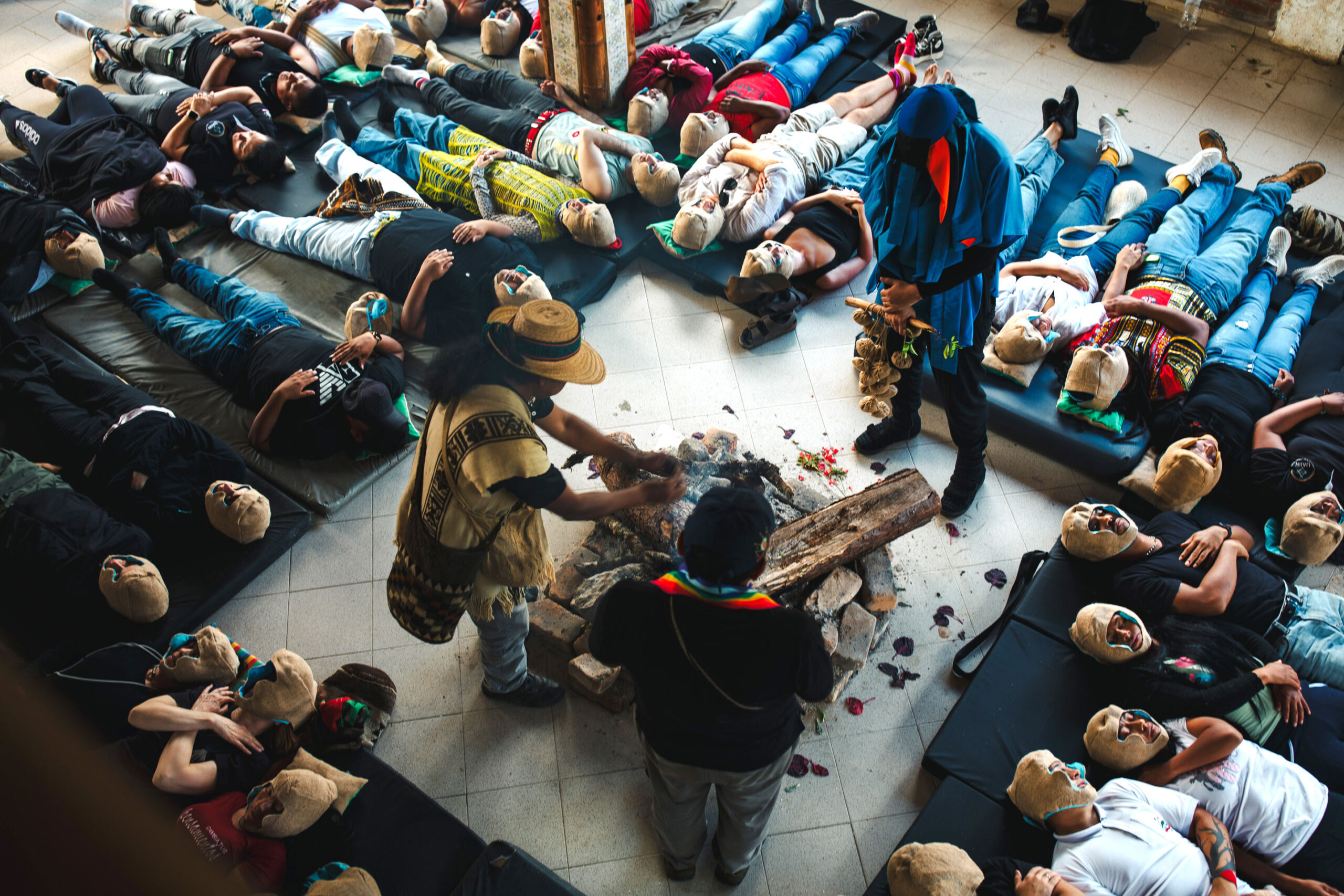
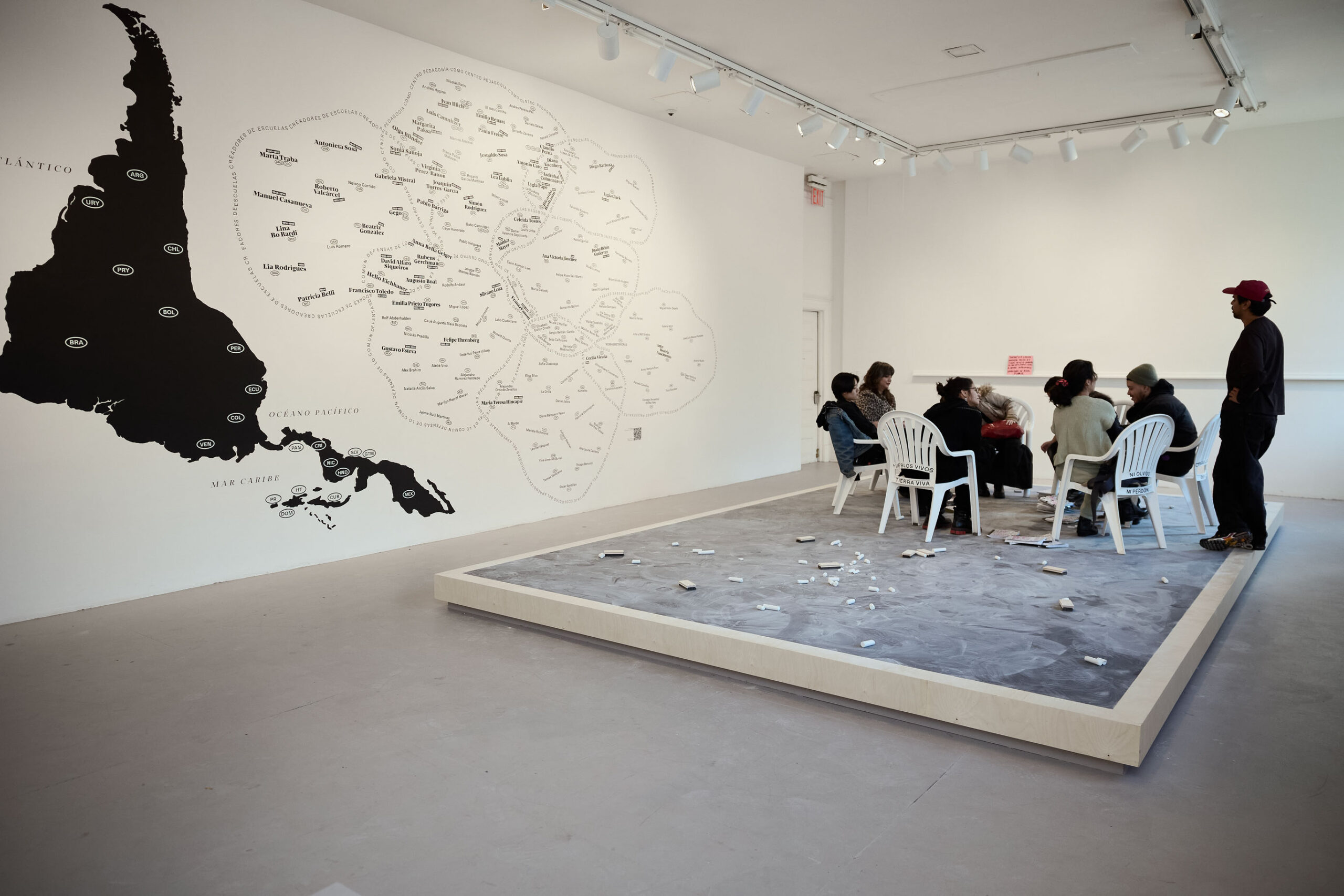
LA ESCUELA_: Education as Resistance, MoMA PS1, Nueva York, 2025–2026. Courtesy LA ESCUELA_.
What are schools for? According to Gustavo Esteva, schools are a systematization of violence and control within society. This can be understood through their origins in Western traditions, where their initial purpose was not to provide students with a broad processes of learning and knowledge, but rather to impose a single worldview—the one that was considered the “correct” ona.
Thus, Esteva argues, we came to believe in the capitalist fiction of schooling: the idea that the more institutionalized or professionalized education one receives—understanding a “professional” solely as someone trained at a prestigious institution and validated by nation-states—the greater one’s chances of succeeding in prestigious and socially recognized spaces.
Positioning myself from a space that is only loosely institutionalized, and seeking to challenge the white myth of schooling, I ask: What are schools for? What might a school look like if it were conceived according to our own standards?
These questions mark the beginning of Miguel Braceli’s artistic project, which would later become LA ESCUELA___: a proposal that sought to challenge dominant models of arts education in the United States, particularly those designed for a Latin American subject. Why do we assume that all education should look the same? Is education a universal process, or a systematized form of whitened knowledge?
It is from this position that LA ESCUELA ___ emerges: a space grounded in questions. It also required acknowledging that there was no absolute understanding of what a school is. Through the idea of the “naked school”—a school without walls, born in and for the street—a different vision of education began to emerge.
By engaging with traditional educational protocols while pushing them to their limits, LA ESCUELA___ proposes a collective, decolonial, and non-hierarchical approach to learning, free from rigid structures.
This led to the inclusion of artist-pedagogical research projects focused on Latin America, fostering spaces of exchange among thinkers and makers engaged with education through art. The initiative emerged with the intention of building bridges between different regions—as Miguel puts it—but also of opening pathways into “ravines”: spaces where those involved can immerse themselves in diverse practices of learning, work toward deprofessionalizing structures of knowledge, and cultivate collective forms of knowing.
LA ESCUELA___ began as an artistic project, but it evolved into a community. This gives rise to another question: what does it mean to develop an artistic project as part of a community, rather than for one?
In fact, it is a question many artists and thinkers ask without realizing that, in doing so, they position themselves as outsiders to the very communities they seek to engage. In LA ESCUELA___, by contrast, the premise was that one already belonged to a community; what was being built was a platform.
In this way, the project began to develop situated pedagogical and artistic practices. It does not emerge from the logic of traditional institutions—whether museums or cultural organizations—but from a way of thinking through art itself. For that reason, it both disrupts established protocols and playfully engages with them.
Miguel argues that one of the project’s aims was to reconfigure roles: participants are referred to as “professors,” regardless of the extent of their contribution or the form their collaboration takes across different levels of engagement. Case studies are incorporated, and conventional hierarchies of knowledge are subverted. In this sense, LA ESCUELA___ reimagines education according to an artistic logic rather than an institutional one.
LA ESCUELA___ also reconfigures schooled, institutionalized, and whitened conceptions of art. It proposes its own field of knowledge, grounded in the subjects, spaces, and conversations that already exist—in other words, in a living theory and a living memory.
To date, LA ESCUELA___ has brought together more than 331 texts in a publicly accessible library, while also producing 31 documentary processes and interviews with people from different regions of Latin America: artists, thinkers, community organizers, activists, curators, cultural managers, historians, and advocates.
In doing so, LA ESCUELA___ has become a space of critical exchange and multiple ways of thinking. It resists the academic urge to classify and define knowledge endlessly—as though one might eventually uncover a single “gold nugget” of truth. Instead, it activates learning as an ongoing process, broadening the category of “professor” to encompass anyone with something to share, teach, or contribute.
For LA ESCUELA___, situated community practices hold the same value as historical analysis. Both forms of knowledge can intersect, be collectively shared, and acquire new meanings when approached from other positions and places.
The Community
Rooted in principles of autonomy and freedom, LA ESCUELA___ operates outside traditional structures of institutional power. It is shaped through self-managed initiatives led by artists responding to the realities of their own communities and contexts.
There is a common claim that Latin America creates “from crisis.” What this narrative often misses, however, is that we create in spite of crisis.
At a time when institutional recognition is often treated as a prerequisite for artistic legitimacy and international relevance, LA ESCUELA___ invests in collective forms of construction and exchange. In doing so, it sustains a network of individuals who have turned to art as a means of seeking dignity, meaning, and social transformation.
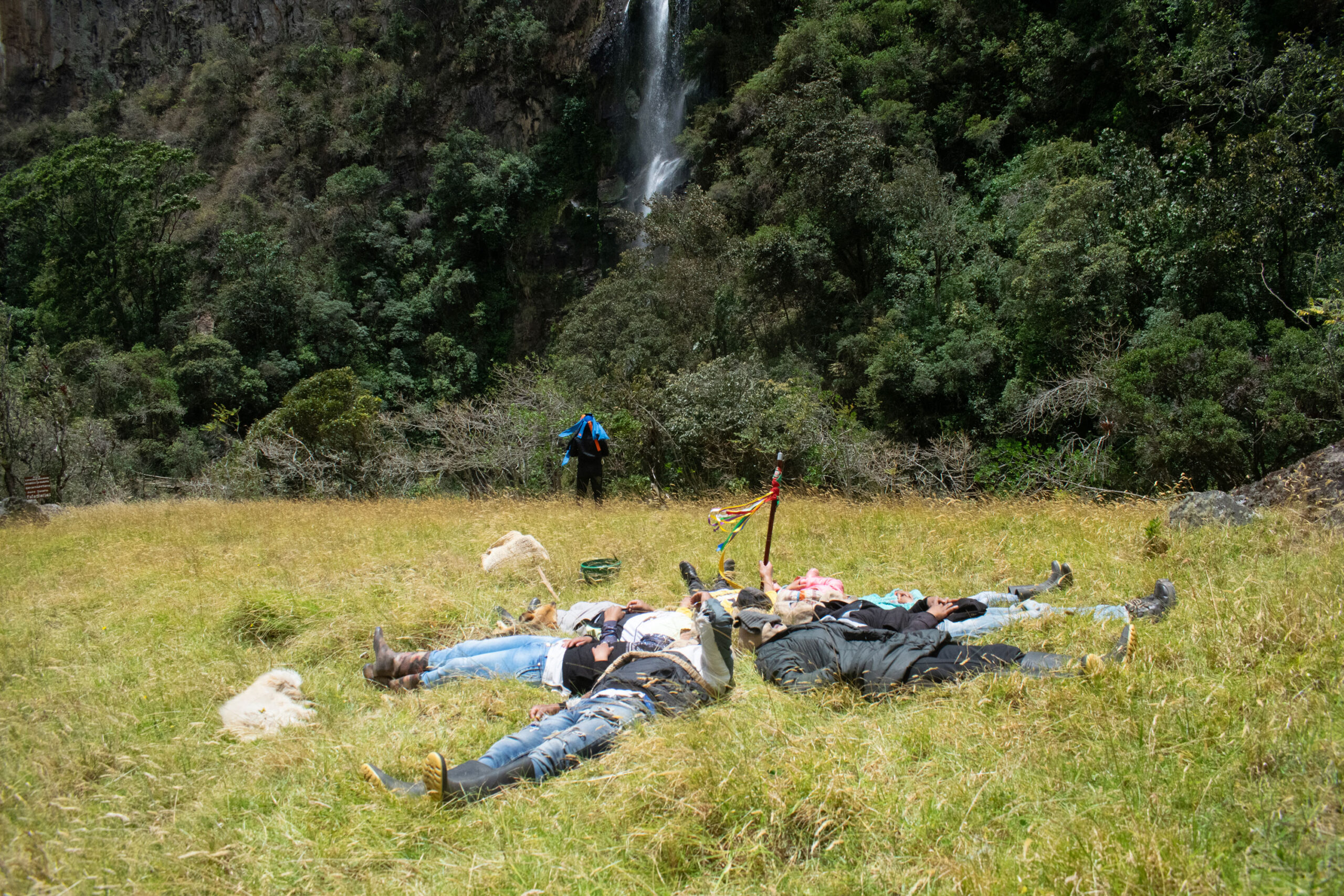
NOMASMETAFORAS: Technologies of Collective Dreaming, Cauca, Colombia, 2024. Activivity from LA ESCUELA_ CLASSROOMS. Documentation: Carlos Campus. Courtesy from Universidad Autónoma Indígena Intercultural UAIIN-C
Who Inhabits LA ESCUELA___?
We are many, and we are everyone: those who have developed independent projects with a community impact; those who have built living theories grounded in territorial forms of knowledge; those who have found new ways of telling stories after realizing that a singular vision of art is no longer enough.
In recent years, these processes have grown and multiplied through independent sessions, conversations, talks, and symposia. One such gathering brought together more than 112 projects from across Latin America, creating opportunities for the exchange of situated experiences and the collective production of knowledge.
More than 5,000 participants have taken part in this process, alongside over 50 collaborating institutions. The network has expanded through 35 classrooms across Venezuela, Colombia, Chile, Argentina, Mexico, Guatemala, Ecuador, Bolivia, Peru, Paraguay, Costa Rica, Brazil, and the United States, as well as through 25 online worksops, 11 residency programs, and 26 auditorium conferences.
LA ESCUELA___ emerges as a platform through which artists and cultural agents can construct their own forms of validation beyond traditional structures. It is a space that generates its own protocols, asserting its place within the field of art through autonomy, collectivity, and situated experience.
LA ESCUELA_: Education as Resistance, MoMA PS1, Nueva York, 2025–2026. Courtesy LA ESCUELA_.
Why Is a School Relevant to Curatorial Practice?
Within the field of Latin American art, LA ESCUELA___ has become a vital space. In particular, it is helping to shape curatorial approaches that move away from Western models and the logics of traditional systems of legitimization. Rather than reproducing established structures, it creates diffuse, mobile, and situated conditions for decentralized forms of learning to emerge.
Meanwhile, in the West, hegemonic power hierarchies continue to define the colonial and political status of the curator, reinforcing figures of individual authority.
In contrast, other spaces are fostering different possibilities: systems grounded in collective care, and in relationships to land, territory, and Within these frameworks, the curator is no longer positioned as an authority who confers legitimacy, but as a member of the community itself.
Education as Resistance
Miguel argues that education is, in itself, an act of resistance. Learning constitutes a space of emancipation.
From this perspective, education as resistance involves creating one’s own models of learning, often at the margins of established institutions. Art has played a fundamental role in imagining educational possibilities that move beyond conventional structures.
This became evident in LA ESCUELA___’s recent exhibition at the MoMA PS1, where its epistemologies were translated into the museum space through maps, blackboards, and embodied practices.
Although the museum is a highly structured institution, it was able to open itself to the ethos of LA ESCUELA _, allowing its boundaries to expand. A horizontal blackboard placed on the floor transformed visitors’ relationship to the space: it invited participation, activated the body, and disrupted the museum’s traditional verticality.
The reading club, meanwhile, offered an opportunity to revisit texts and collectively reinterpret them, generating new connections, meanings, and shared forms of learning.
Non-Structure
LA ESCUELA___ does not adhere to a singular perspective or a closed vision. It is built through openness: it receives, allows itself to be affected, and transforms with every collaboration.
This entails a constant pedagogical movement, one that resonates with traditions of popular education. Far from operating through a rigid epistemology, it functions as a connector between theories and lived realities, dismantling the notion of the “object of study” as something external to those who engage with it.
Its thematic axes are not predetermined; rather, they emerge from the community itself. In this way, participants are not executors of someone else’s idea, but co-creators of the project.
It is not a space for hanging artworks, but a place for activating reality.
Here, learning emerges from lived experience itself—not from observation at a distance, but from a collective form of knowing that is social, embodied, and deeply powerful.
NOMASMETAFORAS: Technologies of Collective Dreaming, Cauca, Colombia, 2024. Activivity from LA ESCUELA_ CLASSROOMS. Documentation: Carlos Campus. Courtesy from Universidad Autónoma Indígena Intercultural UAIIN-C.