When it comes to energy—that force that sets things in motion—I did not need a classroom or a laboratory to understand how it works. I first felt it…
When it comes to energy—that force that sets things in motion—I did not need a classroom or a laboratory to understand how it works. I first felt it as a child, pressing my ear against my grandmother’s chest as I embraced her, listening to the steady rhythm of her heart. I felt it while shelling fresh corn until my fingers and nails began to ache. I felt it every time I sighed because other men sighed too, remembering moments I had never lived. Energy is time. Time is patience. And patience is movement at rest.
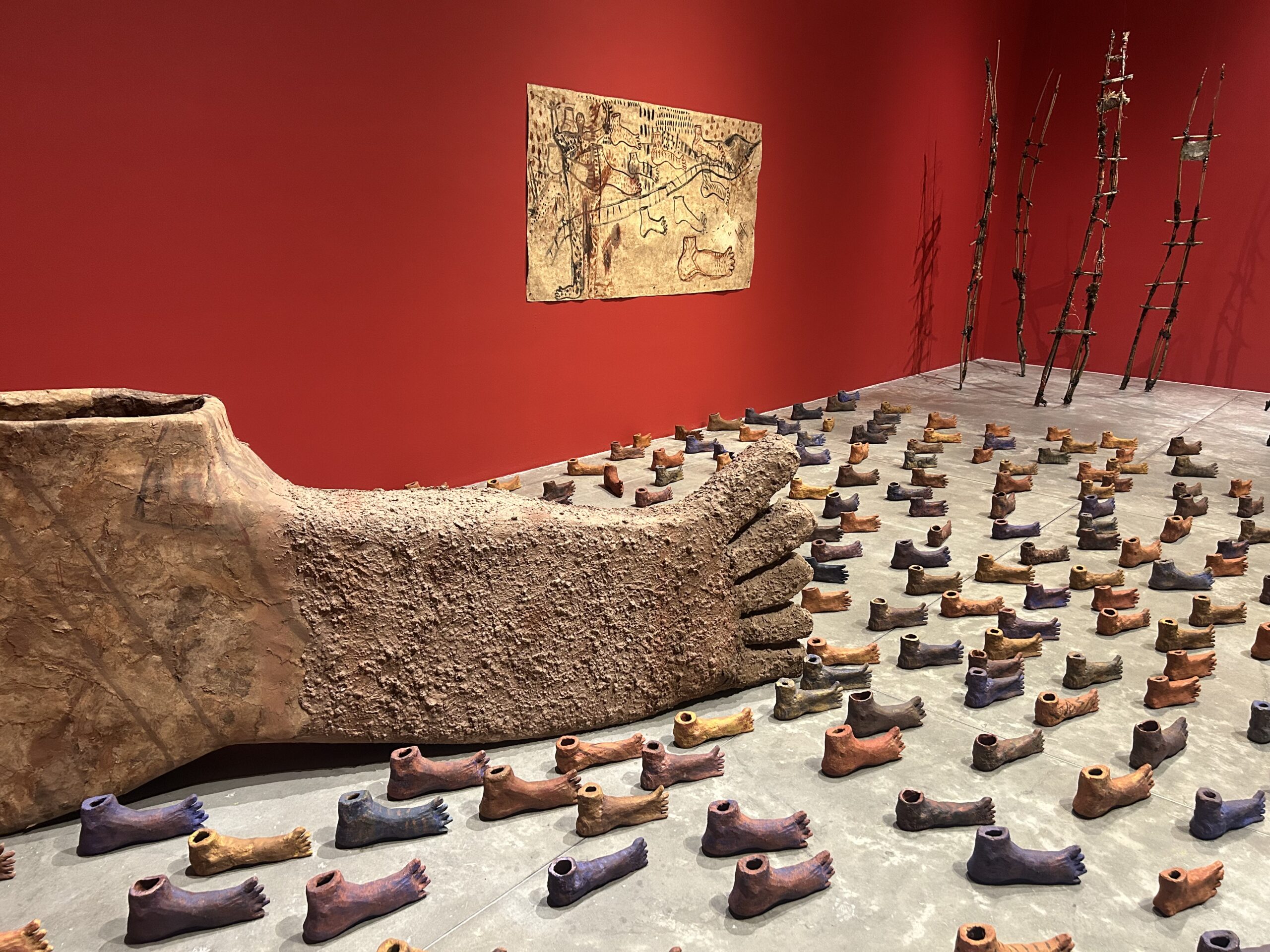
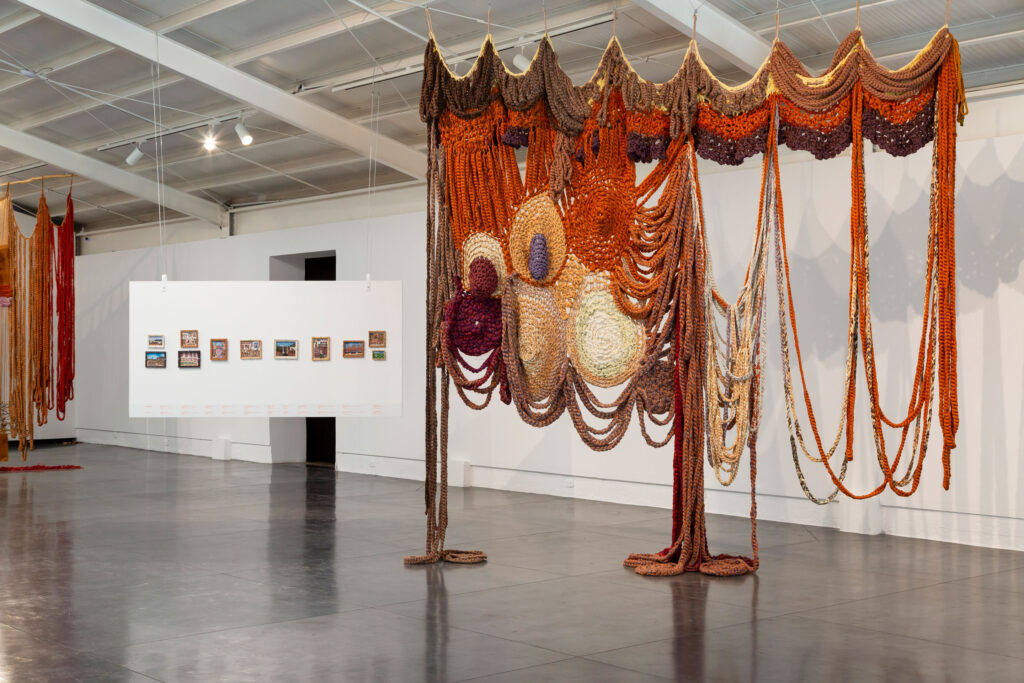
In Xa Jun Ruk’oxomal Qanima – A Shared Heartbeat, this current takes on material and spatial form through the scale of the works and the textile and painterly practices of Rosa Elena Curruchich and Angélica Serech, both from the Kaqchikel community of Chixot, Comalapa. First presented at Museo Universitario del Chopo in Mexico City, curated by Miguel López, the exhibition revealed with astonishing clarity the technical mastery of two Maya women whose practices emerge from forms of collective labor deeply rooted in their community, while eluding the conventions that have long sought to define Indigenous art—if such a category can truly exist. Suspended in space, each work bears witness to fragments of Chixot’s past and recent history: a generational endeavor to build what can only be forged through inheritance—and, fortunately for all of us, through the artists’ shared spirit of defiance.
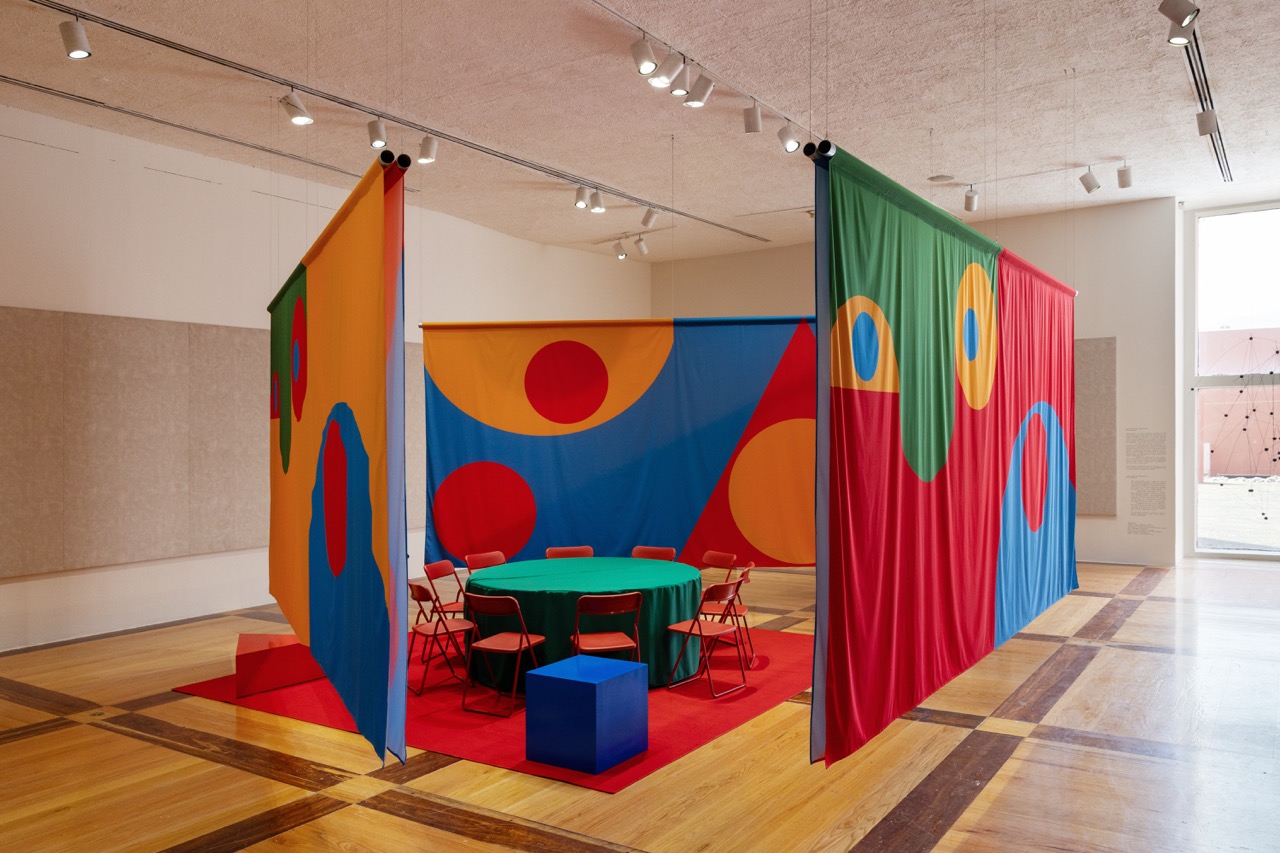
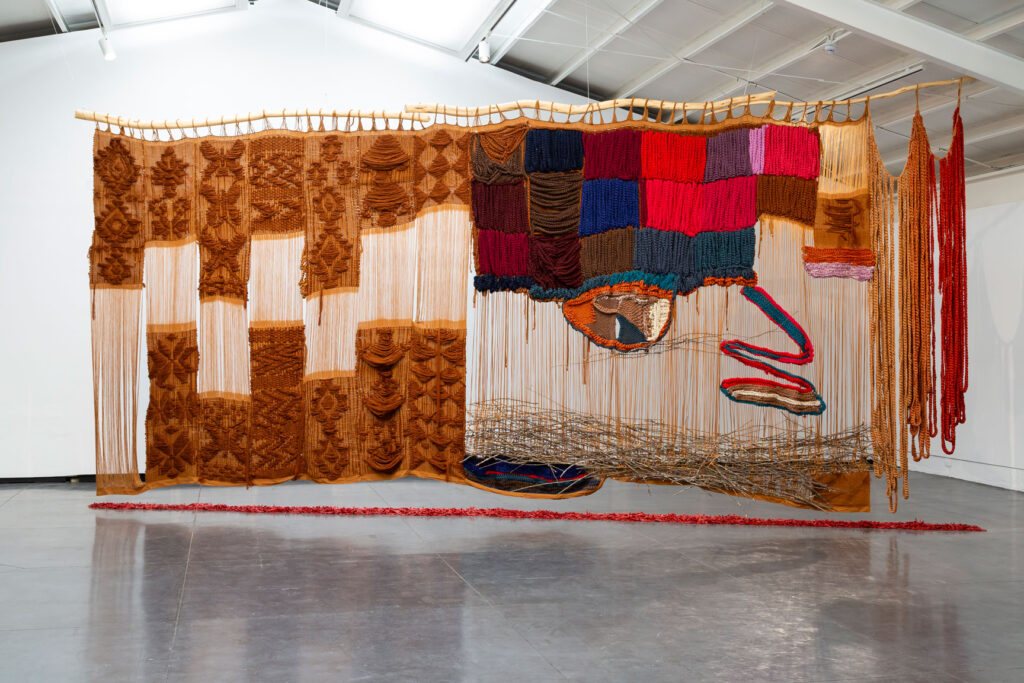
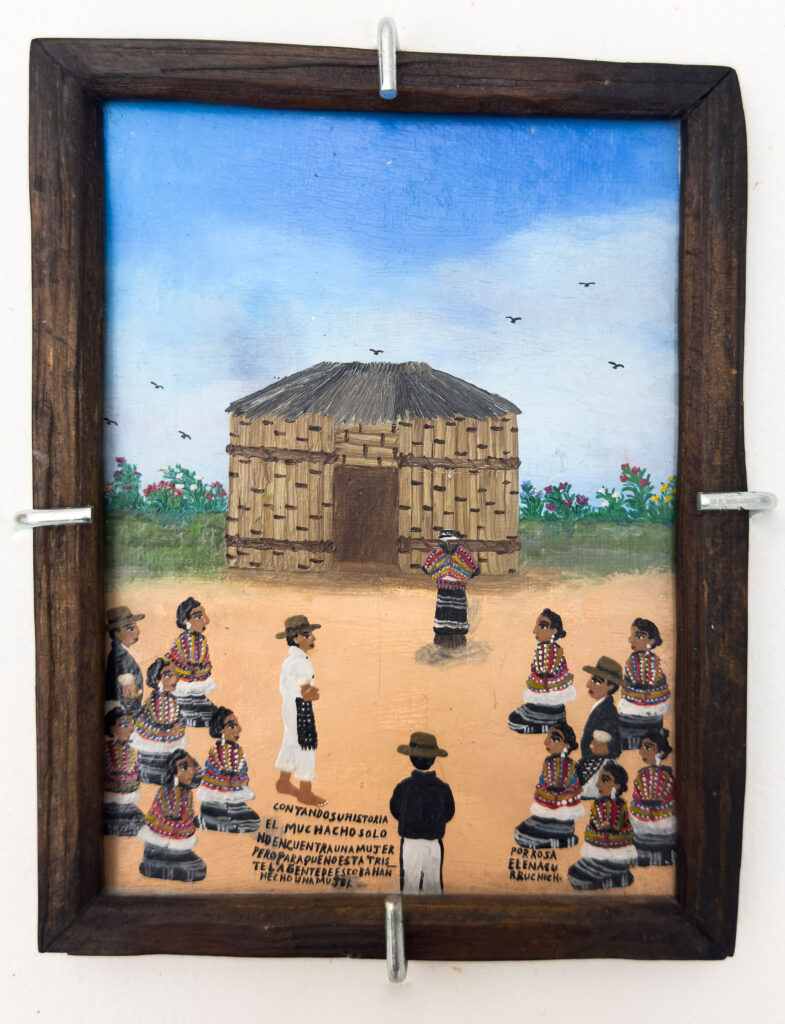
Moving through the exhibition felt like encountering fellow villagers, people from another time who, despite inhabiting a different geography, seemed strangely familiar. It was the colors and woven structures of Angélica Serech’s textiles; the organic materials that support and give shape to her monumental pieces; the embroidered forms that descend to the floor only to rise again—all of which generated an immediate sense of closeness. There were also the countless small windows onto everyday life in Comalapa that unfold throughout Rosa Elena Curruchich’s meticulous paintings. Through them, she depicts fields, ceremonies, childhood mischief, and natural disasters that shaped both her own life and the social fabric of her community.
Making their hearts beat in unison, they returned
The Rab’inaleb came, the Sotz’ileb came, the Tuquche’eb came, the Tujalajay came, the Wuchab’ajay came, the Ch’umilajay came; the Lamaq’i’s came, the Kumätz came… and then we came, the Kaqchikel people.
Last February 28, this exhibition opened at La Nueva Fábrica, a contemporary art space in Antigua Guatemala. Overseen with great care by Ilaria Conti, the installation reprises the original exhibition design. Yet something shifts, transforming the gallery itself; here, context is no longer absent.
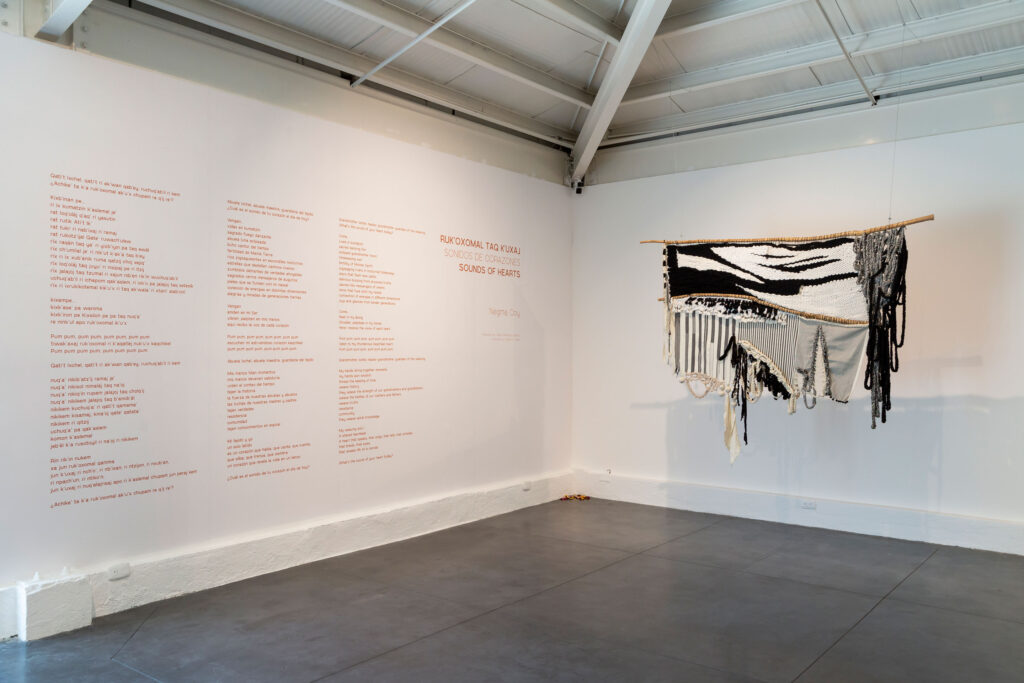
Visitors are first welcomed by Negma Coy’s poem Ruk’oxomal taq K’uxaj, an homage to Grandmother Ixchel, from which the exhibition takes its title. The poem deepens the experience of the works, framing them as part of a communal architecture whose sensibility extends both within and beyond the walls. New works have also been added, expanding the artists’ visual worlds, while at the back of the space a documentary is projected in which Rosa Elena Curruchich carefully narrates the making of her paintings, the people who populated her universe, and her experiences as a woman painter. The film completes this patient act of assembling a world according to communal ways of knowing.
The artists gathered in this exhibition create a meeting ground for the many communities that recognize themselves in their work, while revealing the intricate social and cultural networks that have shaped Chixot—and, in turn, been shaped by it. Rosa Elena Curruchich portrays Kaqchikel cofradías from Sololá, Patzún, and other regions of Guatemala—distinguishable through the variations in the clothing worn by her subjects—as they carry out ceremonial practices within their territories. Angélica Serech, meanwhile, works with unconventional materials and contemporary embroidery techniques while remaining in dialogue with the evolving textile traditions of Indigenous communities across Mesoamerica. These works embody ethnographic traces of relationships that reach far back in time, relationships also recounted in foundational texts of Maya history such as the Popol Wuj and the Memorial de Sololá. Yet these histories continue to move with time itself, resisting the static, folkloric image through which the “Indigenous” has so often been represented.
Today, both artists have become a profound influence on a new generation of contemporary artists in Guatemala. By setting time into motion, they activate the technical knowledge embedded in painting and textile-making—practices learned in childhood and mastered through patience, autonomy, and unwavering determination. Through them, they have forged a space to tell their own stories, as well as those of their peers, within an art world still shaped by institutional power and patriarchy.
In this exhibition, approached with meticulous empathy, these contradictions become inhabitable. Angélica Serech surprises us with a material inquiry that deconstructs, from the front, what appears visible in Maya dress. On the reverse, however, the knots that sustain this experimentation come into view, just as they always have. In Mutar la Piel [Molting Skin, 2025], both sides of the textile narrate the collective. On one side are the colors, materials, and semiotic language woven into the Maya dress of Chixot; on the other, the names of those who have shaped and sustained those codes. Nothing is made in solitude. On the other side, Rosa Elena Curruchich, who had only one solo exhibition during her lifetime, secures her legacy despite having received little recognition, both within Guatemala and in her own community. In Rosa Elena pintando caserío Chosij [Rosa Elena Painting the Hamlet of Chosij, c. 1990–97], the artist portrays herself from behind, painting before a house in the countryside. Her only companions are the vegetable fields rendered with painstaking precision—a testament to the labor of cultivation, which has always been communal. The painting stands as both a testament to an artistic practice that never ceased and to the care of her family, who sustained it. In that soil, no plant ever sprouted on its own.
Similarly, in Mi abuelo Andrés [My Grandfather Andrés, 1996], Rosa Elena is carried in her father’s arms as they watch her grandfather, Andrés Curruchich (1891–1969), paint through a small window facing the street. The scene captures a gesture repeated by countless children in her community. Like them, we too become participants in this pedagogy, drawn into the revelation of Chixot’s communal fabric. In Un Solo Latido, we became witnesses to what is built by listening to the hearts of one’s ancestors, to the skill of their making hands, and, through long sighs, to the endurance of their memory.
Come.
Nest within my being.
Vibrate, pulse through my hands.
Here I receive the voice of every heart.
Kixampe…
Kixk’ase’ pa wanima
Kixk’iron pe Kixsilon pe pa taq nuq’a’
Re nink’ul apo ruk’oxomal ik’u’x
¹ “Departure of the Maya peoples from Tulan.” In Memorial de Sololá. Otzoy C. Simón (facsimile edition of the original manuscript). Guatemalan Interuniversity Commission for the Commemoration of the Quincentenary of the Discovery of America, 1999, p. 157. (Trans. by the translator)
² An ancient feminine force associated with the moon, motherhood, creation, and wisdom. Traditionally depicted as an elderly woman bearing aquatic symbols or weaving on a backstrap loom.
³Negma Coy. Ruk’oxomal Taq K’uxaj (Sounds of Hearts, trans. by the translator).
Fotos instalación – Foto Ana Werren. Cortesía La Nueva Fábrica
When it comes to energy—that force that sets things in motion—I did not need a classroom or a laboratory to understand how it works. I first felt it as a child, pressing my ear against my grandmother’s chest as I embraced her, listening to the steady rhythm of her heart. I felt it while shelling fresh corn until my fingers and nails began to ache. I felt it every time I sighed because other men sighed too, remembering moments I had never lived. Energy is time. Time is patience. And patience is movement at rest.
In Xa Jun Ruk’oxomal Qanima – A Shared Heartbeat, this current takes on material and spatial form through the scale of the works and the textile and painterly practices of Rosa Elena Curruchich and Angélica Serech, both from the Kaqchikel community of Chixot, Comalapa. First presented at Museo Universitario del Chopo in Mexico City, curated by Miguel López, the exhibition revealed with astonishing clarity the technical mastery of two Maya women whose practices emerge from forms of collective labor deeply rooted in their community, while eluding the conventions that have long sought to define Indigenous art—if such a category can truly exist. Suspended in space, each work bears witness to fragments of Chixot’s past and recent history: a generational endeavor to build what can only be forged through inheritance—and, fortunately for all of us, through the artists’ shared spirit of defiance.
Moving through the exhibition felt like encountering fellow villagers, people from another time who, despite inhabiting a different geography, seemed strangely familiar. It was the colors and woven structures of Angélica Serech’s textiles; the organic materials that support and give shape to her monumental pieces; the embroidered forms that descend to the floor only to rise again—all of which generated an immediate sense of closeness. There were also the countless small windows onto everyday life in Comalapa that unfold throughout Rosa Elena Curruchich’s meticulous paintings. Through them, she depicts fields, ceremonies, childhood mischief, and natural disasters that shaped both her own life and the social fabric of her community.
Making their hearts beat in unison, they returned
The Rab’inaleb came, the Sotz’ileb came, the Tuquche’eb came, the Tujalajay came, the Wuchab’ajay came, the Ch’umilajay came; the Lamaq’i’s came, the Kumätz came… and then we came, the Kaqchikel people.
Last February 28, this exhibition opened at La Nueva Fábrica, a contemporary art space in Antigua Guatemala. Overseen with great care by Ilaria Conti, the installation reprises the original exhibition design. Yet something shifts, transforming the gallery itself; here, context is no longer absent.
Visitors are first welcomed by Negma Coy’s poem Ruk’oxomal taq K’uxaj, an homage to Grandmother Ixchel, from which the exhibition takes its title. The poem deepens the experience of the works, framing them as part of a communal architecture whose sensibility extends both within and beyond the walls. New works have also been added, expanding the artists’ visual worlds, while at the back of the space a documentary is projected in which Rosa Elena Curruchich carefully narrates the making of her paintings, the people who populated her universe, and her experiences as a woman painter. The film completes this patient act of assembling a world according to communal ways of knowing.
Fotos instalación – Foto Ana Werren. Cortesía La Nueva Fábrica
The artists gathered in this exhibition create a meeting ground for the many communities that recognize themselves in their work, while revealing the intricate social and cultural networks that have shaped Chixot—and, in turn, been shaped by it. Rosa Elena Curruchich portrays Kaqchikel cofradías from Sololá, Patzún, and other regions of Guatemala—distinguishable through the variations in the clothing worn by her subjects—as they carry out ceremonial practices within their territories. Angélica Serech, meanwhile, works with unconventional materials and contemporary embroidery techniques while remaining in dialogue with the evolving textile traditions of Indigenous communities across Mesoamerica. These works embody ethnographic traces of relationships that reach far back in time, relationships also recounted in foundational texts of Maya history such as the Popol Wuj and the Memorial de Sololá. Yet these histories continue to move with time itself, resisting the static, folkloric image through which the “Indigenous” has so often been represented.
Today, both artists have become a profound influence on a new generation of contemporary artists in Guatemala. By setting time into motion, they activate the technical knowledge embedded in painting and textile-making—practices learned in childhood and mastered through patience, autonomy, and unwavering determination. Through them, they have forged a space to tell their own stories, as well as those of their peers, within an art world still shaped by institutional power and patriarchy.
Fotos instalación – Foto Ana Werren. Cortesía La Nueva Fábrica
In this exhibition, approached with meticulous empathy, these contradictions become inhabitable. Angélica Serech surprises us with a material inquiry that deconstructs, from the front, what appears visible in Maya dress. On the reverse, however, the knots that sustain this experimentation come into view, just as they always have. In Mutar la Piel [Molting Skin, 2025], both sides of the textile narrate the collective. On one side are the colors, materials, and semiotic language woven into the Maya dress of Chixot; on the other, the names of those who have shaped and sustained those codes. Nothing is made in solitude. On the other side, Rosa Elena Curruchich, who had only one solo exhibition during her lifetime, secures her legacy despite having received little recognition, both within Guatemala and in her own community. In Rosa Elena pintando caserío Chosij [Rosa Elena Painting the Hamlet of Chosij, c. 1990–97], the artist portrays herself from behind, painting before a house in the countryside. Her only companions are the vegetable fields rendered with painstaking precision—a testament to the labor of cultivation, which has always been communal. The painting stands as both a testament to an artistic practice that never ceased and to the care of her family, who sustained it. In that soil, no plant ever sprouted on its own.
Similarly, in Mi abuelo Andrés [My Grandfather Andrés, 1996], Rosa Elena is carried in her father’s arms as they watch her grandfather, Andrés Curruchich (1891–1969), paint through a small window facing the street. The scene captures a gesture repeated by countless children in her community. Like them, we too become participants in this pedagogy, drawn into the revelation of Chixot’s communal fabric. In Un Solo Latido, we became witnesses to what is built by listening to the hearts of one’s ancestors, to the skill of their making hands, and, through long sighs, to the endurance of their memory.
Fotos Rosa Elena. Cortesía La Nueva Fábrica
Come.
Nest within my being.
Vibrate, pulse through my hands.
Here I receive the voice of every heart.
Kixampe…
Kixk’ase’ pa wanima
Kixk’iron pe Kixsilon pe pa taq nuq’a’
Re nink’ul apo ruk’oxomal ik’u’x
¹ “Departure of the Maya peoples from Tulan.” In Memorial de Sololá. Otzoy C. Simón (facsimile edition of the original manuscript). Guatemalan Interuniversity Commission for the Commemoration of the Quincentenary of the Discovery of America, 1999, p. 157. (Trans. by the translator)
² An ancient feminine force associated with the moon, motherhood, creation, and wisdom. Traditionally depicted as an elderly woman bearing aquatic symbols or weaving on a backstrap loom.
³Negma Coy. Ruk’oxomal Taq K’uxaj (Sounds of Hearts, trans. by the translator).