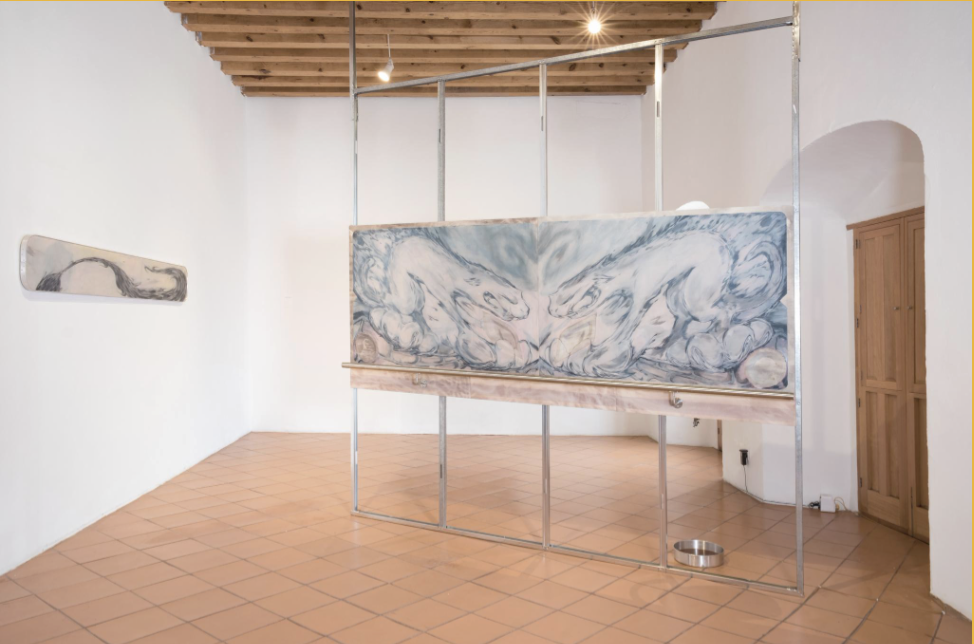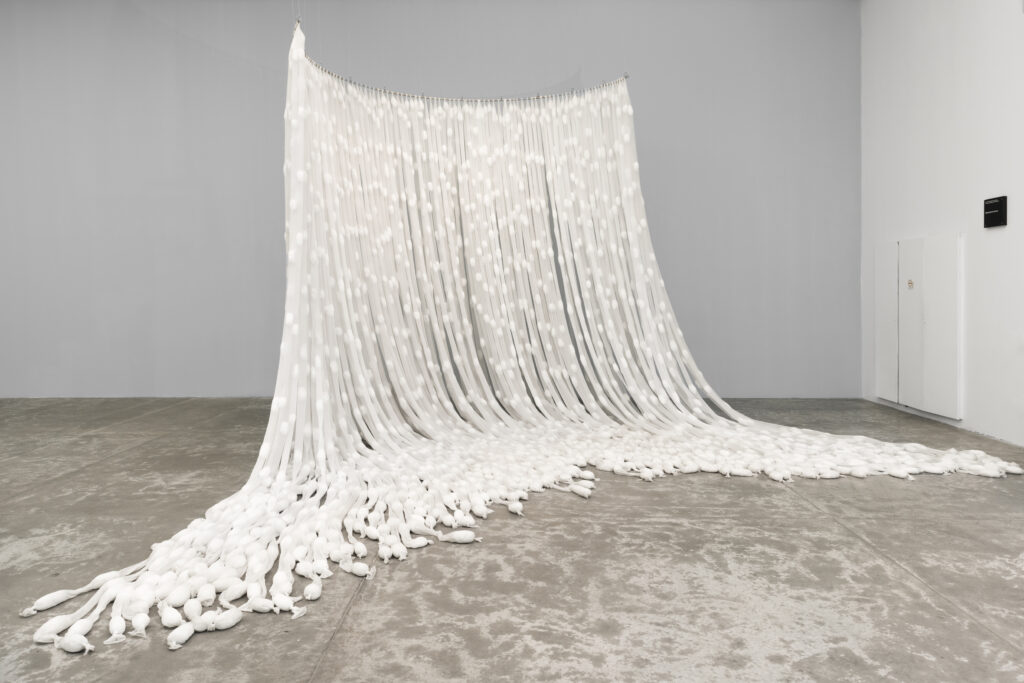
In her practice, Minia Biabiany (Basse-Terre, Guadeloupe, 1988) addresses the violence inflicted upon territory and the historical aggression transmitted across generations. Through poetic resonance and the rhythm of images, her work has explored the histories of the island of Guadeloupe and the aftermath of the ecological crisis caused by the pesticide chlordecone, drawing connections between contamination, lineages, and ancestral wisdom as forms of knowledge.
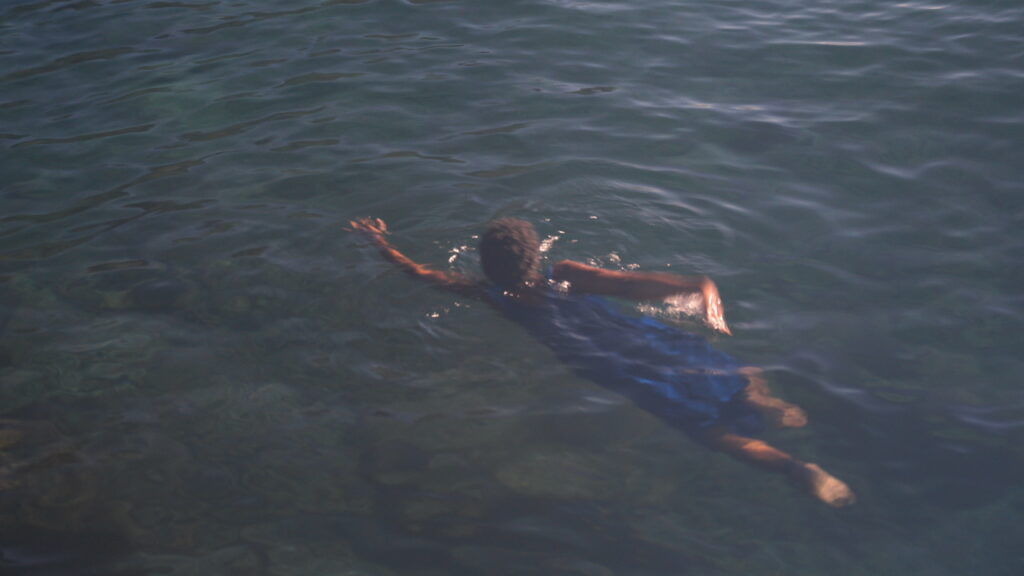
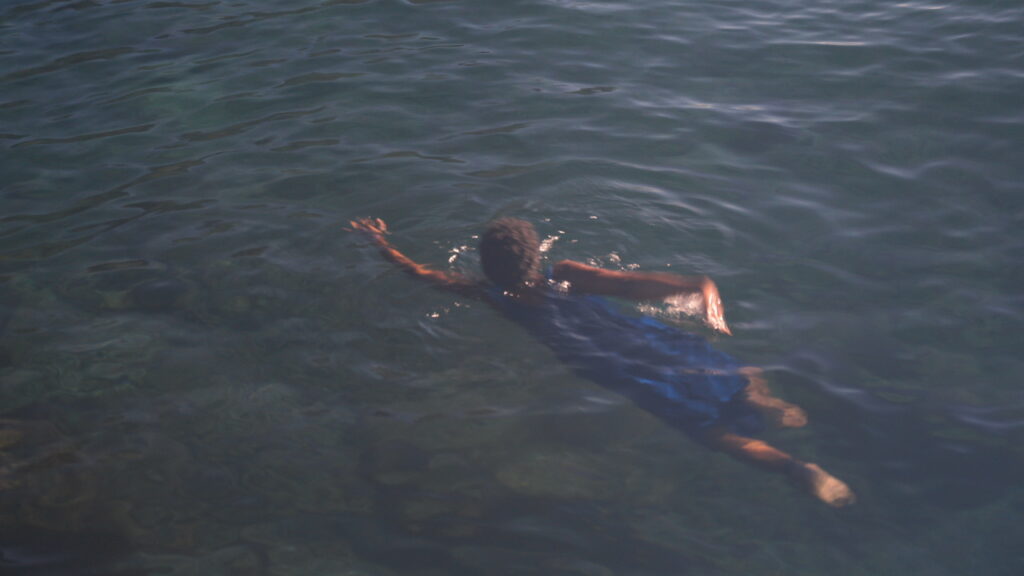
Her new project, the video installation Nuestras escuchas (Our Listenings, 2026), reexamines the relationship between the island of Guadeloupe and the sea through a narrative of intimacy and deep connection with the land. The work was developed alongside Chloé Cramer, an eight-year-old girl; Célia Poulot, an applied arts teacher; Nouma de Lacroix Cobral, a permaculture educator; and Murielle Biabiany, a phytochemistry researcher—a five-person collective, including the artist, all of whom grew up and live in Guadeloupe with a profound bond to the ocean. Curated by Virginia Roy Luzarraga, the exhibition is on view at the Museo Universitario Arte Contemporáneo (MUAC) from September 5, 2026, to February 14, 2027.
Accompanying this work are six burnt-wood sculptures shaped like female sperm whales, a marine species native to Guadeloupe yet largely absent from the local collective imaginary. Drawing inspiration from the echolocation of these cetaceans and the writings of author Alexis Pauline Gumbs, Biabiany translates whale dialects and sound frequencies into a poetic methodology: deep listening and the ocean as pathways to resist the historical asphyxiation of slavery and capitalist extractivism. Throughout the piece, the sea emerges as a central protagonist—bearing witness to history and foreign domination, exposing its own contamination, and safeguarding ritual practices and ancestral wisdom.