Sé, São Paulo, Brazil April 2, 2017 - June 3, 2017
This exhibition offers a moment as an experience to be lived, not mediated and even less mediatized. Hence the need for an indeterminate zone beyond what is given, beyond the spectator and the work of art, beyond the sayable and visible, again: the reverse of the imaginary. Marked by excess and repetition, this exhibition is a constellation that does not seek a unity, but pulsates strongly. We are facing an interruption which hopes to feed some kind of counter-hegemonic thinking or Aat least promote the extinct ability to daydream, of being, and not producing.
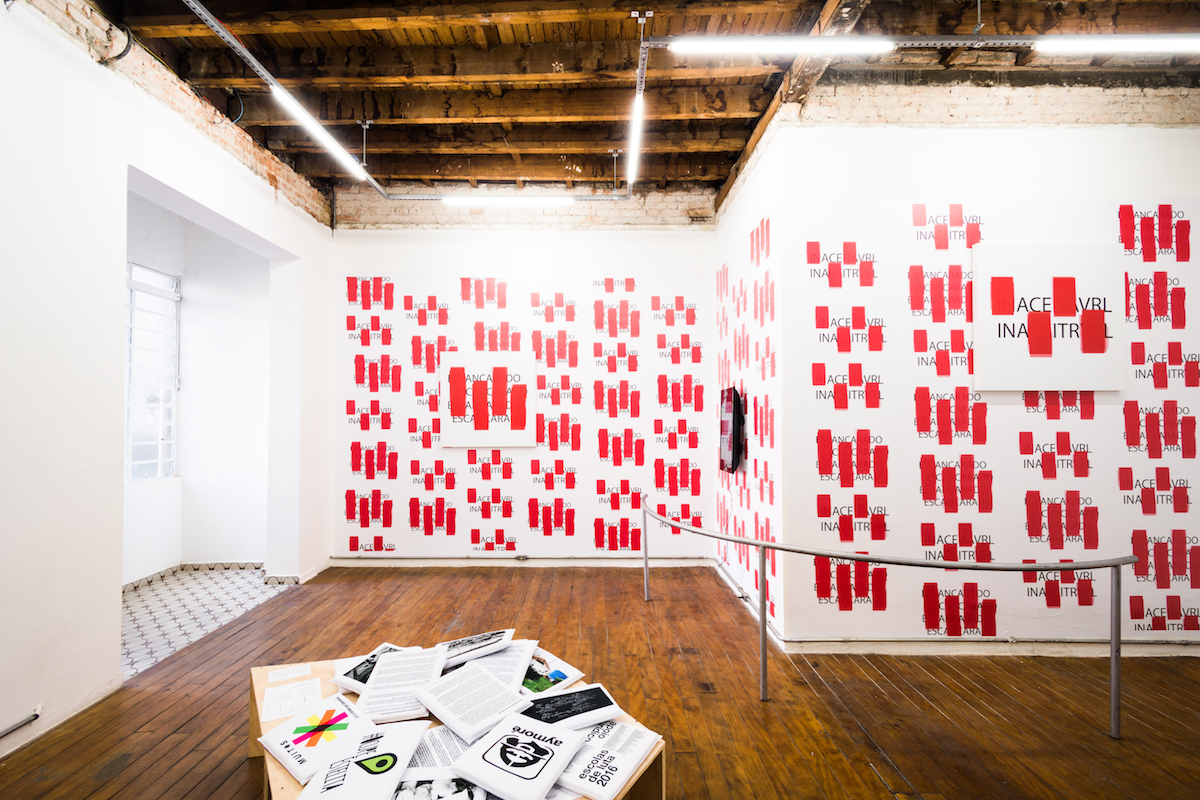
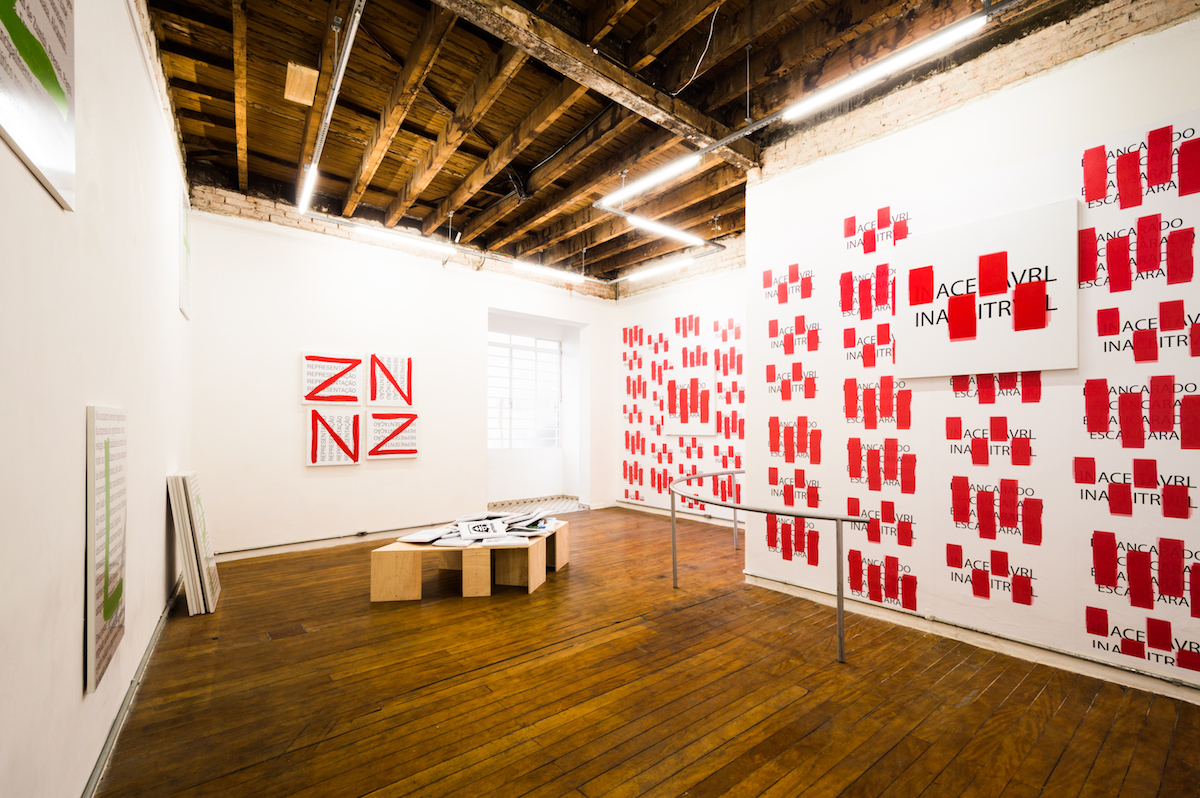
Language is a system of arbitrary signs socially accepted, it is a code. Considering our reality fragmented by an avalanche of dehumanized images, metamorphosed into a giant hypnotic apparatus that reduces us to mere agents of consumption, generic bodies, we must recognize the exhaustion of language. With it there is no possibility of changing the status quo. Traplev breaks with this code by privileging its aesthetic function, drawing attention to the form and not the content of signs, relating ambiguously with the system of expectations allowing meanings that go beyond the speakable and representable. One of the premises of this exhibition is perceived here: the revolution of language is inexorable to the social revolution, probably prior to it insofar as it opens the way to free us from the colonization of our affections.
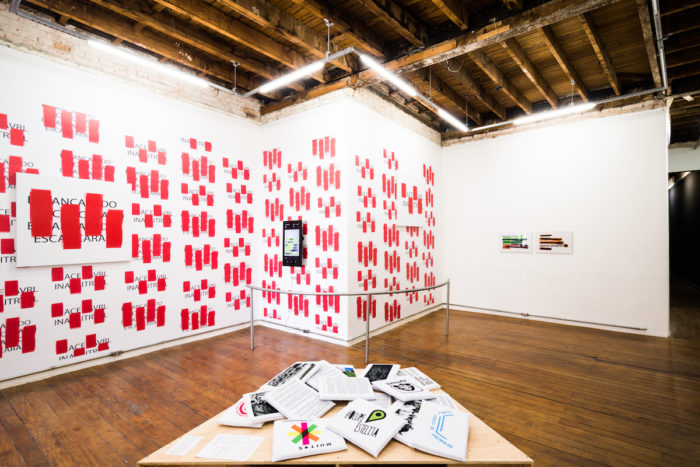
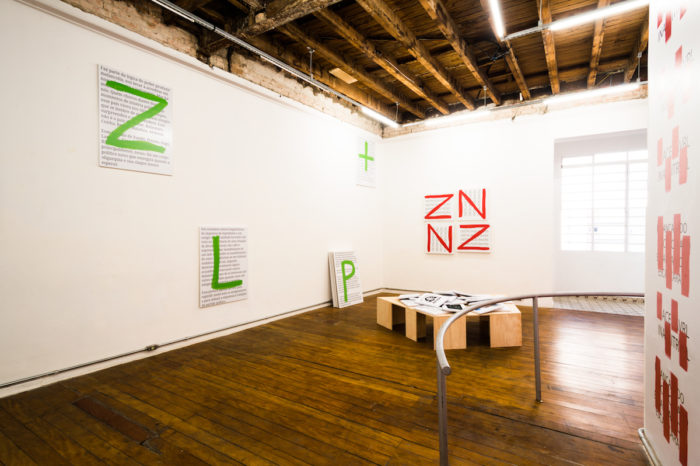
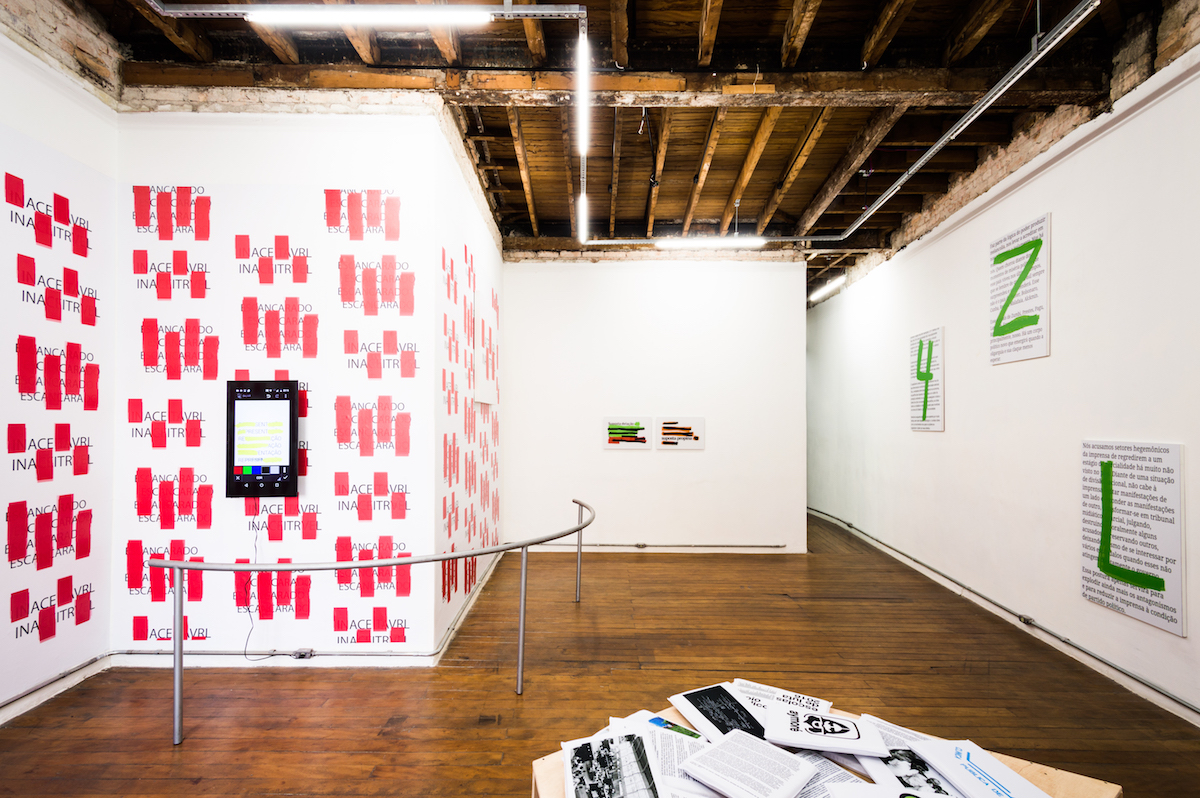
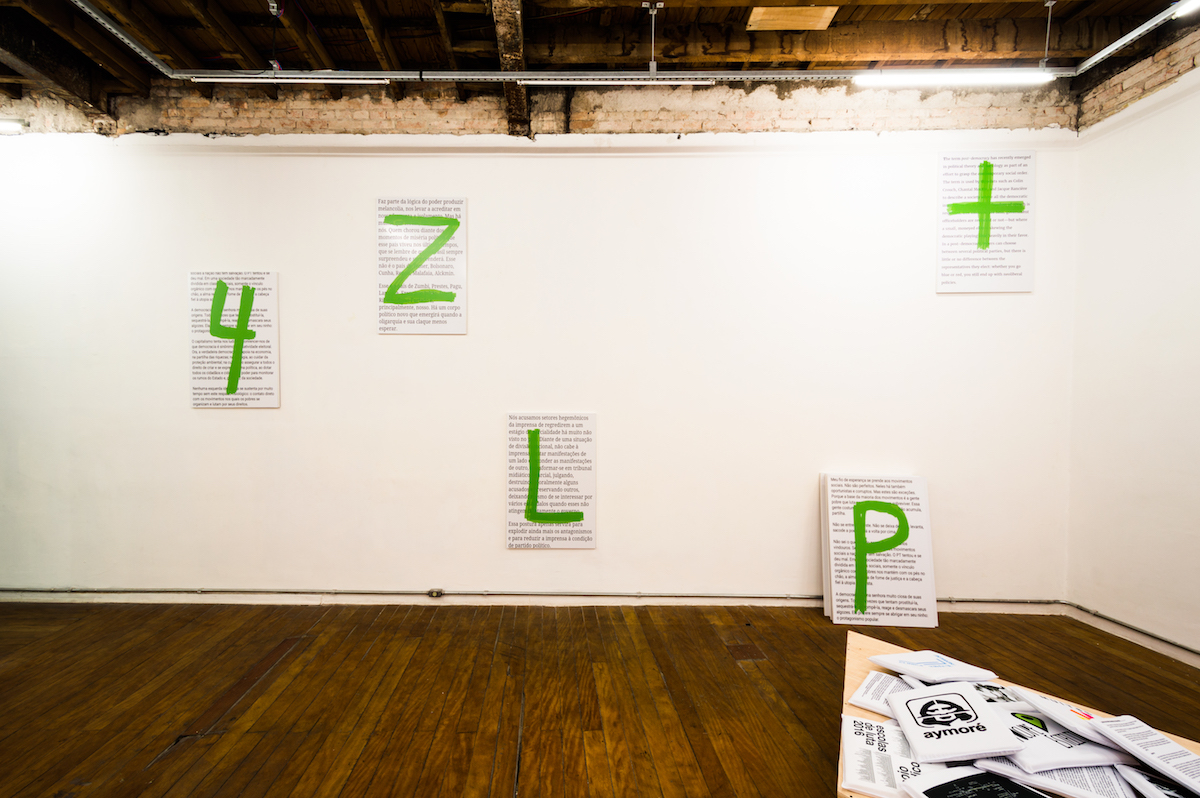
Its construction of images encompasses verbal and visceral signs, overlapping imagination in reality. As we see in the series fluorine alphabet, times of the artist gathered texts during the period of consolidation of the first step towards the Brazilian parliamentary coup of 2016 and of all the criticisms and reflections that followed in the period of April 2016 to now. Later, Traplev made interventions in these texts with letters, numbers or graphic signs in green fluorine. The non-discursive use of language becomes a poetic apparatus that deviates and denatures the codes in which language is constructed. The game of signs promoted by the artist escapes meaning, becoming rhythms and melody, space painting. By displacing referents, there is an interpretative uncertainty in which there is no single reading, but several, to be conducted for reasons other than logic.
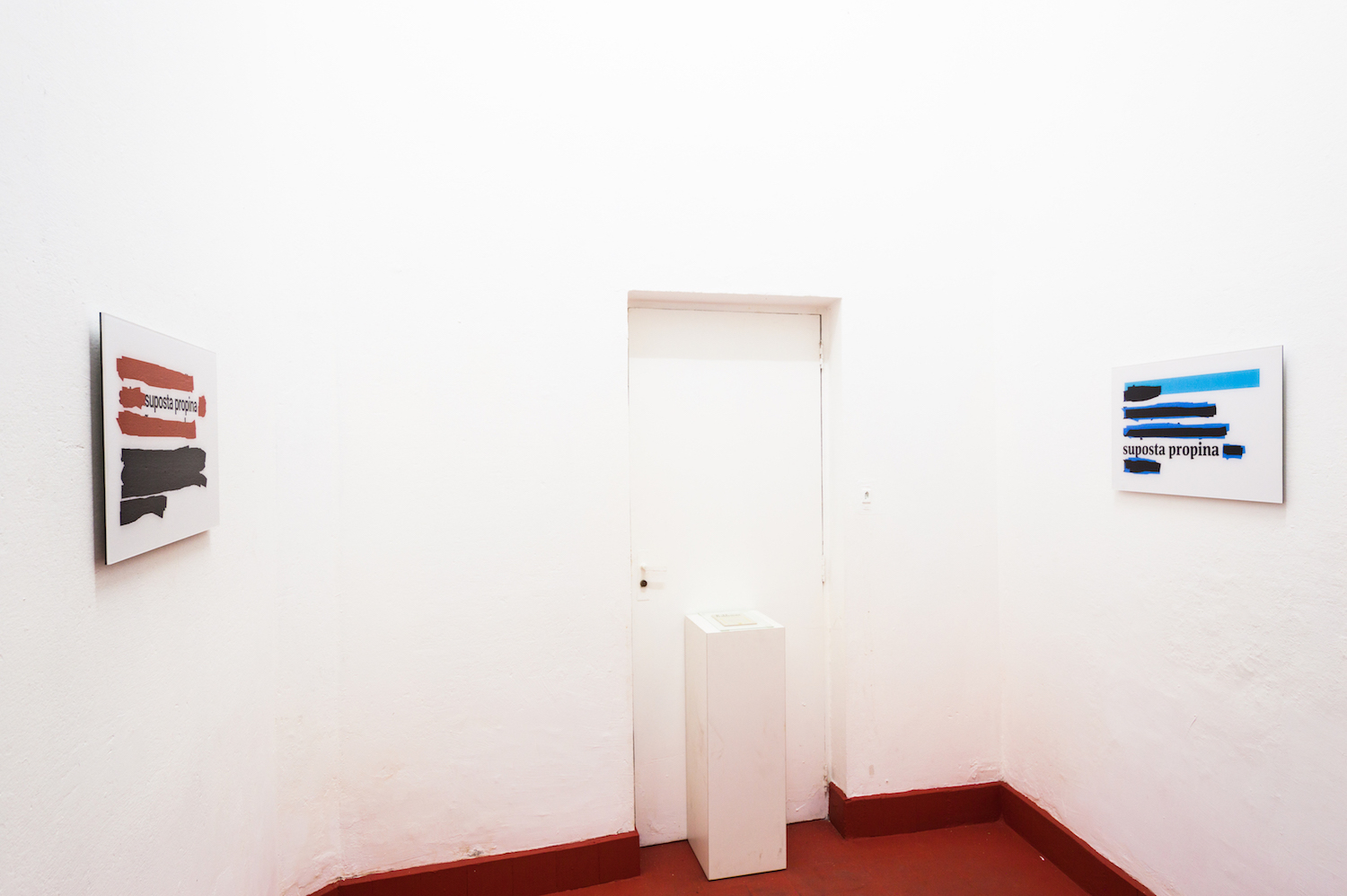
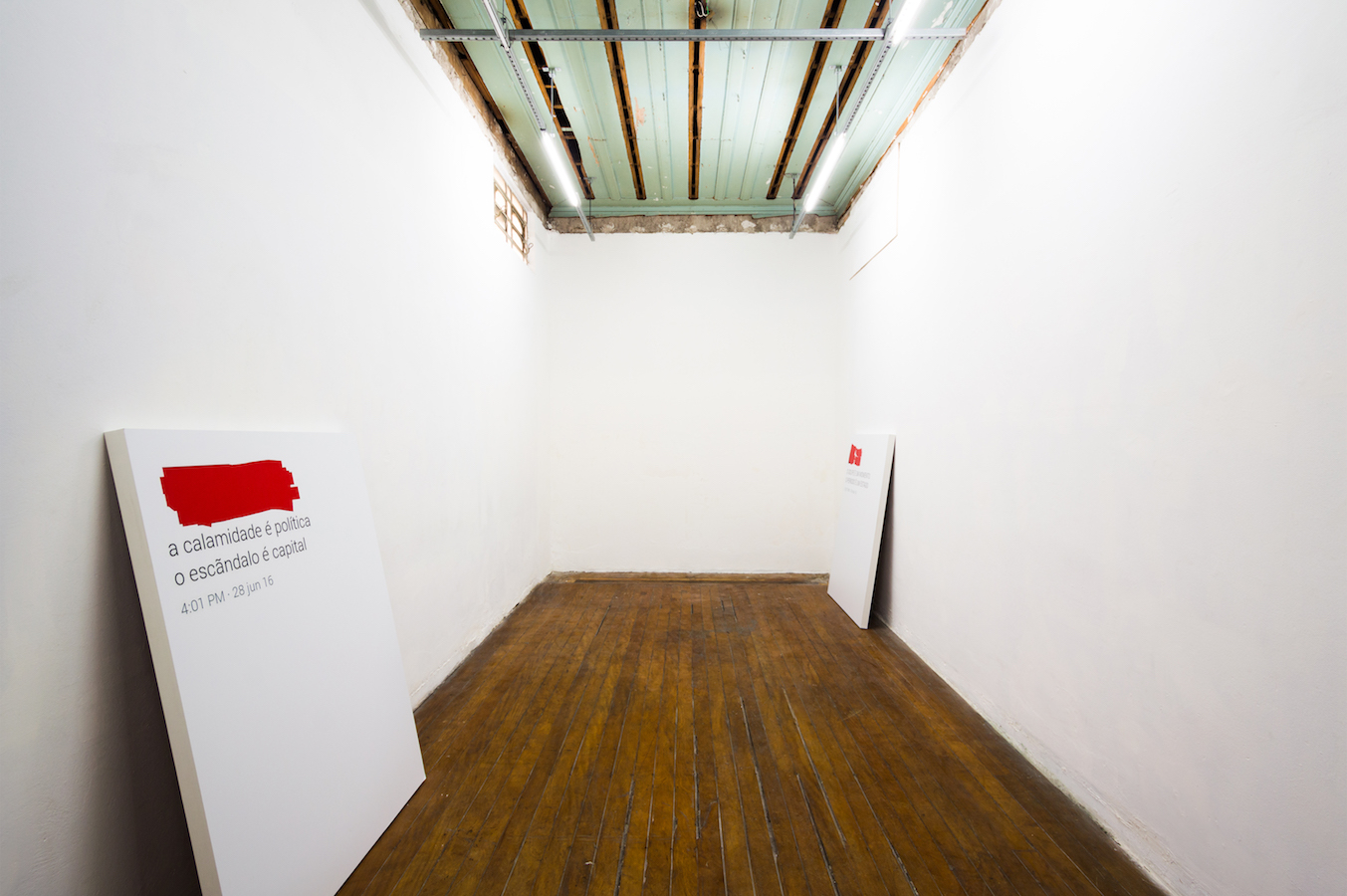
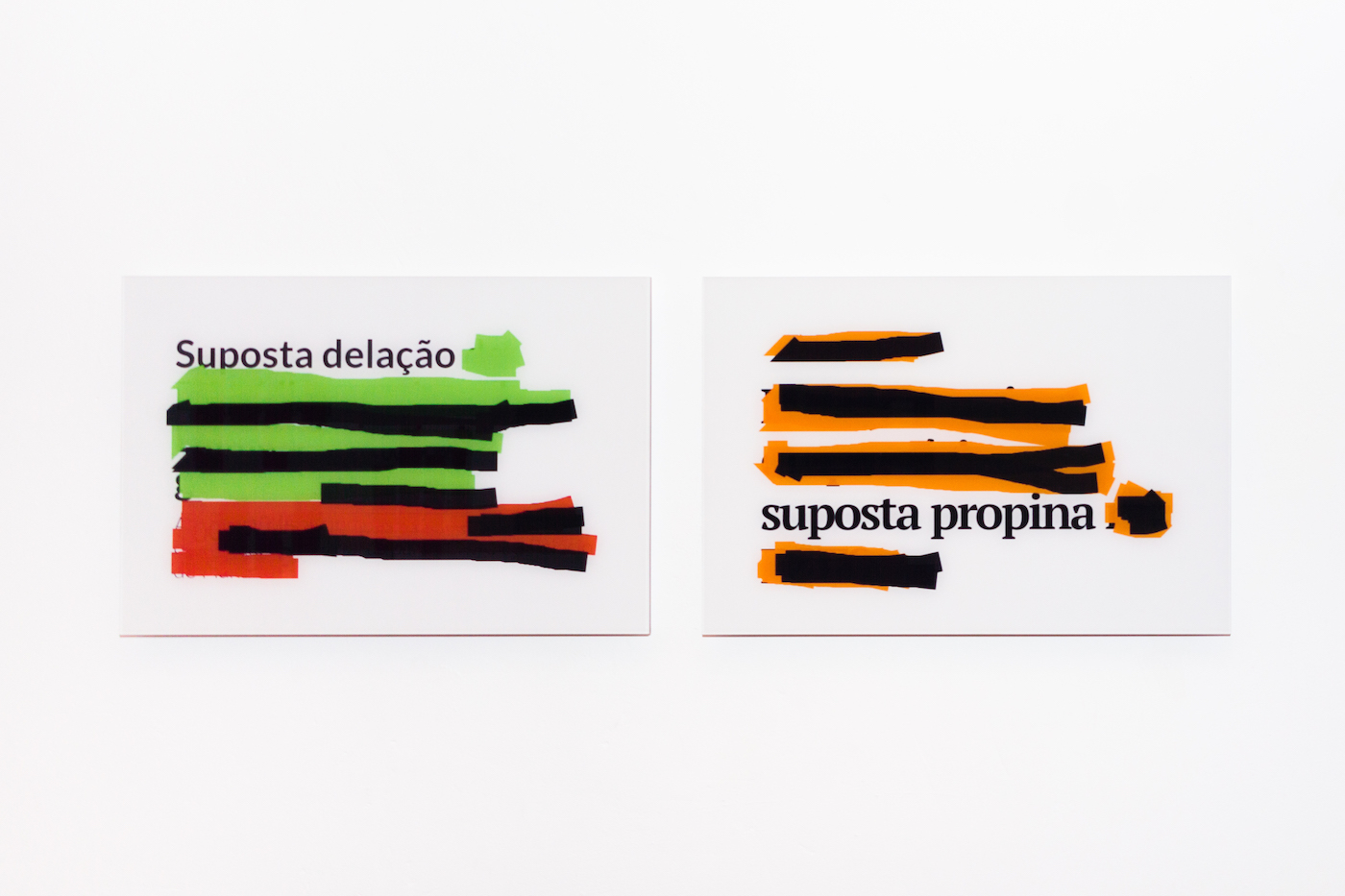
The set of unprecedent works presented by Traplev deal with the immediate socio-political context that the country is going through. Following the general discontent of society with the habit of its representatives, the effervescence of the present is his raw material. From supposition to assumption, it is increasingly difficult to separate fact from fiction, and Traplev puts himself in the rearguard monitoring the tragedy. His aim is not to break with the order, but to expose its crisis, registering its points of collapse and also overcoming.
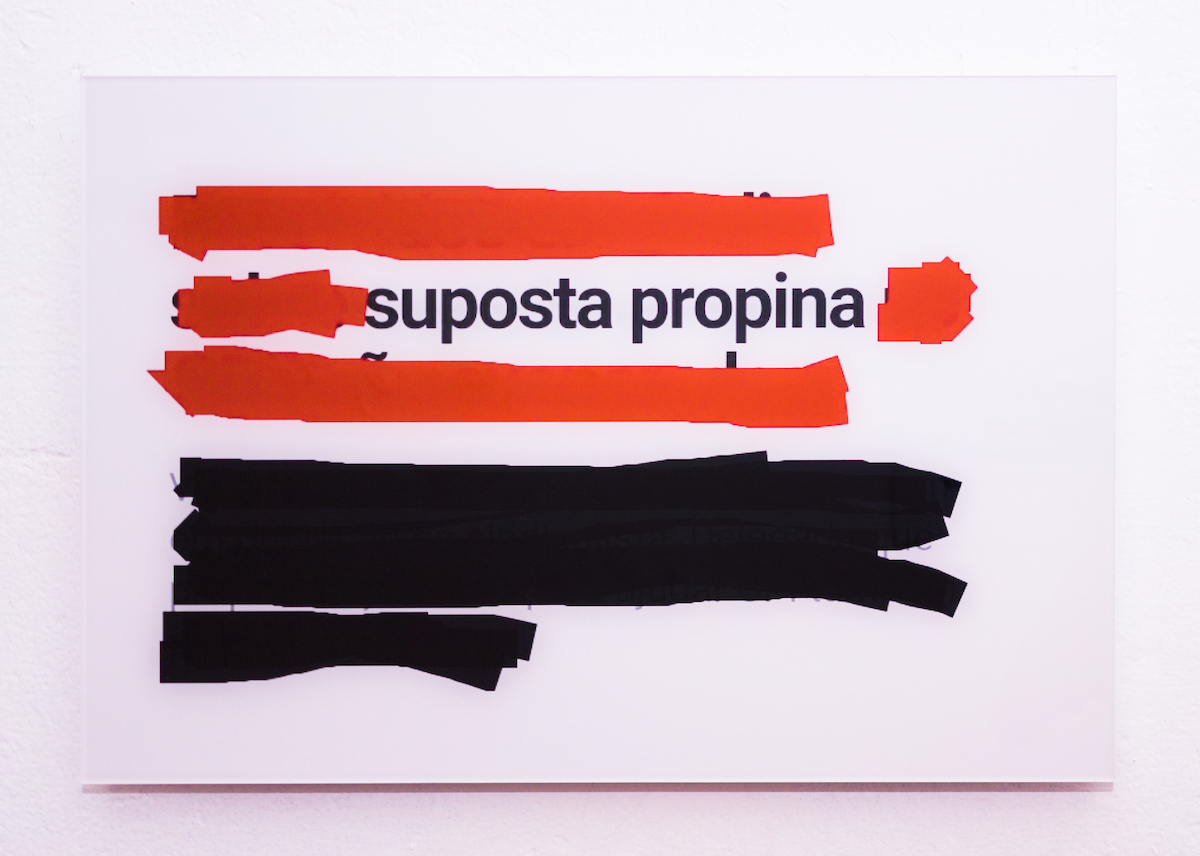
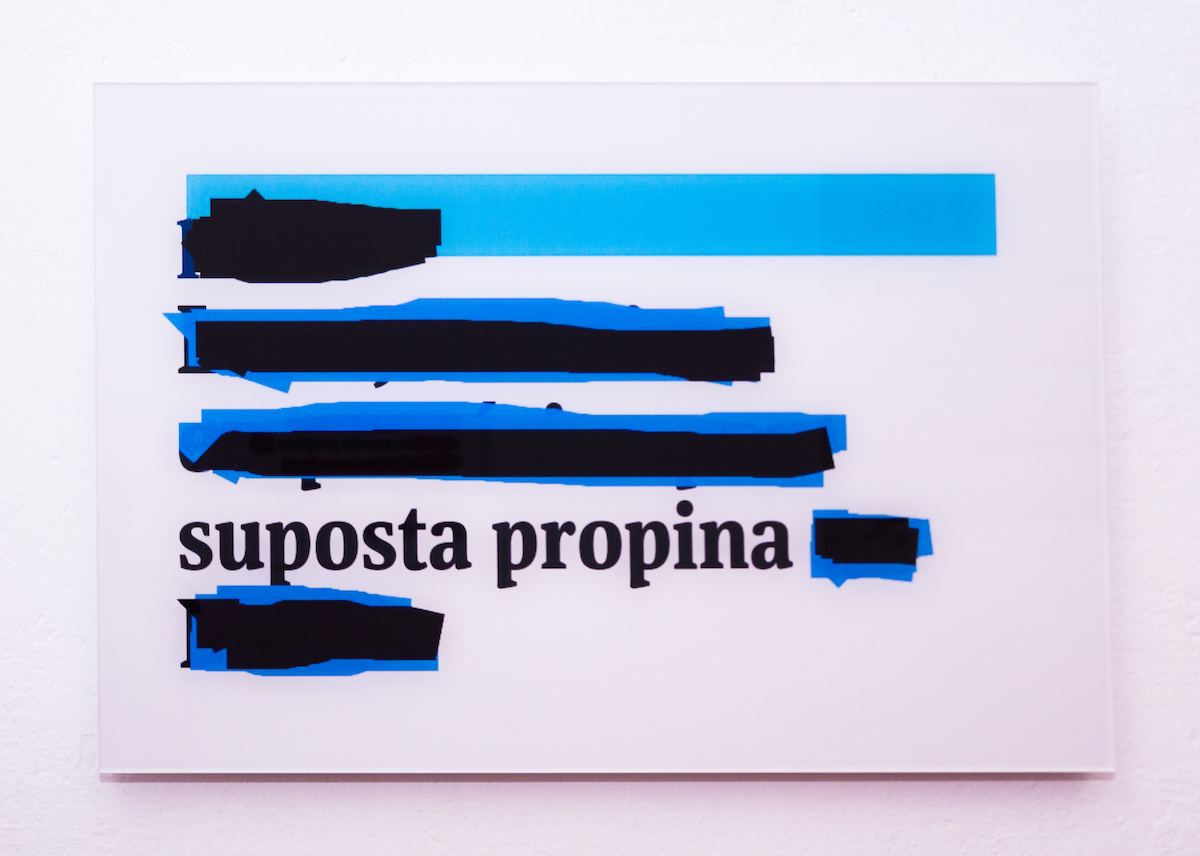
According to the artist, “we are living in a State of Exception, where the ethical and legal premises have all been reversed precisely so that they can be manipulated in favor of the authoritarian state that is openly seen.” That is what we conclude when we observe the attempt of the national congress to typify the crime of slush fund with the intention of amnestying the practice as carried out until today. As they say, there is no crime without previous law that defines it…
Outraged at this situation, Traplev insists on gaps and open-ended spaces and times. His action is an effort to reveal the underlying, to pullout the veil of reality. And this act is conducted violently, a shrill scream. And let’s be clear, it’s not about representing dystopias, but merely smashing the grand narrative that pacifies and normalizes the crisis. Thus, the artist emanates no clear intention, and the point of signification of his works occurs in the receiver, that is: you, the spectator who can and should trust your own synapses.
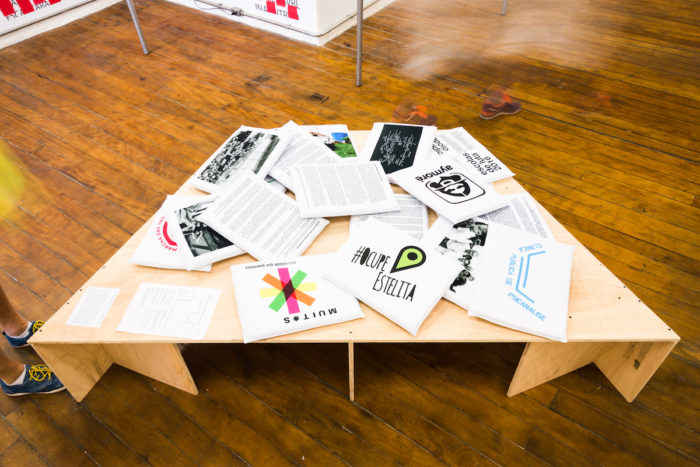
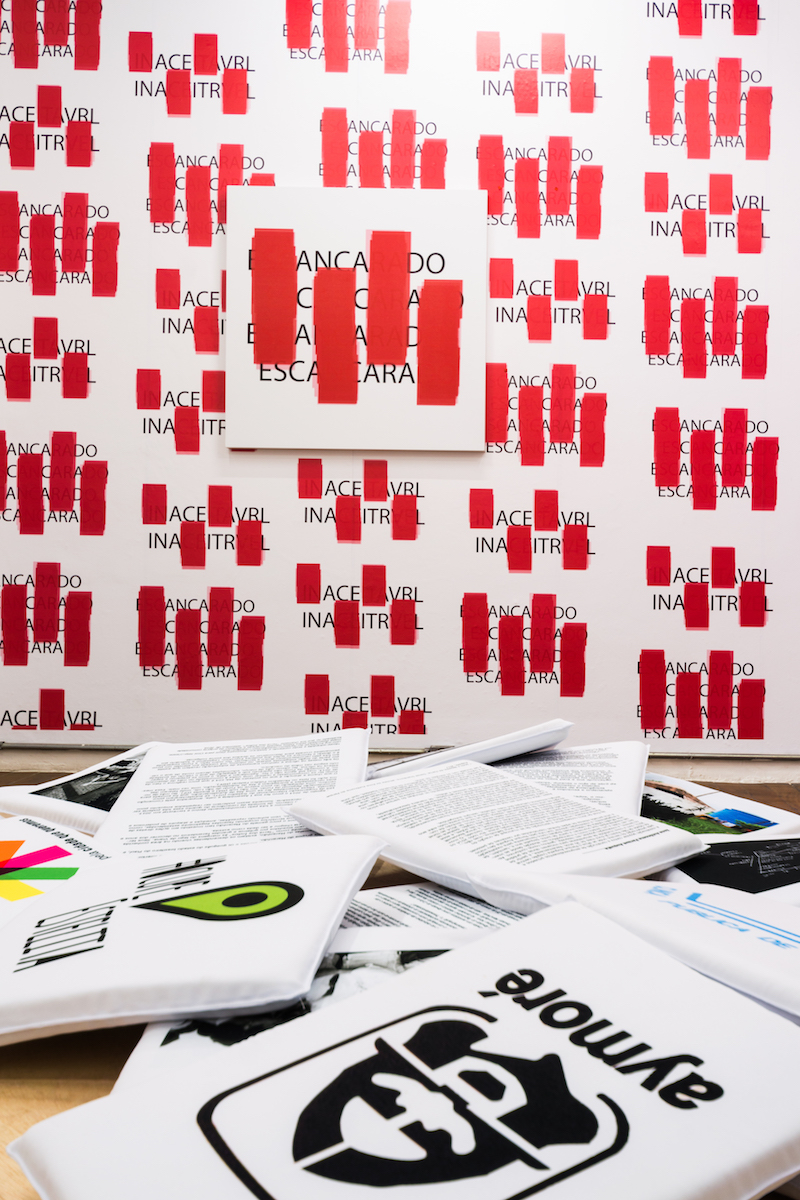
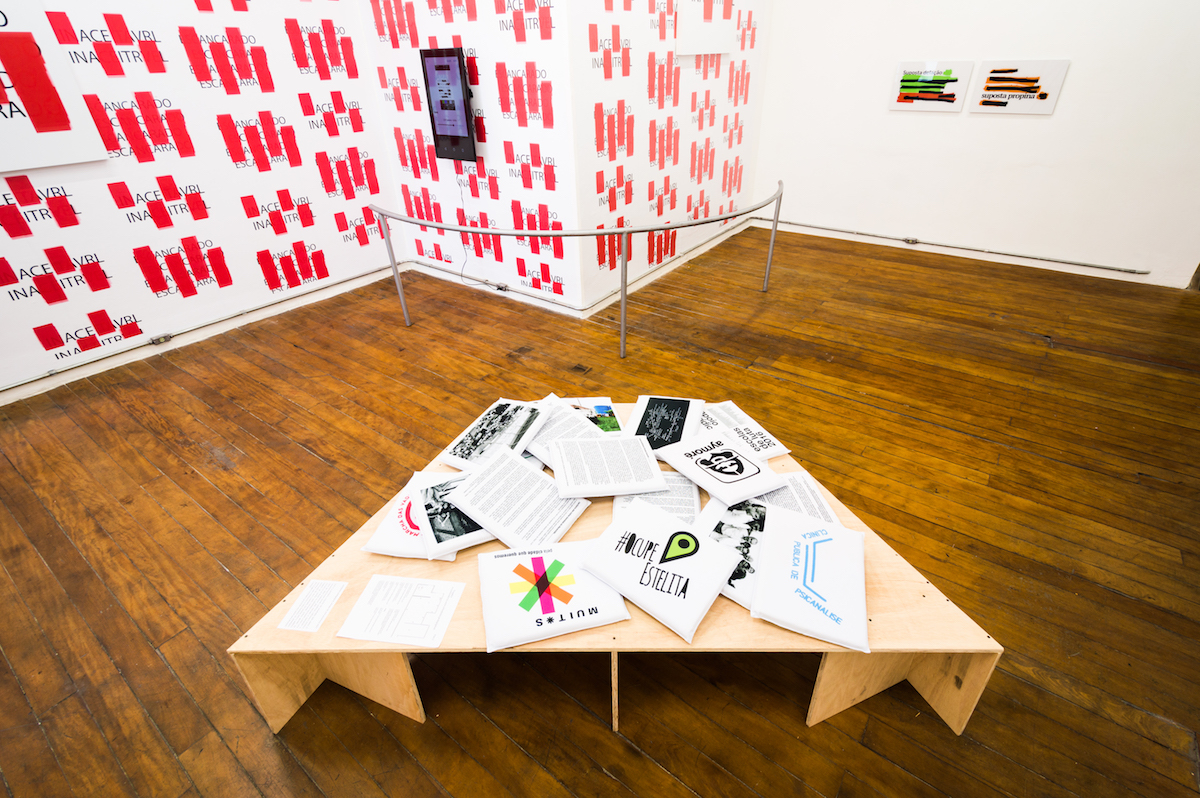
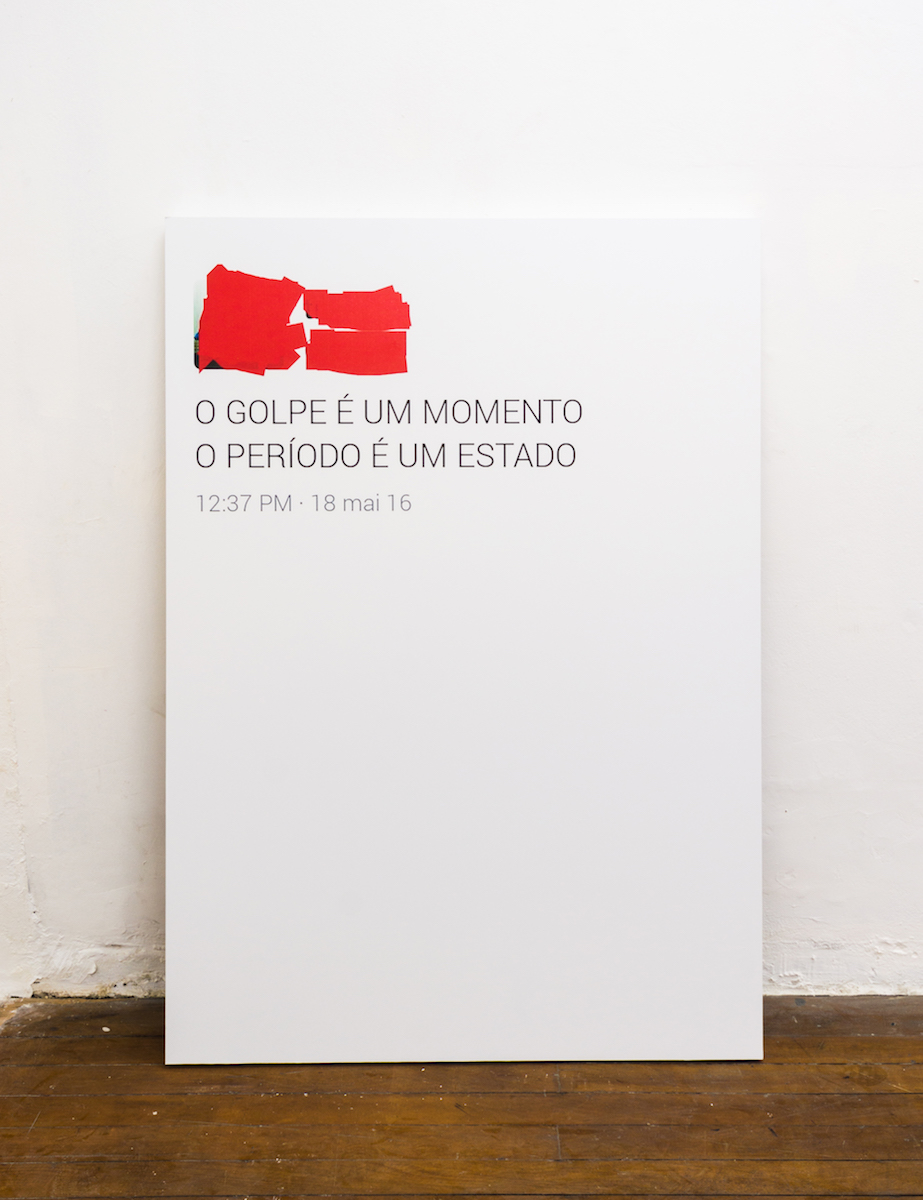
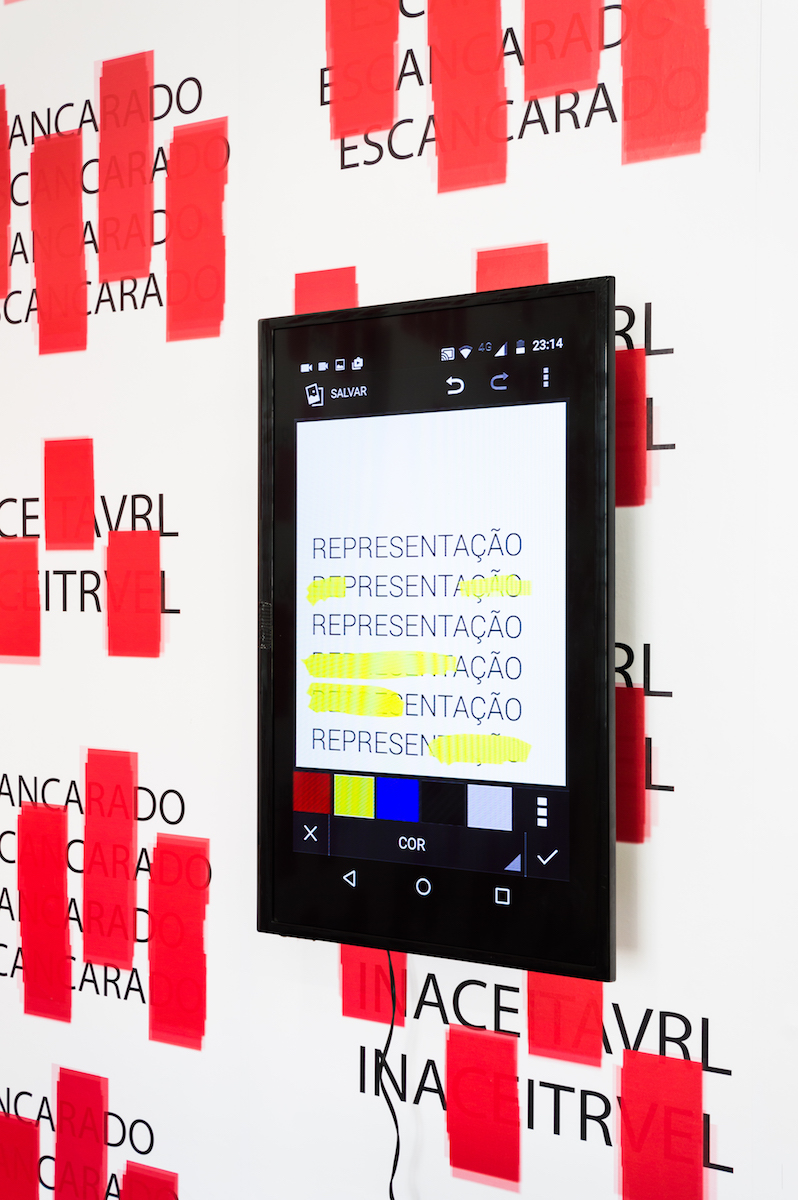
Each era contains its own forms of signification. By excellence, ours is the internet on the cell phone, and all the works of this exhibition arises from this interface. Using this toolbox, Traplev employs electronic communication circuits to express his resistance and at the same time produce new subjectivities. The artist operates on the news images reproduced by the media seeking to break the conditions imposed by it. By sampling the content produced in this context, he interprets and articulates them to unmask their farce. The video Editing process record (espionage) shows the terms in which this process takes place. It is about the cellphone as an end in itself, an exploration of its artistic potential, its possibilities of aestheticization.
#gallery-1 { margin: auto; } #gallery-1 .gallery-item { float: left; margin-top: 10px; text-align: center; width: 33%; } #gallery-1 img { border: 2px solid #cfcfcf; } #gallery-1 .gallery-caption { margin-left: 0; } /* see gallery_shortcode() in wp-includes/media.php */



This exhibition offers a moment as an experience to be lived, not mediated and even less mediatized. Hence the need for an indeterminate zone beyond what is given, beyond the spectator and the work of art, beyond the sayable and visible, again: the reverse of the imaginary. Marked by excess and repetition, this exhibition is a constellation that does not seek a unity, but pulsates strongly. We are facing an interruption which hopes to feed some kind of counter-hegemonic thinking or Aat least promote the extinct ability to daydream, of being, and not producing.
Language is a system of arbitrary signs socially accepted, it is a code. Considering our reality fragmented by an avalanche of dehumanized images, metamorphosed into a giant hypnotic apparatus that reduces us to mere agents of consumption, generic bodies, we must recognize the exhaustion of language. With it there is no possibility of changing the status quo. Traplev breaks with this code by privileging its aesthetic function, drawing attention to the form and not the content of signs, relating ambiguously with the system of expectations allowing meanings that go beyond the speakable and representable. One of the premises of this exhibition is perceived here: the revolution of language is inexorable to the social revolution, probably prior to it insofar as it opens the way to free us from the colonization of our affections.
Its construction of images encompasses verbal and visceral signs, overlapping imagination in reality. As we see in the series fluorine alphabet, times of the artist gathered texts during the period of consolidation of the first step towards the Brazilian parliamentary coup of 2016 and of all the criticisms and reflections that followed in the period of April 2016 to now. Later, Traplev made interventions in these texts with letters, numbers or graphic signs in green fluorine. The non-discursive use of language becomes a poetic apparatus that deviates and denatures the codes in which language is constructed. The game of signs promoted by the artist escapes meaning, becoming rhythms and melody, space painting. By displacing referents, there is an interpretative uncertainty in which there is no single reading, but several, to be conducted for reasons other than logic.
The set of unprecedent works presented by Traplev deal with the immediate socio-political context that the country is going through. Following the general discontent of society with the habit of its representatives, the effervescence of the present is his raw material. From supposition to assumption, it is increasingly difficult to separate fact from fiction, and Traplev puts himself in the rearguard monitoring the tragedy. His aim is not to break with the order, but to expose its crisis, registering its points of collapse and also overcoming.
According to the artist, “we are living in a State of Exception, where the ethical and legal premises have all been reversed precisely so that they can be manipulated in favor of the authoritarian state that is openly seen.” That is what we conclude when we observe the attempt of the national congress to typify the crime of slush fund with the intention of amnestying the practice as carried out until today. As they say, there is no crime without previous law that defines it…
Outraged at this situation, Traplev insists on gaps and open-ended spaces and times. His action is an effort to reveal the underlying, to pullout the veil of reality. And this act is conducted violently, a shrill scream. And let’s be clear, it’s not about representing dystopias, but merely smashing the grand narrative that pacifies and normalizes the crisis. Thus, the artist emanates no clear intention, and the point of signification of his works occurs in the receiver, that is: you, the spectator who can and should trust your own synapses.
Each era contains its own forms of signification. By excellence, ours is the internet on the cell phone, and all the works of this exhibition arises from this interface. Using this toolbox, Traplev employs electronic communication circuits to express his resistance and at the same time produce new subjectivities. The artist operates on the news images reproduced by the media seeking to break the conditions imposed by it. By sampling the content produced in this context, he interprets and articulates them to unmask their farce. The video Editing process record (espionage) shows the terms in which this process takes place. It is about the cellphone as an end in itself, an exploration of its artistic potential, its possibilities of aestheticization.
#gallery-1 { margin: auto; } #gallery-1 .gallery-item { float: left; margin-top: 10px; text-align: center; width: 33%; } #gallery-1 img { border: 2px solid #cfcfcf; } #gallery-1 .gallery-caption { margin-left: 0; } /* see gallery_shortcode() in wp-includes/media.php */