
What is the relationship between visibility, memory, and dignity? Aldri Covarrubias & gaita nihil write for "Memorias Insumisas" about the ways of creating and maintaining archives that, among other things, seek to configure other forms of dignity for transmasculine people in Mexico and Argentina.
Sou uma ancestral do futuro [I am an ancestor of the future] [1]
(in alphabetical order) by Aldri Covarrubias and gaita nihil
Given the growing number and wealth of archives documenting the experiences of queer/trans*/transvestite/butch/non-binary people[2] —specifically in the American continent, not only in Latin America but also from Latin American diaspora populations in the United States[3]—, it is pertinent to make some observations about the origins and current role of the archives of gender and sex-nonconforming people that emerged after the Covid-19 pandemic. It is necessary to make these reflections to examine how the relationship between memory and forgetting acquires characteristics that we can identify as rebellious[4], especially for those archives created by and for feminine masculinities, trans* men, transmasculinities, travos[5] and non-binary people in Argentina and Mexico.
In this space, we will address some reflections derived from two concrete experiences that we embody, in Argentina and Mexico, but we also want to highlight that in Uruguay, Paraguay, Chile, Colombia, Honduras and Guatemala, there are currently concrete efforts[6], and that, since 2018, there are already works in the region around trans* memory carried out by transmasculinities, specifically those traced in the Transgender Museum of History and Art by Ian Guimarães Habib [Museu Transgênero de Historia e Arte] in Brazil. While we can see that some of these efforts aspire to and have achieved institutionalization, we recognize common points that would allow us to speak of a Transmasculine Memory.
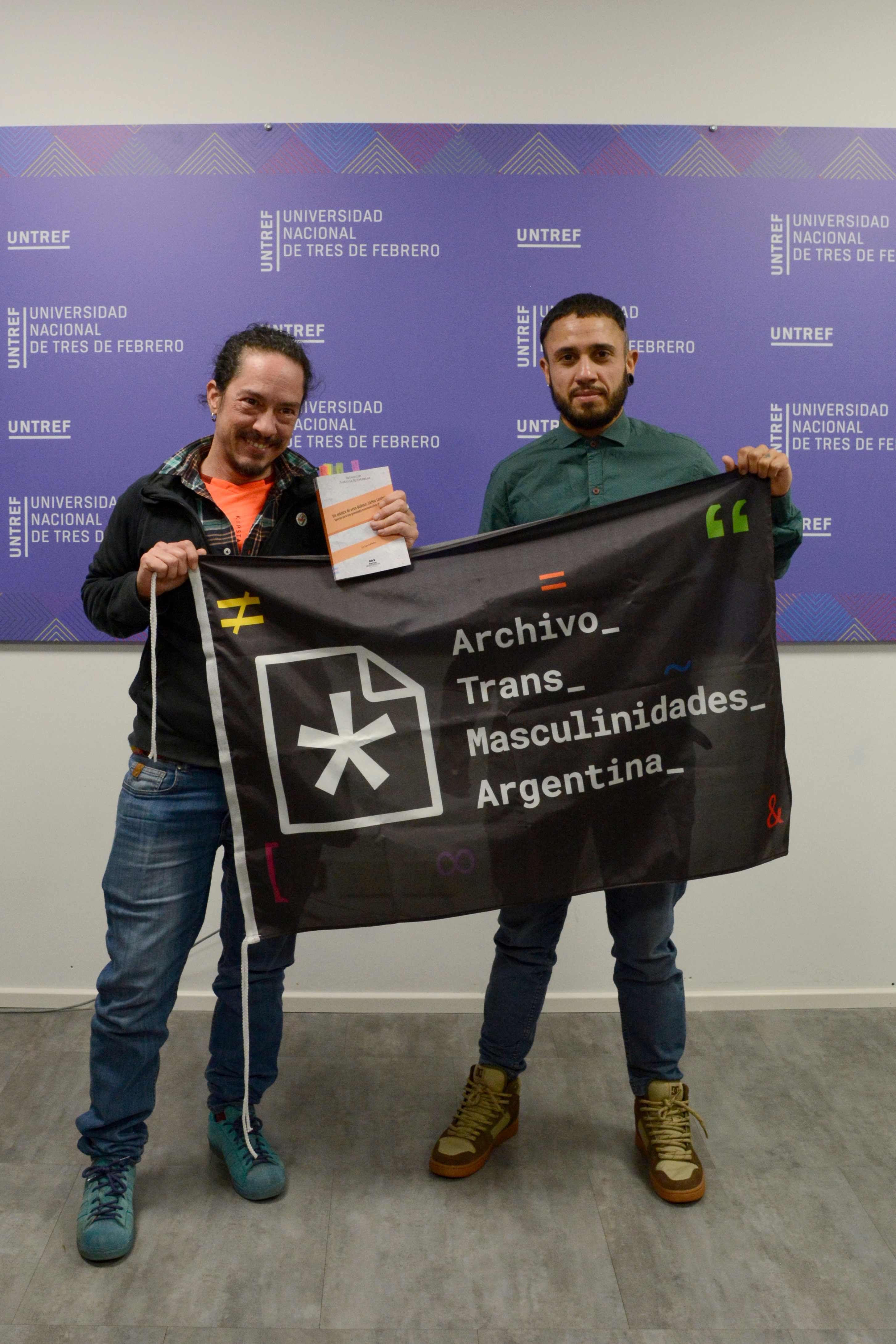
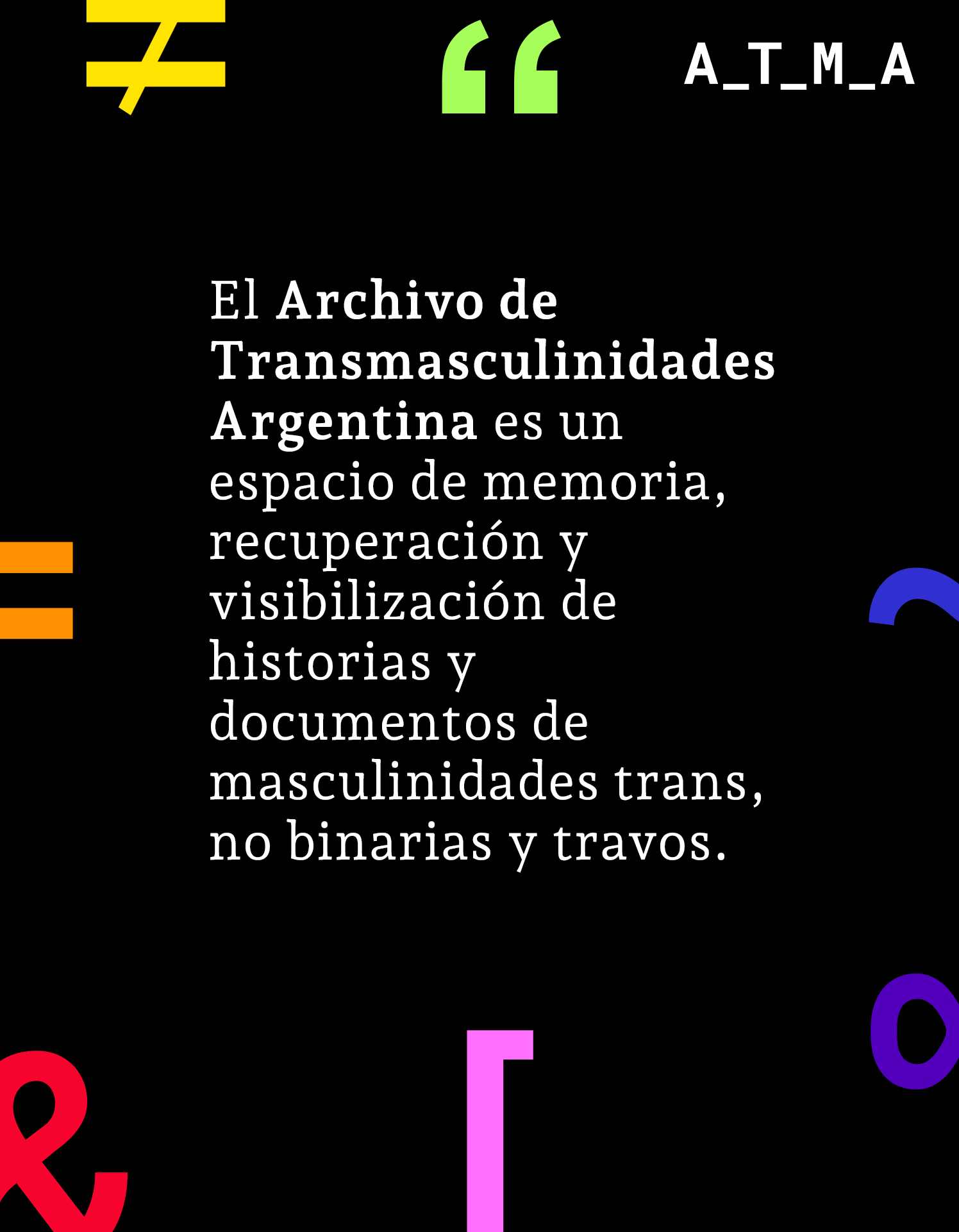
In the same sense, we can highlight that archiving is a political strategy that we share both in the Transmasculinities Archive of Argentina (ATMA, Archivo de Transmasculinidades de Argentina) and in the Transmasculine Memory Archive of Mexico (ATMX, Archivo de la Memoria Transmasculina Mexico), initiatives born of their context and territory, articulated in the desire to build another dignity. Both spaces arise from the need to promote spaces that historicize our realities and move them away from the belief that we are exceptions and/or novelties for contemporary society. We have the conviction and certainty that there were people who dreamed of us, who dreamed of them and of what we are now, and through them we speak to the future. In both archives, we consider as a great example of our practices the impetus of the Argentina Trans Archive, initiated in 2012[7], where transvestite and trans colleagues generated a space for the preservation of the memories of trans femininities and horizons of life, by providing them with knowledge of archival science, restoration, editing and other specialized tools in related matters.
It is important to emphasize this recognition of works and people who inspire us because they have generously shared their knowledge by creating opportunities for meeting and exchange. This shows how trans* people can and have escaped the binary division of male and female that they try to impose on us from Cisheterosexuality[8] and how we generate intra-community solidarity networks. However, it is worth highlighting the contributions we can make from our places of enunciation, in relation to what is understood by Trans* Memory. We understand this practice, which we call Transmasculine Memory*, as far removed from the objectivity implied by scientific research, where the subject/object dichotomy is blurred. The production of archives takes place in everyday life, observing us, but also as part of the building of knowledge from which, in most cases, we are excluded because we do not have access to academic training and are deprived of epistemological access to tools specific to research and archival work.
The role of our archives is specific because it does not respond to essentialisms nor does it focus solely on gender identity. We consider other complexities[9] in the identities of the lives we portray and we relate daily to incompleteness, based on recognizing the imbrication[10] of oppressions. We know we can't cover everything and we know some things will be lost, but that doesn't stop us. The production of common terms, images, and sensibilities is being set in motion and communicated among the groups that visualize the common from various latitudes.
We make these efforts with the conviction of building another dignity, one that does not ignore our experiences when talking about trans* people, one that is not content to be the end of the phrase "women and gender dissidents". This is also an exercise in creativity, sensitivity and even humor: we produce the relational part of the archive where the focus is not on the document, but on what we can be and do from the moment we come into contact with it and with our communities. Our work does not aspire to dispute power or pain in order to continue feeding narratives that place cisheterosexuality at the center of life. We recognize each other through the pain of shared oppressions, but with the caution not to over-identify with it. We are marked by obvious helplessness, violence, the overexposure demanded of us and, in some cases, absolute weakness, but this is not origin-destiny, it is merely a starting point from which to continue sustaining life.
It is therefore also necessary to address the contradiction inherent in what we do and to warn about the threats and their accomplices that we see along the way: visibility without liberation from what oppresses us and which some unwary voices demand; the production of individual images to make us palatable even from the bitter taste of fear and disgust: the new man, the naked man with a vulva, the figure with scars and without breasts, the pregnant man, all figures to transact for hegemonic recognition. Similarly, we still lack clarity on what knowledge and experiences we should safeguard for ourselves, as we find ourselves digging at many levels simultaneously. We find ourselves with infinite desires but with extremely limited resources. We must place uncritical futurism and pioneering under suspicion, remove that neurotic imprint of following in the footsteps of the Father, of seeking genealogies in virility as a sign of origin, of saying "we have always existed", of looking for the "first trans* man who did..." to gain the status of respectability and humanity, the focus on photographs and documents at the cost of the loss of other practices and devices.
This reconstruction—on the one hand, of our past, and on the other, as an intentional production of archives for the future—responds to an intention to produce answers and then more questions. We recognize this responsibility and project it with the need to leave something for the future with the full awareness that the people who succeed us owe us nothing and, even so, aspire to the dissolution and concentration of an intergenerational commonality, which speaks, to the future, of the past that runs through us as that which is impracticable for Cisheterosexuality.
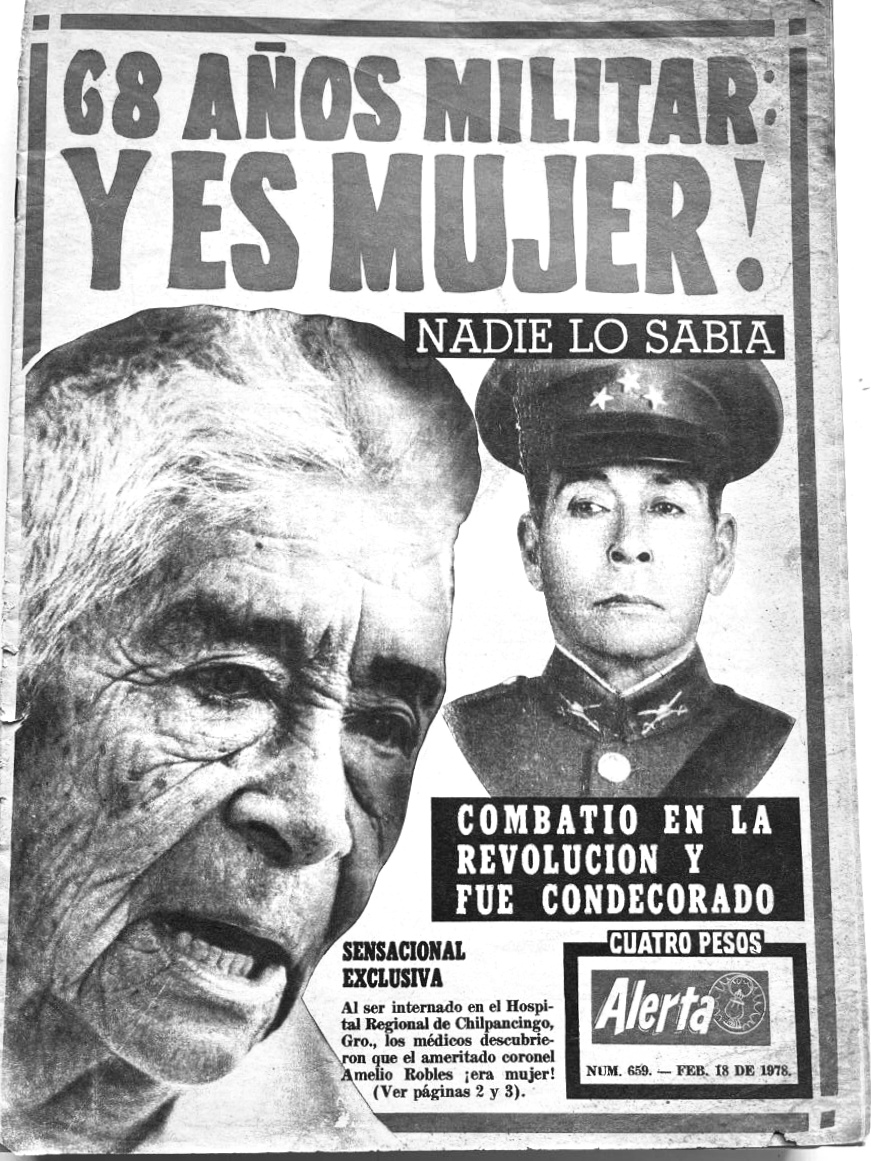
From Mexico, this path has been winding, especially noteworthy are the efforts that, from the lived experience and coordinates of trans* women/transvestites, see in these practices horizons of life. The Trans Memory Archive Mexico, the Transfeminine Art Museum and Trans* Historic Justice* are must-see stops when talking about Trans* Memory in this territory. Because of the transmasculine experience, efforts from art and community organization such as those promoted by Pol Martinez, Mario Sanchez Perez and Nancy Cazares, the latter two based on the figure of Amelio Robles, as well as the wave of expressions of feminine masculinities, trans* men, transmasculinities and non-binary people of the Ballroom Culture, from Monterrey to Merida, throughout the country, with special importance for young, racialized and diaspora people.
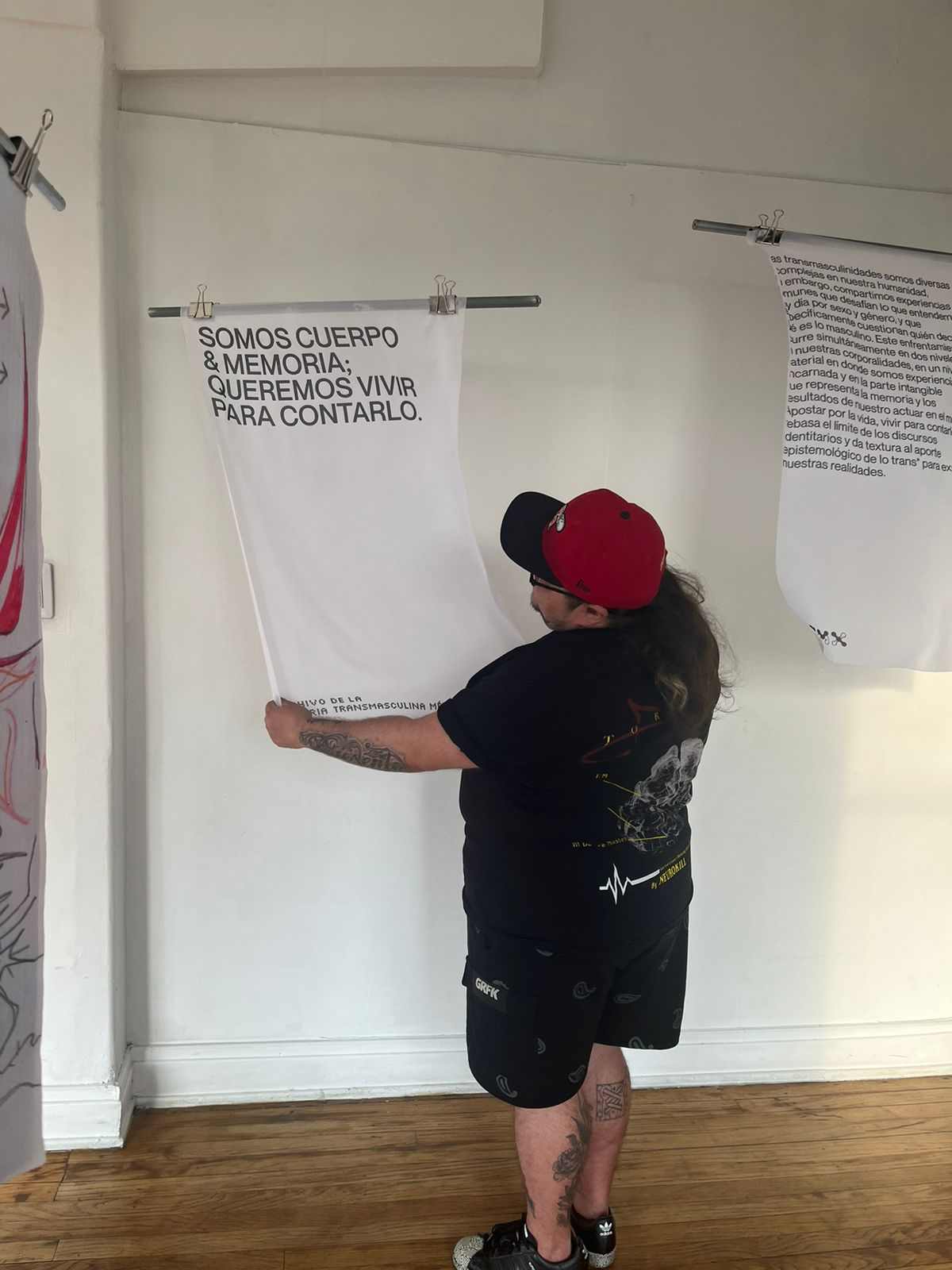
Specifically, the Transmasculine Memory Archive Mexico supports work on several levels: of course, the investigation in Institutional Archives, but also the recording of what happens with Transmasculinities in the public life of Mexico City and also in other localities, as well as the opening of commonality in spaces from which we have historically been excluded. These works have a calling for imagination and the construction of an alternative collective organization to the Academy, the State and its Institutions, with complacent figures from activism and the commodification of identities.
Far to the south, the Transmasculinities Archive of Argentina (ATMA)[11] emerges as a child of its territory, where archival practices and politics have a strong relationship with resistance. During the final years of the last civic-ecclesiastical-military dictatorship (1976-1983) and the return to democracy, human rights movements carried out actions to recover and preserve the documents and memories of the victims of torture, death and disappearance under the motto "Memory, Truth and Justice". Organizations such as Madres de Plaza de Mayo, Abuelas de Plaza de Mayo, H.I.J.O.S., among others linked to human rights, pledged to gather all information about their relatives, friends, activists and other people disappeared by the de facto government.
The list of those persecuted and disappeared also included people from the LGB+, queer, and trans* communities, who began to collect documents that would bring to mind the victims of state terrorism who were part of these groups, which have their own specific characteristics. However, the persecution of our community neither begins nor ends with the coup or the return to democracy. The pathologization of our existence, the lack of public policies and access to human rights, criminalization and marginalization are some of the problems we face daily, linked to the prevailing heterocisexism in societies. In this sense, the need arises to promote archival spaces that historicize our realities and distance them from the belief that we are exceptions and/or novelties that arise from 2012, when the Gender Identity Law was sanctioned in Argentina. A great example of this practice is that promoted by the aforementioned Trans Archive Argentina, where transvestites and trans women created a space for preserving the memories of trans femininities, many of them survivors of the political context of the 1970s. This organization inspires and supports us, since, among many other direct impacts on our society, its archives have served for the trials for crimes against humanity of those involved in the military dictatorship.
In this sense, the people who make up ATMA take the concept of ethnology. We, the subjects ourselves, take our community as an object of study, not from otherness but from inhabiting it and being part of it. Instead of applying an external analysis to the recovered transmasculine archives (from the media, books, stories, historical testimonies, etc.), we consider ourselves ethnographers investigating the community itself: faced with the cisexism that has systematically hidden our existences, transmasculine people, trans men, non-binary people, and travos are brought into the present with the aim of collaborating in expanding the imaginaries and possibilities of masculinities in the present, strengthening our heritage and dusting off trajectories erased and ignored by cisheterosexual history. The production of archives takes place in everyday life, in the interaction, but also as part of the building of knowledge from which, in most cases, we are excluded because we do not have access to academic training —depriving us of epistemological access to tools specific to research and archival work. Thus, we generate our own emerging methodologies, not only rescuing the past but also generating archives for the future, through artistic productions and community meetings, where art, activism and archive merge, as do past and present.
This reconstruction that the Transmasculinities Archive Argentina intends to carry out, on the one hand, of our past, and on the other hand, as an intentional production of archives for the future, responds to an intention to recognize a heritage, understood as that pillar of culture that is a heritage of material and immaterial (symbolic) goods. We received that heritage and projected it with the need to leave something for the future: a legacy that speaks to the future of the past that runs through us as a community. However, we do not fail to recognize its colonial origin and the need to build other archives that speak from a critical perspective to this and other paradigms imposed by colonial and capitalist heterocisexuality.
---------------
[1] Castiel Vitorino Brasileiro, When I Meet You All: Bixa Macumbas, Travesti Spells, Self-Publishing. Vitoria, Brazil, 2019; [2] We group this conceptual block with the purpose of highlighting the general terms used contemporaneously in Spanish-speaking Latin America to refer to people who dissent from the Political Regime of Cisheterosexuality in the sense proposed by Ochy Curiel [Coopia, Fanzine Laboratory: Asymmetric Spatialities: Gender Coloniality, Heteronorm, and Territorial Coloniality, Collective Notes, Conversation with Ochy Curiel, page 51]. With this, we aim to question the uncritical extension of the use of the term "queer/cuir/kuir"; [3] Simply reviewing the archive of the First Latin American Trans Archives Congress available on YouTube reveals some of the efforts being made from the diaspora and exile; [4] We revisit the meaning of the "Insubordinate Subject" proposed by Robinsón Salazar as the conscious overcoming of a meaningless life, the obligation to permanently act in a de-alienating and sensitive manner in the face of injustice, and with the resolve to act in risky situations; [5] Although there is no specific definition, and we believe there shouldn't be one, in some territories of southern America we have begun using the term "travo" in relation to the term "trava" (short for "travesti"). "Travesti" is how our comrades self-perceive who, generally, do not accept "being a woman" in the binary terms that linking "woman" to "trans" would propose. While many reject "trans woman" and prefer "travesti," the same occurs with comrades who reject "trans man" to self-perceive as "travos." This term has spread to neighboring countries and further north as well. These denominations tend to be specific to some South American countries; in other Spanish-speaking countries, "travesti" is often used as a synonym for "drag" as an artistic practice, which is a profound semantic difference from the use of the term in Argentina, where "lo travesti" is a gender identity. "We traced the adoption of the term 'travo' thanks to its use on Social Media, content creators, and slang used in the Ballroom Community across Latin America"; [6] They can be found on Instagram as: Memoria Transmasculina Py, Memoria TransMasculina (Chile). On Instagram: AL and Chile Memoria TransMasculina @memoriatransmasc; AL Brazil Arquivo das Transmasculinidades Negras Brasileriras @transencruzilhadas; ChilenRaíces Transmasculinas @raicestransmasc; Honduras Hombres trans Honduras @hombrestranshonduras; Guatemala Repositorio Memoria Abyecta Guatemala @memoria_abyectagt; Uruguay Transboys Uruguay; [7] https://archivotrans.ar; [8] The belief or assumption that the gender identities, expressions, and embodiments of cis people are more natural and legitimate than those of trans people. Julia Serano adopts this term in her texts Whipping Girl (2007), Excluded (2013), and Outspoken (2016); [9] How do you search for what is not named? And, in the case of transmasculinities, what also doesn't catch the eye due to an apparent assimilation with cis masculinities. Our archival work breaks with the linear conception of time; we search in the past, record what happens, and imagine lines where the norm could not see them. Coming from the abject, from anomaly, even the prison, the hospital, and the museum hold the majority of the records where our ancestry might be found. Therefore, we are irremediably limited, and narratives can quickly shift towards the assimilation of subjects outside the norm. Conservation spaces will soon exhaust private collections, and public buildings will be necessary. In Latin America, there is little technical knowledge and little autonomy for the tasks of preserving and restoring; [10] We use "imbrication" in the sense of the works of Andréa Gill and Thula Pirés (2019), as well as the notes of Martín Pahde. Using the metaphor of how oppressions overlap and support each other, like threads in a loom, they mutually constitute each other and result in much more than their accumulation. This avoids superficial discussions about who has more and focuses on how they are sustained to perpetuate hegemonic power; [11] Web: www.archivotransmasc.ar, Instagram: archivotransmasc.ar
Sou uma ancestral do futuro [I am an ancestor of the future] [1]
(in alphabetical order) by Aldri Covarrubias and gaita nihil
Given the growing number and wealth of archives documenting the experiences of queer/trans*/transvestite/butch/non-binary people[2] —specifically in the American continent, not only in Latin America but also from Latin American diaspora populations in the United States[3]—, it is pertinent to make some observations about the origins and current role of the archives of gender and sex-nonconforming people that emerged after the Covid-19 pandemic. It is necessary to make these reflections to examine how the relationship between memory and forgetting acquires characteristics that we can identify as rebellious[4], especially for those archives created by and for feminine masculinities, trans* men, transmasculinities, travos[5] and non-binary people in Argentina and Mexico.
In this space, we will address some reflections derived from two concrete experiences that we embody, in Argentina and Mexico, but we also want to highlight that in Uruguay, Paraguay, Chile, Colombia, Honduras and Guatemala, there are currently concrete efforts[6], and that, since 2018, there are already works in the region around trans* memory carried out by transmasculinities, specifically those traced in the Transgender Museum of History and Art by Ian Guimarães Habib [Museu Transgênero de Historia e Arte] in Brazil. While we can see that some of these efforts aspire to and have achieved institutionalization, we recognize common points that would allow us to speak of a Transmasculine Memory.
In the same sense, we can highlight that archiving is a political strategy that we share both in the Transmasculinities Archive of Argentina (ATMA, Archivo de Transmasculinidades de Argentina) and in the Transmasculine Memory Archive of Mexico (ATMX, Archivo de la Memoria Transmasculina Mexico), initiatives born of their context and territory, articulated in the desire to build another dignity. Both spaces arise from the need to promote spaces that historicize our realities and move them away from the belief that we are exceptions and/or novelties for contemporary society. We have the conviction and certainty that there were people who dreamed of us, who dreamed of them and of what we are now, and through them we speak to the future. In both archives, we consider as a great example of our practices the impetus of the Argentina Trans Archive, initiated in 2012[7], where transvestite and trans colleagues generated a space for the preservation of the memories of trans femininities and horizons of life, by providing them with knowledge of archival science, restoration, editing and other specialized tools in related matters.
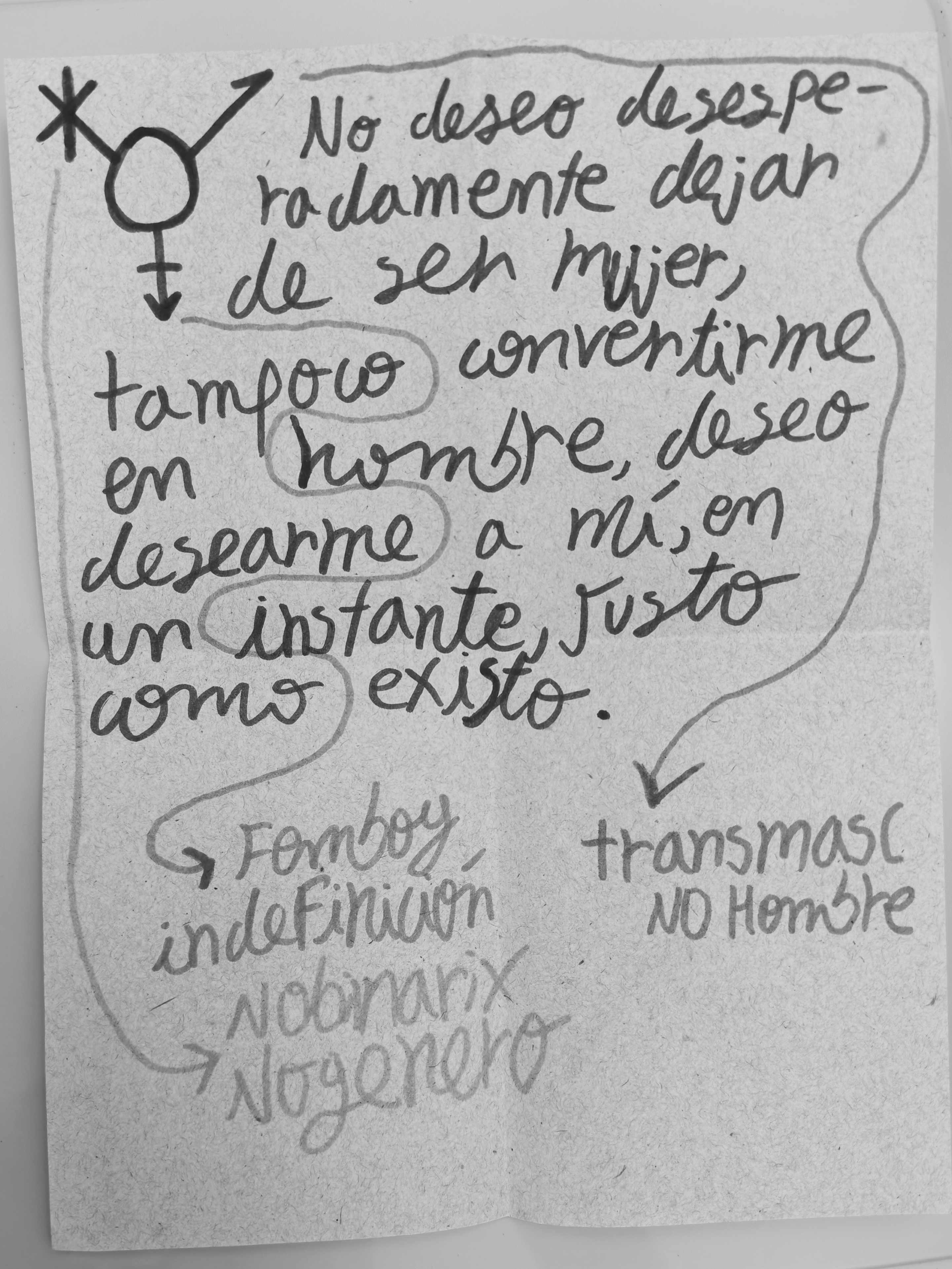
It is important to emphasize this recognition of works and people who inspire us because they have generously shared their knowledge by creating opportunities for meeting and exchange. This shows how trans* people can and have escaped the binary division of male and female that they try to impose on us from Cisheterosexuality[8] and how we generate intra-community solidarity networks. However, it is worth highlighting the contributions we can make from our places of enunciation, in relation to what is understood by Trans* Memory. We understand this practice, which we call Transmasculine Memory*, as far removed from the objectivity implied by scientific research, where the subject/object dichotomy is blurred. The production of archives takes place in everyday life, observing us, but also as part of the building of knowledge from which, in most cases, we are excluded because we do not have access to academic training and are deprived of epistemological access to tools specific to research and archival work.
The role of our archives is specific because it does not respond to essentialisms nor does it focus solely on gender identity. We consider other complexities[9] in the identities of the lives we portray and we relate daily to incompleteness, based on recognizing the imbrication[10] of oppressions. We know we can't cover everything and we know some things will be lost, but that doesn't stop us. The production of common terms, images, and sensibilities is being set in motion and communicated among the groups that visualize the common from various latitudes.
We make these efforts with the conviction of building another dignity, one that does not ignore our experiences when talking about trans* people, one that is not content to be the end of the phrase "women and gender dissidents". This is also an exercise in creativity, sensitivity and even humor: we produce the relational part of the archive where the focus is not on the document, but on what we can be and do from the moment we come into contact with it and with our communities. Our work does not aspire to dispute power or pain in order to continue feeding narratives that place cisheterosexuality at the center of life. We recognize each other through the pain of shared oppressions, but with the caution not to over-identify with it. We are marked by obvious helplessness, violence, the overexposure demanded of us and, in some cases, absolute weakness, but this is not origin-destiny, it is merely a starting point from which to continue sustaining life.
It is therefore also necessary to address the contradiction inherent in what we do and to warn about the threats and their accomplices that we see along the way: visibility without liberation from what oppresses us and which some unwary voices demand; the production of individual images to make us palatable even from the bitter taste of fear and disgust: the new man, the naked man with a vulva, the figure with scars and without breasts, the pregnant man, all figures to transact for hegemonic recognition. Similarly, we still lack clarity on what knowledge and experiences we should safeguard for ourselves, as we find ourselves digging at many levels simultaneously. We find ourselves with infinite desires but with extremely limited resources. We must place uncritical futurism and pioneering under suspicion, remove that neurotic imprint of following in the footsteps of the Father, of seeking genealogies in virility as a sign of origin, of saying "we have always existed", of looking for the "first trans* man who did..." to gain the status of respectability and humanity, the focus on photographs and documents at the cost of the loss of other practices and devices.
This reconstruction—on the one hand, of our past, and on the other, as an intentional production of archives for the future—responds to an intention to produce answers and then more questions. We recognize this responsibility and project it with the need to leave something for the future with the full awareness that the people who succeed us owe us nothing and, even so, aspire to the dissolution and concentration of an intergenerational commonality, which speaks, to the future, of the past that runs through us as that which is impracticable for Cisheterosexuality.
From Mexico, this path has been winding, especially noteworthy are the efforts that, from the lived experience and coordinates of trans* women/transvestites, see in these practices horizons of life. The Trans Memory Archive Mexico, the Transfeminine Art Museum and Trans* Historic Justice* are must-see stops when talking about Trans* Memory in this territory. Because of the transmasculine experience, efforts from art and community organization such as those promoted by Pol Martinez, Mario Sanchez Perez and Nancy Cazares, the latter two based on the figure of Amelio Robles, as well as the wave of expressions of feminine masculinities, trans* men, transmasculinities and non-binary people of the Ballroom Culture, from Monterrey to Merida, throughout the country, with special importance for young, racialized and diaspora people.
Specifically, the Transmasculine Memory Archive Mexico supports work on several levels: of course, the investigation in Institutional Archives, but also the recording of what happens with Transmasculinities in the public life of Mexico City and also in other localities, as well as the opening of commonality in spaces from which we have historically been excluded. These works have a calling for imagination and the construction of an alternative collective organization to the Academy, the State and its Institutions, with complacent figures from activism and the commodification of identities.
Far to the south, the Transmasculinities Archive of Argentina (ATMA)[11] emerges as a child of its territory, where archival practices and politics have a strong relationship with resistance. During the final years of the last civic-ecclesiastical-military dictatorship (1976-1983) and the return to democracy, human rights movements carried out actions to recover and preserve the documents and memories of the victims of torture, death and disappearance under the motto "Memory, Truth and Justice". Organizations such as Madres de Plaza de Mayo, Abuelas de Plaza de Mayo, H.I.J.O.S., among others linked to human rights, pledged to gather all information about their relatives, friends, activists and other people disappeared by the de facto government.
The list of those persecuted and disappeared also included people from the LGB+, queer, and trans* communities, who began to collect documents that would bring to mind the victims of state terrorism who were part of these groups, which have their own specific characteristics. However, the persecution of our community neither begins nor ends with the coup or the return to democracy. The pathologization of our existence, the lack of public policies and access to human rights, criminalization and marginalization are some of the problems we face daily, linked to the prevailing heterocisexism in societies. In this sense, the need arises to promote archival spaces that historicize our realities and distance them from the belief that we are exceptions and/or novelties that arise from 2012, when the Gender Identity Law was sanctioned in Argentina. A great example of this practice is that promoted by the aforementioned Trans Archive Argentina, where transvestites and trans women created a space for preserving the memories of trans femininities, many of them survivors of the political context of the 1970s. This organization inspires and supports us, since, among many other direct impacts on our society, its archives have served for the trials for crimes against humanity of those involved in the military dictatorship.
In this sense, the people who make up ATMA take the concept of ethnology. We, the subjects ourselves, take our community as an object of study, not from otherness but from inhabiting it and being part of it. Instead of applying an external analysis to the recovered transmasculine archives (from the media, books, stories, historical testimonies, etc.), we consider ourselves ethnographers investigating the community itself: faced with the cisexism that has systematically hidden our existences, transmasculine people, trans men, non-binary people, and travos are brought into the present with the aim of collaborating in expanding the imaginaries and possibilities of masculinities in the present, strengthening our heritage and dusting off trajectories erased and ignored by cisheterosexual history. The production of archives takes place in everyday life, in the interaction, but also as part of the building of knowledge from which, in most cases, we are excluded because we do not have access to academic training —depriving us of epistemological access to tools specific to research and archival work. Thus, we generate our own emerging methodologies, not only rescuing the past but also generating archives for the future, through artistic productions and community meetings, where art, activism and archive merge, as do past and present.
This reconstruction that the Transmasculinities Archive Argentina intends to carry out, on the one hand, of our past, and on the other hand, as an intentional production of archives for the future, responds to an intention to recognize a heritage, understood as that pillar of culture that is a heritage of material and immaterial (symbolic) goods. We received that heritage and projected it with the need to leave something for the future: a legacy that speaks to the future of the past that runs through us as a community. However, we do not fail to recognize its colonial origin and the need to build other archives that speak from a critical perspective to this and other paradigms imposed by colonial and capitalist heterocisexuality.
---------------
[1] Castiel Vitorino Brasileiro, When I Meet You All: Bixa Macumbas, Travesti Spells, Self-Publishing. Vitoria, Brazil, 2019; [2] We group this conceptual block with the purpose of highlighting the general terms used contemporaneously in Spanish-speaking Latin America to refer to people who dissent from the Political Regime of Cisheterosexuality in the sense proposed by Ochy Curiel [Coopia, Fanzine Laboratory: Asymmetric Spatialities: Gender Coloniality, Heteronorm, and Territorial Coloniality, Collective Notes, Conversation with Ochy Curiel, page 51]. With this, we aim to question the uncritical extension of the use of the term "queer/cuir/kuir"; [3] Simply reviewing the archive of the First Latin American Trans Archives Congress available on YouTube reveals some of the efforts being made from the diaspora and exile; [4] We revisit the meaning of the "Insubordinate Subject" proposed by Robinsón Salazar as the conscious overcoming of a meaningless life, the obligation to permanently act in a de-alienating and sensitive manner in the face of injustice, and with the resolve to act in risky situations; [5] Although there is no specific definition, and we believe there shouldn't be one, in some territories of southern America we have begun using the term "travo" in relation to the term "trava" (short for "travesti"). "Travesti" is how our comrades self-perceive who, generally, do not accept "being a woman" in the binary terms that linking "woman" to "trans" would propose. While many reject "trans woman" and prefer "travesti," the same occurs with comrades who reject "trans man" to self-perceive as "travos." This term has spread to neighboring countries and further north as well. These denominations tend to be specific to some South American countries; in other Spanish-speaking countries, "travesti" is often used as a synonym for "drag" as an artistic practice, which is a profound semantic difference from the use of the term in Argentina, where "lo travesti" is a gender identity. "We traced the adoption of the term 'travo' thanks to its use on Social Media, content creators, and slang used in the Ballroom Community across Latin America"; [6] They can be found on Instagram as: Memoria Transmasculina Py, Memoria TransMasculina (Chile). On Instagram: AL and Chile Memoria TransMasculina @memoriatransmasc; AL Brazil Arquivo das Transmasculinidades Negras Brasileriras @transencruzilhadas; ChilenRaíces Transmasculinas @raicestransmasc; Honduras Hombres trans Honduras @hombrestranshonduras; Guatemala Repositorio Memoria Abyecta Guatemala @memoria_abyectagt; Uruguay Transboys Uruguay; [7] https://archivotrans.ar; [8] The belief or assumption that the gender identities, expressions, and embodiments of cis people are more natural and legitimate than those of trans people. Julia Serano adopts this term in her texts Whipping Girl (2007), Excluded (2013), and Outspoken (2016); [9] How do you search for what is not named? And, in the case of transmasculinities, what also doesn't catch the eye due to an apparent assimilation with cis masculinities. Our archival work breaks with the linear conception of time; we search in the past, record what happens, and imagine lines where the norm could not see them. Coming from the abject, from anomaly, even the prison, the hospital, and the museum hold the majority of the records where our ancestry might be found. Therefore, we are irremediably limited, and narratives can quickly shift towards the assimilation of subjects outside the norm. Conservation spaces will soon exhaust private collections, and public buildings will be necessary. In Latin America, there is little technical knowledge and little autonomy for the tasks of preserving and restoring; [10] We use "imbrication" in the sense of the works of Andréa Gill and Thula Pirés (2019), as well as the notes of Martín Pahde. Using the metaphor of how oppressions overlap and support each other, like threads in a loom, they mutually constitute each other and result in much more than their accumulation. This avoids superficial discussions about who has more and focuses on how they are sustained to perpetuate hegemonic power; [11] Web: www.archivotransmasc.ar, Instagram: archivotransmasc.ar


Subscribe to our newsletter!
¡Gracias por suscribirte!











CALLE DEL ARTÍCULO 123 #116 INT. 100,
COLONIA CENTRO, CUAUHTÉMOC,
CDMX 06040, MÉXICO