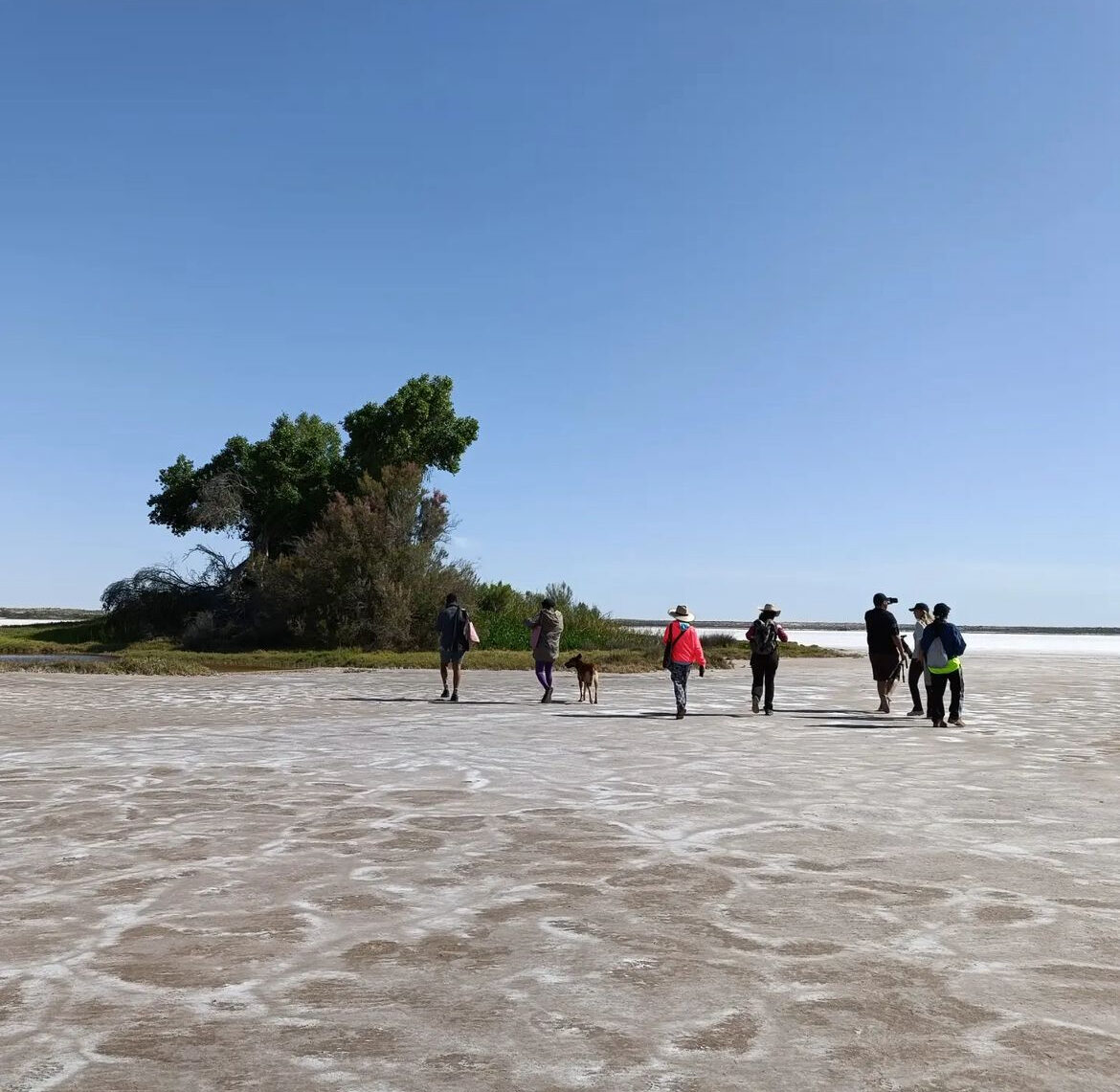
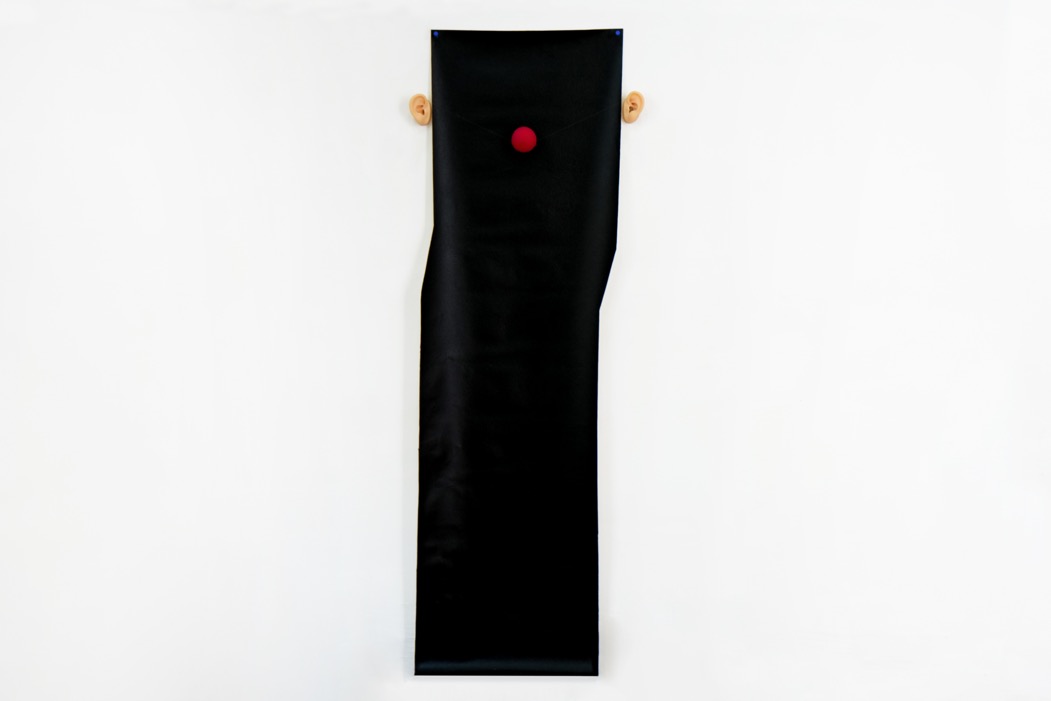
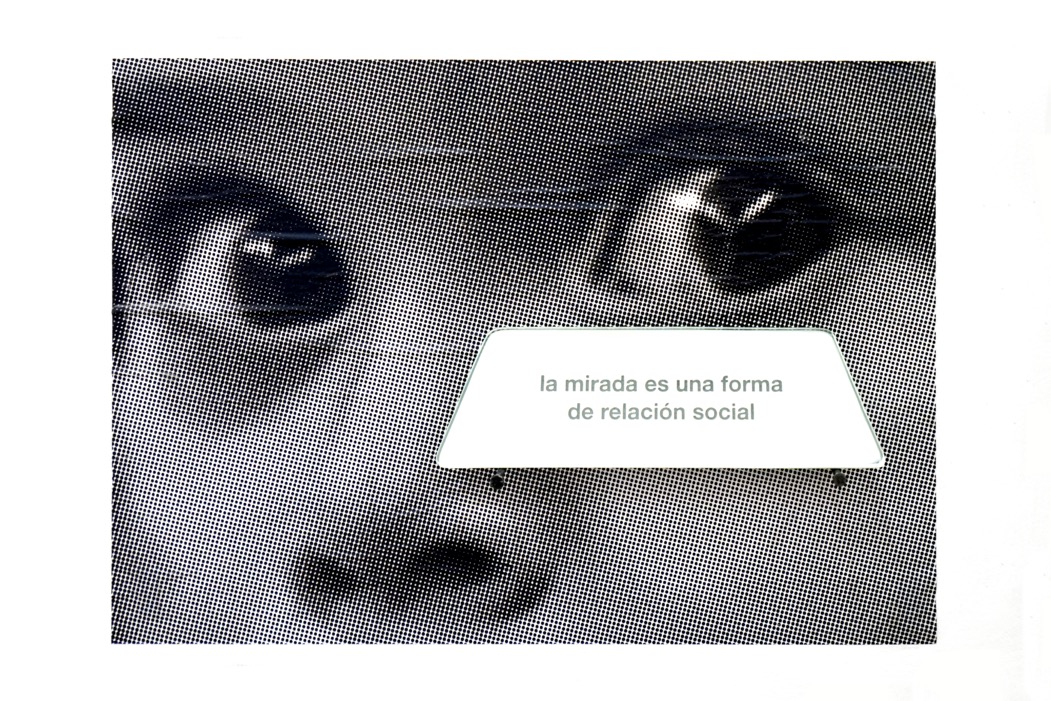
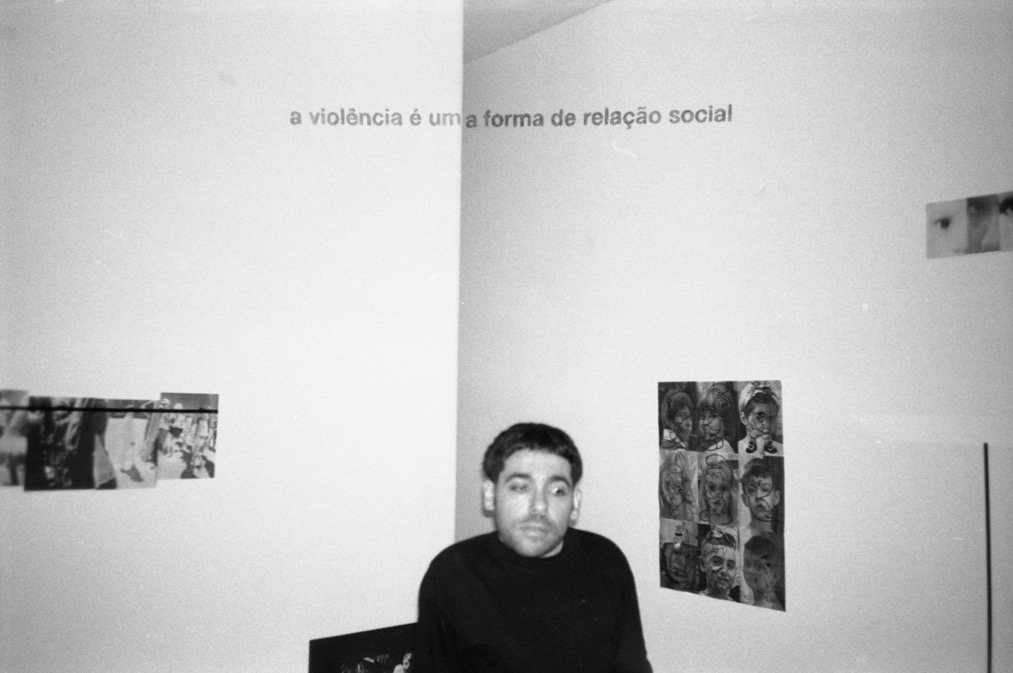
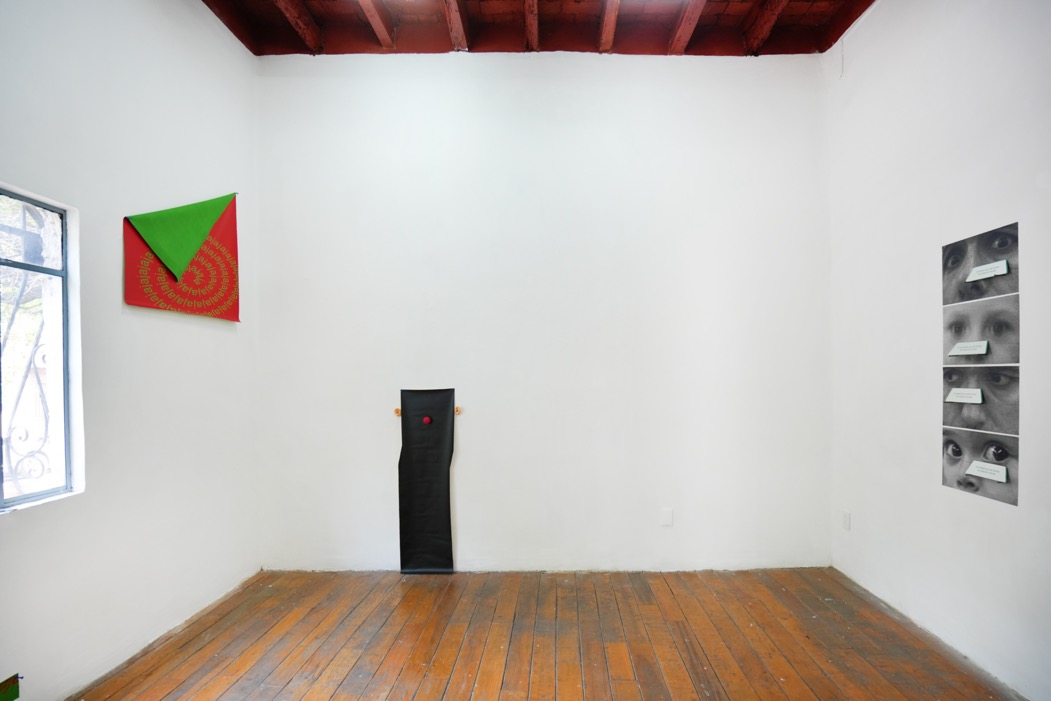
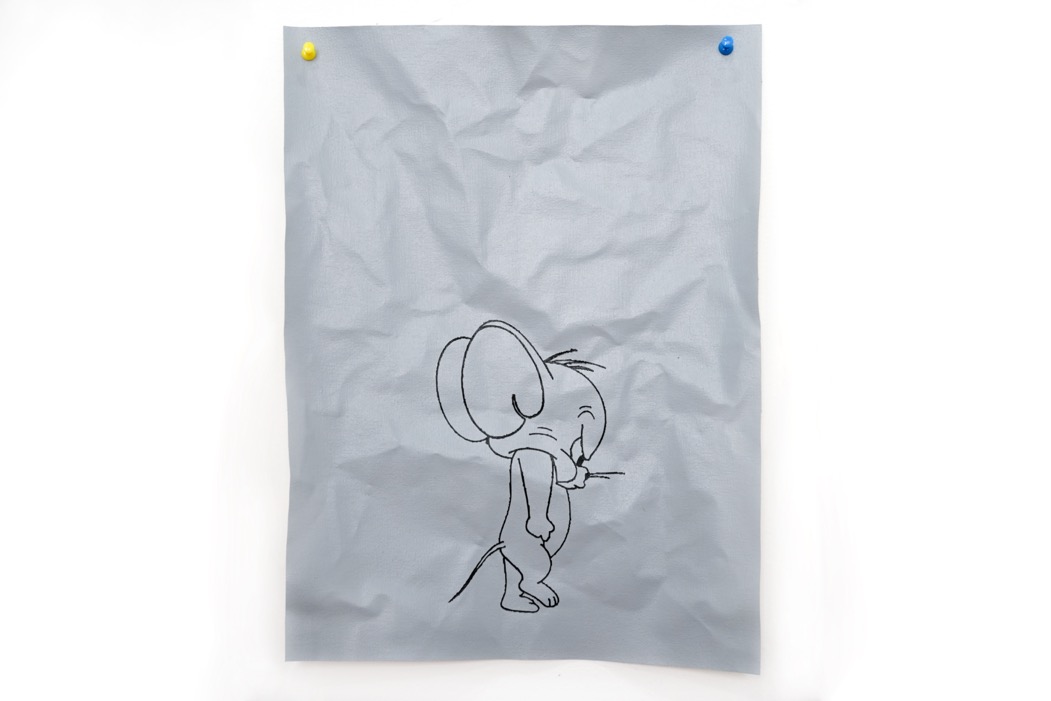
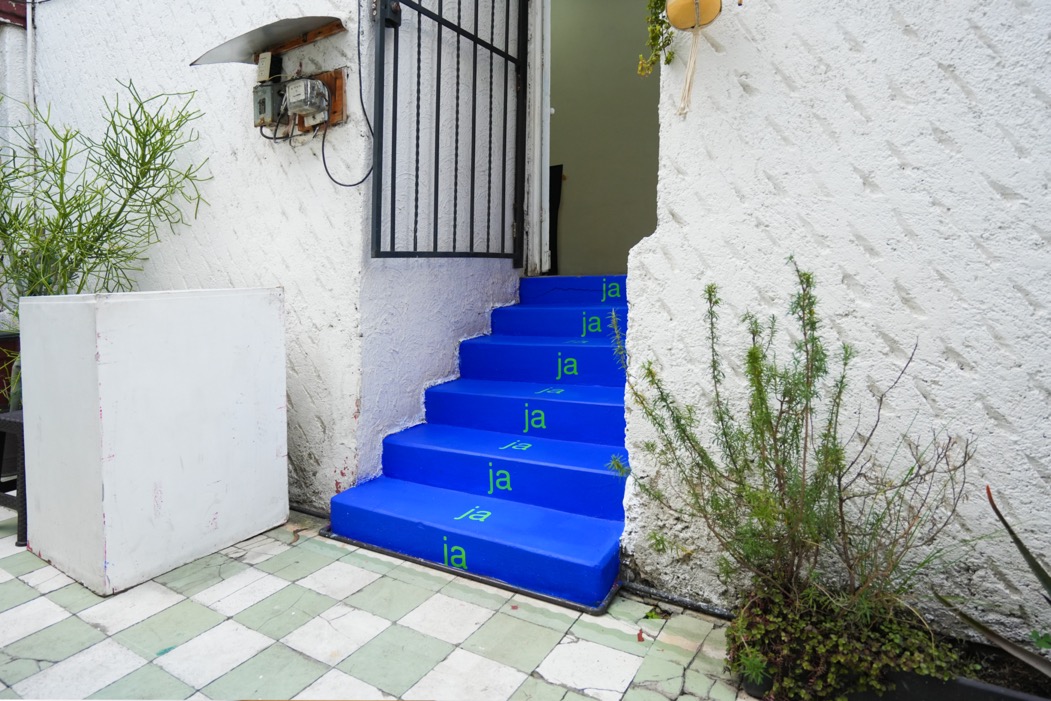
Based on a correspondence between artist Elian Chali and curator Catalina Urtubey, the exhibition “what is that?” [Salón Silicón, Mexico, from July 5 to August 26] dismantles the idea of “curating” as order and refinement, in order to open something else: an amorphous space of listening, care, and risk. A laboratory where the body—as language, as archive, as mask, and as enigma—becomes a territory of vibration, opacity, and humor, of tenderness and monstrosity. What is that? did not seek answers. It preferred escape, doubt, the gray slice of nothing. It invites us to look with infinite eyelids, to empty ourselves of the weight of the world, and to inhabit the strangeness that keeps us alive. A constellation traced between two bodies that insist on accompanying each other. A conversation that becomes artwork. An exhibition that asks us, head-on: What remains inside that we don’t yet know how to say?
The body is the spirit’s expressive form. So says one of the fifty-eight marks on the body, where J. L. Nancy goes back and forth, says and unsays, around this thing that we are, or this thing where we are, or this thing that is, etc., etc., etc.
That text is amazing because it presents, from a philosophical perspective, a poetic maneuver. It reads like a draft of statements that shift all the time away from any certainty.
What is that? is a selection of works that are also in motion, powered. Somewhat opaque, although it says it clearly. These pieces come to tell of a deep concern that lets one body-archive speak —I don't know if in shouts or in a very low voice.
In this exhibition, we did some very serious clowning around together, in terms of an exorcist ritual. You opened up in front of me and I groped you, I grope you and, without fear, you are dancing, you close your eyes looking for something, looking to see nothing, looking to see that gray slice of nothing, you dive deep, into the enjoyment of the liquid, that inhabits the thick bubble, slimy and light, that captures, in a discreet cage, your bag of bones.
Everything is revealed except the secret of the body, that body, expands, it falls off at the corners, it becomes minuscule, it unfolds, it unfolds, it's kilometric, it’s always everywhere in the world, they look at you, they look at you, they look at you, before going back home you make a joke, “I am Gloria Trevi,” you say, and you leave lying on the floor a backpack full of stones, that fall making a sound that is barely audible.
There is a dance that grants, among many other wonders, the possibility of infinite eyelids. That transforms the eyeballs, which now disoriented, drop and float on the back of the skull. The suspense in the eye causes an echo in the compassless bowl of air, and then, the body begins to empty. That shell-like body is now sustained by a kind of unknown consciousness, a slight reality that occurs between the whole and the tan tien.
Gravity becomes rarefied. Thus, a constellation drawn in another time is articulated, which goes from the center of the Earth and reaches to the end of the world. Would that be becoming a gray slice of nothing? What remained trapped inside you without translation, Elian? *
Disclaimer
I don't really know where this text is going, but it doesn't heal. I also don't think it's a support device. I, your friend, am sometimes a support device, but this text is not a prosthetic for nothing. We have already discussed, at length, the violence involved in healing.
Curator or commissioner: the two alternatives that exist in Spanish. What a shitty couple of words we have come up with to name the ways of being together in such a process. It's strange that, in a medium that is always thinking about, from and around language, we have been content with such a pathologizing term. You made me see that a while ago. Also, I know that healing comes from caring. For whom? Against what? There is a vigilant desire that pulses within us when it comes to assisting an overflow of the other: looking at it, studying it, containing it, editing it, explaining it, making it enjoyable, digestible, worthy. Colonizer of works of art. That term would be fine, along the same line.
I believe that in recent years, and stemming from a profound loss of love for the art system, I became a radical for the future of listening to other people's practices. I listen, I read, I take notes, I snoop, I review archives and works, I ask questions and I talk a lot. I ramble with others. We think out loud. While I carefully reread what emerges from there, I capture something.
A number of images appear that trigger a plan of action that is precise and vital for all parties. It's impressive. We're encouraged. And meanwhile, I remember things and organize a network of interests and affections. Symbolic capital? I open my books, my house, and this appears. An amorphous, experimental, and horizontal way of healing, to get closer to works, friends and people I admire. Sometimes I think it's a co-gestation. Things get mixed up: care, production, and management. Reproduction tasks? It's difficult. It's difficult to care for without polishing, without whitewashing. It's difficult to raise someone without sterilizing their uniqueness and wanting to shed light on their opacities.
Maria Zambrano says that philosophy wants to be in charge of getting out of the cave, while poetry is conceived as a deeper form of knowledge, which dwells in the depths of human experience and is nourished by intuition and emotion, without needing to escape from it. There is a moment when you come out of a body and they teach you things. They explain things to you all the time. Until you die. They tell you what and how, and you sharpen the knife of reason, morality, and ethics; and you have no choice but to interpret the world, understanding everything.
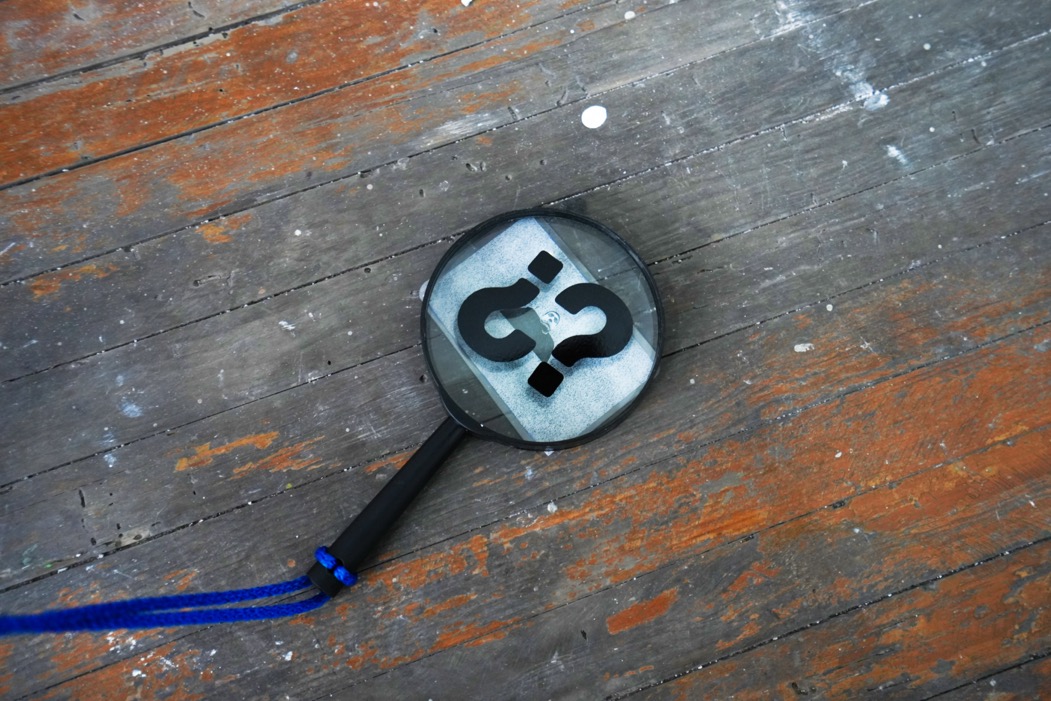
What's that?, that is cheese, that is a painting, that is a pipe, that is a look, that is a skid, that is a larva, that is paranoia, that is a mold, that is a poster, that is militancy, that is an average, that is a whore, that is a curatorial text, that is a drama, that is an axolotl, that is a magnifying glass that is a dwarf, that is a hole, that is a social relationship, I don't really know what anything is, I'm very wrong, my friend.
I feel like the world has been about to end since it began. I feel like the world is smaller than ourselves. Is there any way to avoid the wound? We lubricate ourselves so that all our courses slip through the available extension of flesh. Long live THIS freedom! The one to fill holes with vaseline, the one to make my friend cry.
Long live the freedom to call you: fucking dwarf. Long live the unprecedented, untranslatable gesture. Are your friends aware of which muscle chains you're using to cross this shitty river? — asked danie s., a few weeks ago, in this same room. We always take care of each other; a little bit of me taking care of you and a little bit of you taking care of me. We learn about our bodies, about the ideas that haunt and stir us. Let's insist on finding paths to walk together along the road of the slow species, battered by the public eye of society but with a long trajectory on tenderness in intimacy. Long live nostalgia against all presentism! You are my compass that always points south, Elian.
What remained trapped inside you without translation, Elian?
-Cata
When? Now? In the past? At the exact moment my heart was broken? In the instant after my last breath? After every wild, lascivious look from all those children who once crossed paths with me? After reading you lurking in my inner nooks and crannies in this text? Inside it's a tangle, a swarm, a multitude of multitudes impossible to organize. It's a hot hole, feverish like the tightly packed organs of my accordion-like chest. If I told you that it was trapped, it's because I would know, and knowing can be a form of translation.
I would like to be genuine with my answer, although, in reality, it leaves me with a deep, unbearable emptiness; the same emptiness I feel when any child asks me to my face: What's that? As if I weren't standing in front of them, listening. As if I weren't a person. As if that question could, perhaps, be protected by the halo of curiosity with which so many things in childhood are justified. Genuine, not honest, not even authentic, nor sincere. I mean that I would like to put aside all artifice and be able to spew out what is trapped inside, whatever form it may take. Without preambles or justifications. Without filter, without order, without poetic pretensions or political stances. To open a tap that will rid my being of all that I feel and don't understand. Because "honest" has a foul, church-like smell. “Authentic” seems to owe correspondence, to have backing from something else capable of legitimizing these treacherous words. And “sincere” is, well, a commodity of the transparency business. I wish I could be genuine but I can't, I go round and round, while I crawl through these words trying to answer and I wonder if these are not, also, the cage where the untranslatable is trapped.
I'd rather not start with the usual spiel, about how I rely on this, how I prove this with that, because right then and there, that obvious thing I try to disguise with the speeches I invented to justify my existence starts falling out of my pockets. Those party masks and rubber clown noses have saved my life, but they are not enough to hide what is trapped, untranslatable, inside me, deep inside, which I know well and which, when I think about it, I close one eye so as not to see it so much and, while I write this, I really see it, I can almost lick it, I touch it, I kiss it and I abhor it. Sometimes I wish that costume wasn't a piece of cloth but a suit of skin, human skin, so I could dress up as someone other than myself; that thing they say about creating fictions to survive, about getting caught up in fantasy to escape this suffocating reality. That's what I want, Cati. I don't know if I should turn my insides upside down to let out what's trapped inside me, deep inside, without translation. Maybe I imagine a journey in reverse, on the opposite path. Or maybe dressing up as an animal, I don't know, a wooden skin to see if I can become a piece of furniture, a strange leather, like an alien's, I don't know. We could ask the children what they think, what clothes they would put on that thing that looks like a human, how they would disguise it to make it more acceptable. I don't know, Cati. I thought adults were worse, but the truth is they can't hide their misery and decadence even a little, and we're all in that place, and honestly, it makes me feel tenderness, a little tenderness. I feel sorry for all of humanity, not just those close to me, who are quite sad, my friends and family; they're kind of disoriented, well, we are, compassless, as if the Earth's magnetic fields had melted and become useless, confusing the meridians, the tropics, the neighborhoods. But I also see those who aren't so close to me, or rather, to be honest, yes, they are quite close but they aren't my friends, although some of them are, and they are so obsessed with war, with hatred, with the extermination of others who don't think the same way, with the disintegration of anything that smells of commonality. They are the same, and I don't want to hug them; I want to hug my friends, but not them. Sorry, but no. I don't have this obsession with protecting all of humanity for the sake of species preservation. Let them hug each other, or I don't know, kill each other. Who knows what they do when they're together? If they even share anything? But I can see them wandering around the streets and on social media. They're the same, they don't see anything even though it's right in front of them; they defend with unwavering faith all this shit that's happening and say that everything is fine, while they cut the soles of their feet, while they burn the fine hairs on the backs of their necks and their gazes yearn for any horizon, and that's where I feel sorry for humanity. So yes, I know that they can be sinister, twisted and perverse. They are. We already see them destroying everything alive here or there without hesitation; but the gaze of children is something else, it is ambiguous and crystalline, they refract the unspeakable truths illuminating and obscuring everything, they pierce the very depths and nothing can be said because that is what happens, the semantic field of childhood is untouchable; pure, hygienic, debuting in a world that, sooner rather than later, will turn it into shit. It's an immaculate, odorless universe, and the language of the cherubs is sweet and white, honeyed and airy; so try to imagine, Cati, how am I going to translate what's trapped inside me if I can't even grasp it, or get close to it, or dig into it, and it's strangled in the corridors of this cage that I don't know if it's a common jail or a madhouse or a zoo or a museum or simply a body, and, look, several lines later, I'm still snooping around to see if I can manage it, but I go round and round and I wonder if translation is a problem of language or if language is a problem of reason, or if reason is a problem of truth, or if truth and violence are the same, or if it's useful to traffic a little bit from there to here, and I wonder what for, why not leave everything as it is, in there rotting, fermenting; those parasites also need to eat.
-Elian
The body is the spirit’s expressive form. So says one of the fifty-eight marks on the body, where J. L. Nancy goes back and forth, says and unsays, around this thing that we are, or this thing where we are, or this thing that is, etc., etc., etc.
That text is amazing because it presents, from a philosophical perspective, a poetic maneuver. It reads like a draft of statements that shift all the time away from any certainty.
What is that? is a selection of works that are also in motion, powered. Somewhat opaque, although it says it clearly. These pieces come to tell of a deep concern that lets one body-archive speak —I don't know if in shouts or in a very low voice.
In this exhibition, we did some very serious clowning around together, in terms of an exorcist ritual. You opened up in front of me and I groped you, I grope you and, without fear, you are dancing, you close your eyes looking for something, looking to see nothing, looking to see that gray slice of nothing, you dive deep, into the enjoyment of the liquid, that inhabits the thick bubble, slimy and light, that captures, in a discreet cage, your bag of bones.
Everything is revealed except the secret of the body, that body, expands, it falls off at the corners, it becomes minuscule, it unfolds, it unfolds, it's kilometric, it’s always everywhere in the world, they look at you, they look at you, they look at you, before going back home you make a joke, “I am Gloria Trevi,” you say, and you leave lying on the floor a backpack full of stones, that fall making a sound that is barely audible.
There is a dance that grants, among many other wonders, the possibility of infinite eyelids. That transforms the eyeballs, which now disoriented, drop and float on the back of the skull. The suspense in the eye causes an echo in the compassless bowl of air, and then, the body begins to empty. That shell-like body is now sustained by a kind of unknown consciousness, a slight reality that occurs between the whole and the tan tien.
Gravity becomes rarefied. Thus, a constellation drawn in another time is articulated, which goes from the center of the Earth and reaches to the end of the world. Would that be becoming a gray slice of nothing? What remained trapped inside you without translation, Elian? *
Disclaimer
I don't really know where this text is going, but it doesn't heal. I also don't think it's a support device. I, your friend, am sometimes a support device, but this text is not a prosthetic for nothing. We have already discussed, at length, the violence involved in healing.
Curator or commissioner: the two alternatives that exist in Spanish. What a shitty couple of words we have come up with to name the ways of being together in such a process. It's strange that, in a medium that is always thinking about, from and around language, we have been content with such a pathologizing term. You made me see that a while ago. Also, I know that healing comes from caring. For whom? Against what? There is a vigilant desire that pulses within us when it comes to assisting an overflow of the other: looking at it, studying it, containing it, editing it, explaining it, making it enjoyable, digestible, worthy. Colonizer of works of art. That term would be fine, along the same line.
I believe that in recent years, and stemming from a profound loss of love for the art system, I became a radical for the future of listening to other people's practices. I listen, I read, I take notes, I snoop, I review archives and works, I ask questions and I talk a lot. I ramble with others. We think out loud. While I carefully reread what emerges from there, I capture something.
A number of images appear that trigger a plan of action that is precise and vital for all parties. It's impressive. We're encouraged. And meanwhile, I remember things and organize a network of interests and affections. Symbolic capital? I open my books, my house, and this appears. An amorphous, experimental, and horizontal way of healing, to get closer to works, friends and people I admire. Sometimes I think it's a co-gestation. Things get mixed up: care, production, and management. Reproduction tasks? It's difficult. It's difficult to care for without polishing, without whitewashing. It's difficult to raise someone without sterilizing their uniqueness and wanting to shed light on their opacities.
Maria Zambrano says that philosophy wants to be in charge of getting out of the cave, while poetry is conceived as a deeper form of knowledge, which dwells in the depths of human experience and is nourished by intuition and emotion, without needing to escape from it. There is a moment when you come out of a body and they teach you things. They explain things to you all the time. Until you die. They tell you what and how, and you sharpen the knife of reason, morality, and ethics; and you have no choice but to interpret the world, understanding everything.
What's that?, that is cheese, that is a painting, that is a pipe, that is a look, that is a skid, that is a larva, that is paranoia, that is a mold, that is a poster, that is militancy, that is an average, that is a whore, that is a curatorial text, that is a drama, that is an axolotl, that is a magnifying glass that is a dwarf, that is a hole, that is a social relationship, I don't really know what anything is, I'm very wrong, my friend.
I feel like the world has been about to end since it began. I feel like the world is smaller than ourselves. Is there any way to avoid the wound? We lubricate ourselves so that all our courses slip through the available extension of flesh. Long live THIS freedom! The one to fill holes with vaseline, the one to make my friend cry.
Long live the freedom to call you: fucking dwarf. Long live the unprecedented, untranslatable gesture. Are your friends aware of which muscle chains you're using to cross this shitty river? — asked danie s., a few weeks ago, in this same room. We always take care of each other; a little bit of me taking care of you and a little bit of you taking care of me. We learn about our bodies, about the ideas that haunt and stir us. Let's insist on finding paths to walk together along the road of the slow species, battered by the public eye of society but with a long trajectory on tenderness in intimacy. Long live nostalgia against all presentism! You are my compass that always points south, Elian.
What remained trapped inside you without translation, Elian?
-Cata
When? Now? In the past? At the exact moment my heart was broken? In the instant after my last breath? After every wild, lascivious look from all those children who once crossed paths with me? After reading you lurking in my inner nooks and crannies in this text? Inside it's a tangle, a swarm, a multitude of multitudes impossible to organize. It's a hot hole, feverish like the tightly packed organs of my accordion-like chest. If I told you that it was trapped, it's because I would know, and knowing can be a form of translation.
I would like to be genuine with my answer, although, in reality, it leaves me with a deep, unbearable emptiness; the same emptiness I feel when any child asks me to my face: What's that? As if I weren't standing in front of them, listening. As if I weren't a person. As if that question could, perhaps, be protected by the halo of curiosity with which so many things in childhood are justified. Genuine, not honest, not even authentic, nor sincere. I mean that I would like to put aside all artifice and be able to spew out what is trapped inside, whatever form it may take. Without preambles or justifications. Without filter, without order, without poetic pretensions or political stances. To open a tap that will rid my being of all that I feel and don't understand. Because "honest" has a foul, church-like smell. “Authentic” seems to owe correspondence, to have backing from something else capable of legitimizing these treacherous words. And “sincere” is, well, a commodity of the transparency business. I wish I could be genuine but I can't, I go round and round, while I crawl through these words trying to answer and I wonder if these are not, also, the cage where the untranslatable is trapped.
I'd rather not start with the usual spiel, about how I rely on this, how I prove this with that, because right then and there, that obvious thing I try to disguise with the speeches I invented to justify my existence starts falling out of my pockets. Those party masks and rubber clown noses have saved my life, but they are not enough to hide what is trapped, untranslatable, inside me, deep inside, which I know well and which, when I think about it, I close one eye so as not to see it so much and, while I write this, I really see it, I can almost lick it, I touch it, I kiss it and I abhor it. Sometimes I wish that costume wasn't a piece of cloth but a suit of skin, human skin, so I could dress up as someone other than myself; that thing they say about creating fictions to survive, about getting caught up in fantasy to escape this suffocating reality. That's what I want, Cati. I don't know if I should turn my insides upside down to let out what's trapped inside me, deep inside, without translation. Maybe I imagine a journey in reverse, on the opposite path. Or maybe dressing up as an animal, I don't know, a wooden skin to see if I can become a piece of furniture, a strange leather, like an alien's, I don't know. We could ask the children what they think, what clothes they would put on that thing that looks like a human, how they would disguise it to make it more acceptable. I don't know, Cati. I thought adults were worse, but the truth is they can't hide their misery and decadence even a little, and we're all in that place, and honestly, it makes me feel tenderness, a little tenderness. I feel sorry for all of humanity, not just those close to me, who are quite sad, my friends and family; they're kind of disoriented, well, we are, compassless, as if the Earth's magnetic fields had melted and become useless, confusing the meridians, the tropics, the neighborhoods. But I also see those who aren't so close to me, or rather, to be honest, yes, they are quite close but they aren't my friends, although some of them are, and they are so obsessed with war, with hatred, with the extermination of others who don't think the same way, with the disintegration of anything that smells of commonality. They are the same, and I don't want to hug them; I want to hug my friends, but not them. Sorry, but no. I don't have this obsession with protecting all of humanity for the sake of species preservation. Let them hug each other, or I don't know, kill each other. Who knows what they do when they're together? If they even share anything? But I can see them wandering around the streets and on social media. They're the same, they don't see anything even though it's right in front of them; they defend with unwavering faith all this shit that's happening and say that everything is fine, while they cut the soles of their feet, while they burn the fine hairs on the backs of their necks and their gazes yearn for any horizon, and that's where I feel sorry for humanity. So yes, I know that they can be sinister, twisted and perverse. They are. We already see them destroying everything alive here or there without hesitation; but the gaze of children is something else, it is ambiguous and crystalline, they refract the unspeakable truths illuminating and obscuring everything, they pierce the very depths and nothing can be said because that is what happens, the semantic field of childhood is untouchable; pure, hygienic, debuting in a world that, sooner rather than later, will turn it into shit. It's an immaculate, odorless universe, and the language of the cherubs is sweet and white, honeyed and airy; so try to imagine, Cati, how am I going to translate what's trapped inside me if I can't even grasp it, or get close to it, or dig into it, and it's strangled in the corridors of this cage that I don't know if it's a common jail or a madhouse or a zoo or a museum or simply a body, and, look, several lines later, I'm still snooping around to see if I can manage it, but I go round and round and I wonder if translation is a problem of language or if language is a problem of reason, or if reason is a problem of truth, or if truth and violence are the same, or if it's useful to traffic a little bit from there to here, and I wonder what for, why not leave everything as it is, in there rotting, fermenting; those parasites also need to eat.
-Elian


Subscribe to our newsletter!
¡Gracias por suscribirte!










CALLE DEL ARTÍCULO 123 #116 INT. 100,
COLONIA CENTRO, CUAUHTÉMOC,
CDMX 06040, MÉXICO