The gallerist and cultural manager Gabriela Urrutia da Bove presents a profound conversation with the Chilean curator and cultural producer Rodolfo Andaur, on the occasion of his nearly two decades of curatorial practice and, in particular, his book Transformative Territories 2010–2020 (Editorial Gronefot, 2023). The interview explores the ways in which Andaur weaves together thought, research, and curatorial practice from northern Chile, proposing a methodology centered on travel, territorialities, and a critique of official historical narratives.
I met with curator and manager Rodolfo Andaur to explore his almost twenty years of curatorial career and to reflect, in particular, on the contents of his latest publication Territorios transformativos 2010-2020 (Editorial Gronefot, 2023). Andaur offers us a profound look at travel as a tool to transcend the traditional borders of both art and contemporary thought. This methodology has led him to travel and analyze countless geographies beyond urban centers and official narratives. The journey, the transcendence of borders, the critical review of denied narratives and situated practices are presented as the central axes of a curatorial-artistic and theoretical project, which has opened horizons of thought from Atacama.
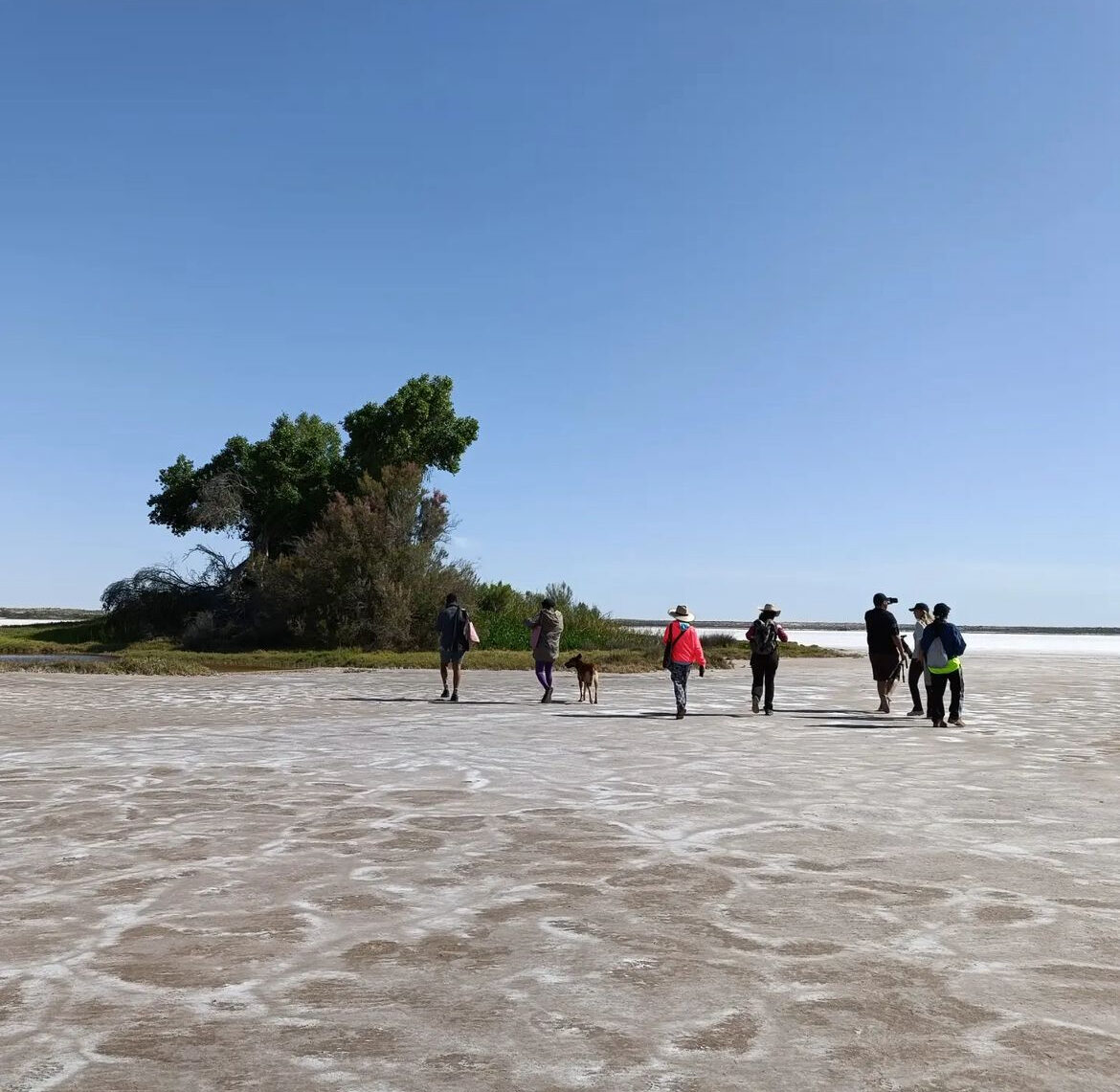
Rodolfo [R]: For me, it has been fundamental to create systems of thought that then shape writings and curatorial work, in addition to visiting certain archives that play a crucial role. Many of these archives are not related to the field of art, but rather to those that house sociological, anthropological, archaeological, biological, and historical analyses.
Similarly, the curating and the act of compiling archives led me to reflect on the stories that have been systematically denied for at least the last two centuries in Atacama. It is not the territory itself that speaks, but the territorialities: all that vast information accompanied by invisible stories, the ways of learning and doing that communities spread, particularly in territories that have been marked by conflict, usurpation and ethnocide for a long time. Perhaps this is not perceived as clearly in places like large metropolises, but here, in northern Chile, it is felt very intensely. I realized how the State acts in a colonial way, how forms, textures and ways of speaking are imposed; which led me to rethink the notion of territoriality. This territoriality has been essential to my methodology and has allowed me to apply it in a variety of curatorial projects.
R: In my opinion, there has never been an open conversation in Chile about the responsibility of the State, for example, in the war with Peru and Bolivia, nor about the implications of the war that this has had on the education system. That is why I found it very interesting to approach the texts of Sergio Gonzalez, and of other critical historians who have been made invisible, such as Guillermo Billinghurst; Peruvian-Chilean historians who spoke and wrote about these problems and, particularly, about what happened when Chile assumed control of the Atacama Desert. On the other hand, I believe that Chile's strategy has always been to use force as an effective and accurate tool to compulsively "Chileanize" the desert.
R: Since 2007, especially when I had to work on the exhibition Huellas civiles [Civil footprints], which commemorated the workers' massacre of the Santa Maria de Iquique School (1907), I began to reflect on how I understood the concept of territory. I began to question and take note that territory is not only something physical, but also a notion that is built from the vision of the communities, from how a group of people understands their relationship with the space they inhabit. But what happens when, within those spaces, there are other ways of thinking about and experiencing that same territory? I call this situation territoriality.
Territoriality refers to the ways of living that emerge in certain geographical spaces, and how these ways shape the way people communicate, dress, speak, and preserve their traditions. That's why I've always said that territoriality is the most intangible aspect of territory. It is what happens within the community, and how it interacts with non-human culture.What has happened, especially in Latin America in recent years, is that we have begun to recognize, from the field of art, that territoriality is an essential component for understanding and challenging the different realities that exist in countless territories.
R: Being able to become deeply involved with places has been key to my work: studying both the landscape and physical geography, as well as the territorialities that emerge in those spaces. I am also interested in how imaginaries intersect with official history, those chronicles that are imposed on us with other narratives that emerge from popular communities, from that popular imagery that often remains silenced. That which is not physical, the immeasurable that inhabits the territories, is fundamental. These practices, which we can only understand when we are in that place, encourage us to reflect on what kind of critical thinking we can generate from them. And it's not just about reflecting, but about how we can be part of that thinking, not only within the context of contemporary art, but with communities. That is another dimension I try to promote: that artists in residencies or projects linked to residencies have the opportunity to connect more closely with a social group, with a community, to understand that not everything is reduced to a piece or work of art. The act of listening and sharing is also crucial for generating critical thinking. For me, this process of exchange and reflection is essential.
R: I often think that I was born traveling. I had the privilege of doing it from a very young age. My ancestors are from the pampas and, due to the nitrate crisis, they had to leave La Pampa. However, as a commemorative act, they returned periodically, which for me became a ritual. For me, the diaspora of my ancestors is part of territoriality. It was very significant to realize how that pampas diaspora moved to Iquique and returned every so often to a place that was already abandoned, whose houses in ruins were full of intact objects, although covered with chusca.
For me, travel is a ritual, not just a physical journey. It is a profound act, a moment that allows us to observe, to connect landscapes, temporalities and situations that we would not normally see in our daily lives, and it also involves the participation of a collective. This vast amount of acquired information validates this territorial research methodology that has allowed me to carry out curatorial projects and residencies in this country, and also in other countries such as Canada, Singapore, Iran, Turkey and Denmark, to name a few.
G: Continuing with the journey, how does the idea of borders fit into your practice?
R: For me, the border represents an overflow. In these overflows, various human practices are mixed, and this is especially evident in situations such as the massive arrival of immigrants to different countries in both North and South America. This phenomenon occurs not only at international borders, but also within the internal overflows that many countries possess. Many of these overflows are geographical and also ethnic.
R: Most of these projects arose from direct invitations from some artists and collectives, while others were driven by my own interest in exploring certain visualities and narratives of on-site visual arts work. The purpose of bringing these texts together is to present a review of a process that, over more than a decade, has sought to spread a vision that goes beyond the capital of Chile. In this global context, I understood that, in order to address territories and territorialities in a more complex way, it was necessary to consider not only ethnic, ethical, and psychopolitical conflicts, but also biological ones. Transformativity, as a concept, contributes to offering a new perspective to understand these processes and their impact on communities and their territories.
It emerged in my reflective analysis, when, since 2011, I began several long curatorial research stays in Berlin. There, I came across this concept within the field of biology and ethnobotany. In this sense, Territorios transformativos 2010-2020 is committed to the dissemination of a group of artists who develop transformative practices, beyond the design times and logics.
Transformativity is assuming that human and non-human processes are also part of the field of art research and are also a way of critically questioning territorialities. It is crucial to make these reviews visible and to highlight that these types of decentralized readings can be done constantly. I committed to that perspective, thinking it was of great interest to the context of what Chile has experienced recently. In fact, the book ends with the first anniversary of the 2019 social uprising.
R: Yes, it was essential to create a space for reflection on what Chile experienced during such a complex period. Not only because of the uprising, but also because of the pandemic and the way in which the State repressed social demands through it. This text seeks to capture an emotional state of territoriality, not only in terms of physical space, but also of the tensions in different places in Chile. It was crucial for me to realize that we were not facing a simple "social explosion", as it was called, but rather an uprising with clear drives, political drives that defined its character.
That's why I believe that transformativity encourages a deep reflection on what we have denied as a society. It also discusses how the art world, which is often seen as privileged, has failed to recognize these non-hegemonic social and cosmogonic realities. We already know that many artistic projects exploit social dramas without offering deep reflection and analysis. That is why I chose to examine these projects, because I believe that the most relevant ones, for example, to understand the uprising, are those that not only seek to portray political events, but also involve proposing a social reflection.
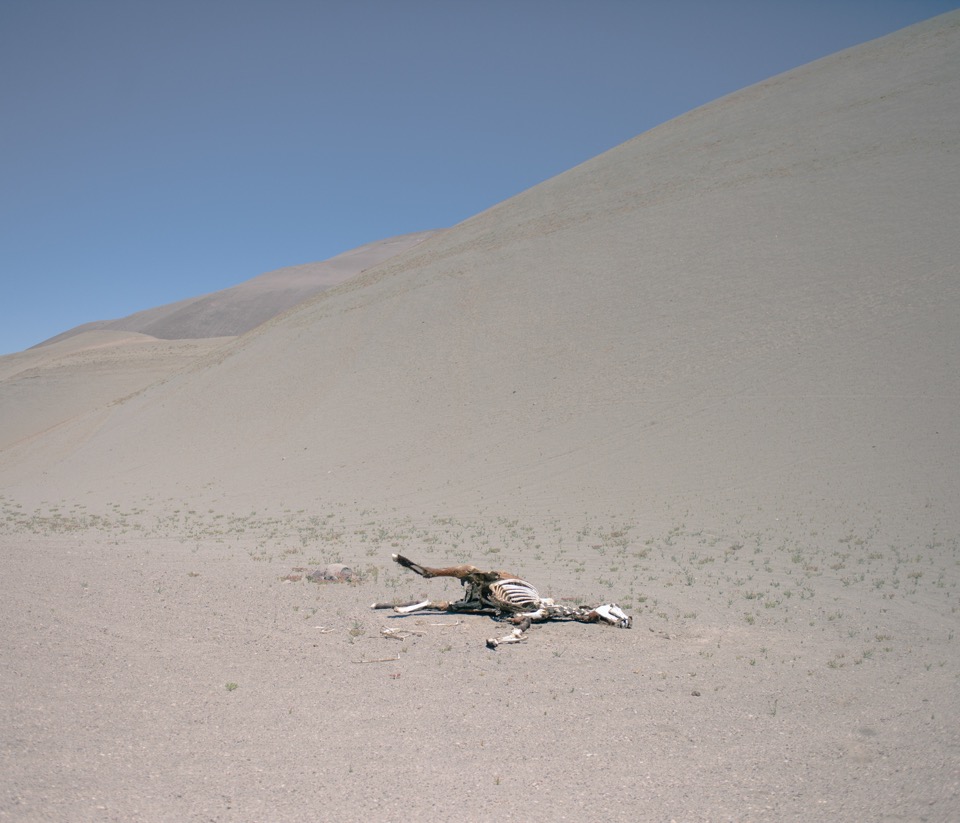
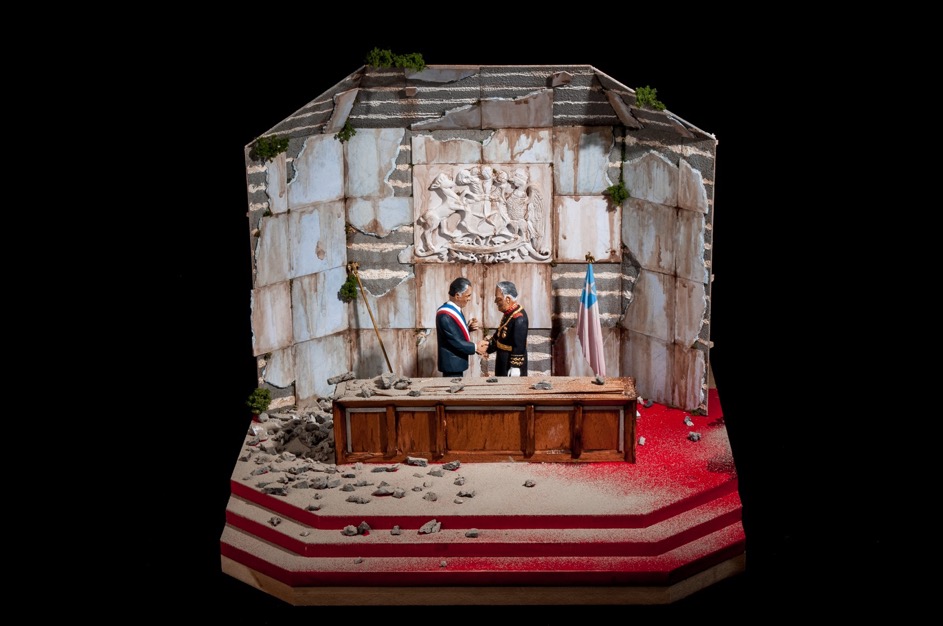
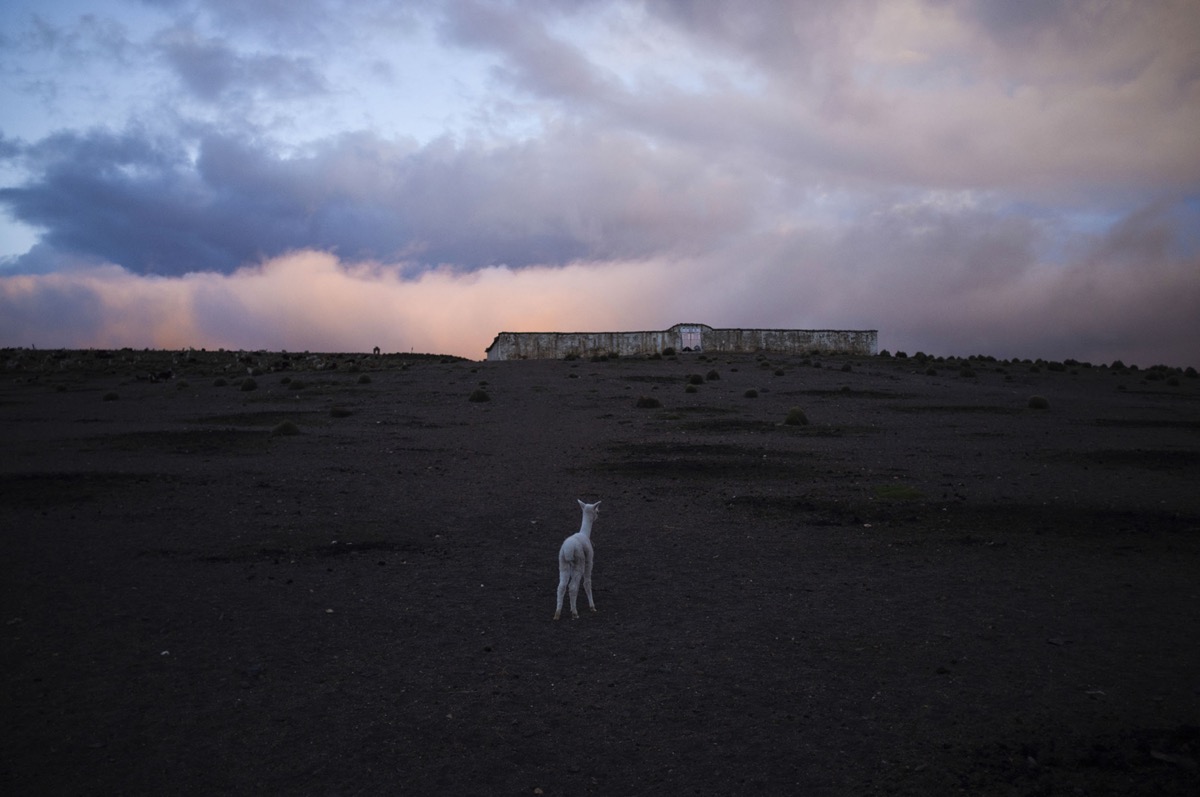
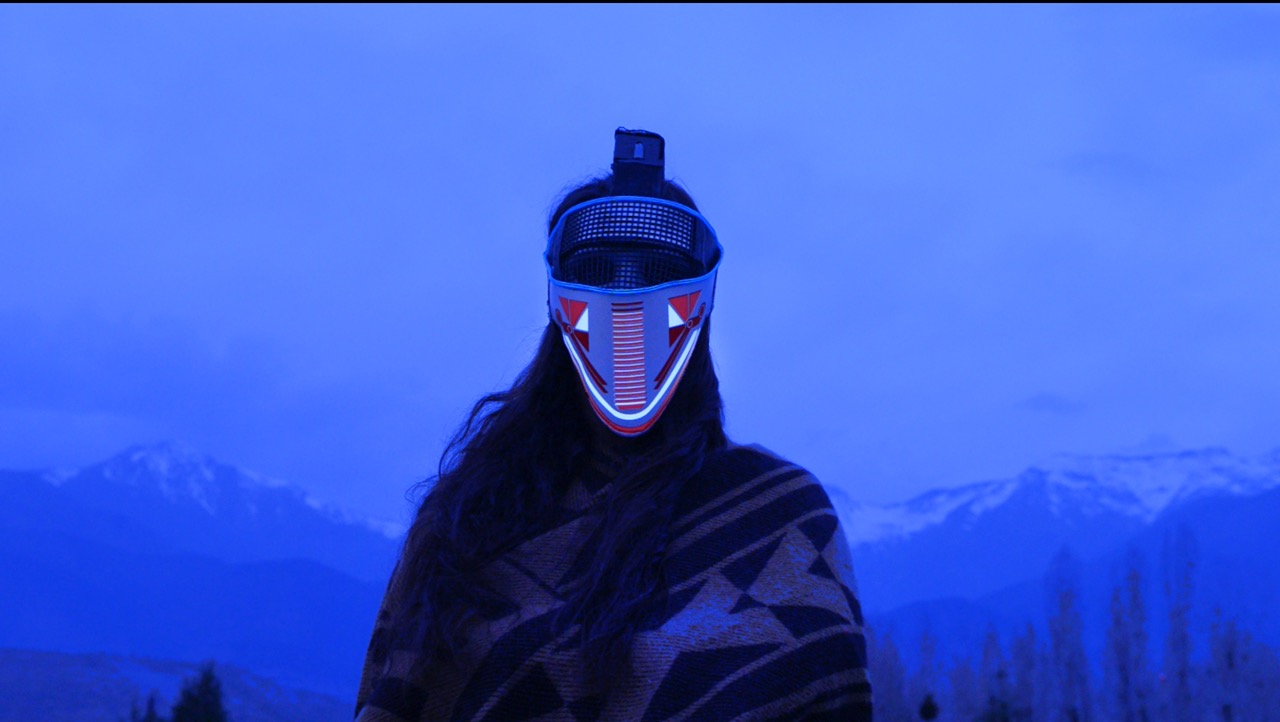
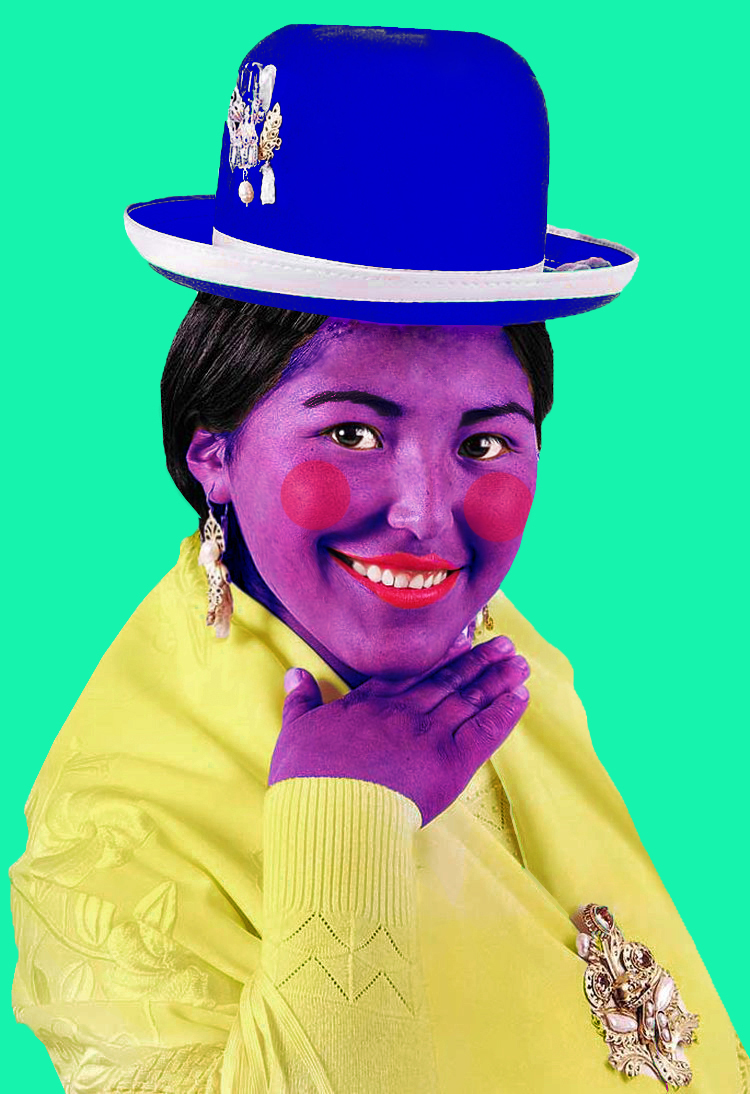
[Images courtesy of Rodolfo Andaur: 1.-Marcos Zegers, From the series Infraestructuras del desierto, 2015–2019; 2.-Nicolás Grum, Installation El gran pacto de Chile, 2014; 3.-Fabián España, From the series Desilusiones, 2012; 4.-Patricia Domínguez, Film still Los ojos serán lo último en pixelarse, 2016; 5.-Cholita Chic, Cholita Chic, 2014.]
I met with curator and manager Rodolfo Andaur to explore his almost twenty years of curatorial career and to reflect, in particular, on the contents of his latest publication Territorios transformativos 2010-2020 (Editorial Gronefot, 2023). Andaur offers us a profound look at travel as a tool to transcend the traditional borders of both art and contemporary thought. This methodology has led him to travel and analyze countless geographies beyond urban centers and official narratives. The journey, the transcendence of borders, the critical review of denied narratives and situated practices are presented as the central axes of a curatorial-artistic and theoretical project, which has opened horizons of thought from Atacama.
Rodolfo [R]: For me, it has been fundamental to create systems of thought that then shape writings and curatorial work, in addition to visiting certain archives that play a crucial role. Many of these archives are not related to the field of art, but rather to those that house sociological, anthropological, archaeological, biological, and historical analyses.
Similarly, the curating and the act of compiling archives led me to reflect on the stories that have been systematically denied for at least the last two centuries in Atacama. It is not the territory itself that speaks, but the territorialities: all that vast information accompanied by invisible stories, the ways of learning and doing that communities spread, particularly in territories that have been marked by conflict, usurpation and ethnocide for a long time. Perhaps this is not perceived as clearly in places like large metropolises, but here, in northern Chile, it is felt very intensely. I realized how the State acts in a colonial way, how forms, textures and ways of speaking are imposed; which led me to rethink the notion of territoriality. This territoriality has been essential to my methodology and has allowed me to apply it in a variety of curatorial projects.
R: In my opinion, there has never been an open conversation in Chile about the responsibility of the State, for example, in the war with Peru and Bolivia, nor about the implications of the war that this has had on the education system. That is why I found it very interesting to approach the texts of Sergio Gonzalez, and of other critical historians who have been made invisible, such as Guillermo Billinghurst; Peruvian-Chilean historians who spoke and wrote about these problems and, particularly, about what happened when Chile assumed control of the Atacama Desert. On the other hand, I believe that Chile's strategy has always been to use force as an effective and accurate tool to compulsively "Chileanize" the desert.
R: Since 2007, especially when I had to work on the exhibition Huellas civiles [Civil footprints], which commemorated the workers' massacre of the Santa Maria de Iquique School (1907), I began to reflect on how I understood the concept of territory. I began to question and take note that territory is not only something physical, but also a notion that is built from the vision of the communities, from how a group of people understands their relationship with the space they inhabit. But what happens when, within those spaces, there are other ways of thinking about and experiencing that same territory? I call this situation territoriality.
Territoriality refers to the ways of living that emerge in certain geographical spaces, and how these ways shape the way people communicate, dress, speak, and preserve their traditions. That's why I've always said that territoriality is the most intangible aspect of territory. It is what happens within the community, and how it interacts with non-human culture.What has happened, especially in Latin America in recent years, is that we have begun to recognize, from the field of art, that territoriality is an essential component for understanding and challenging the different realities that exist in countless territories.
R: Being able to become deeply involved with places has been key to my work: studying both the landscape and physical geography, as well as the territorialities that emerge in those spaces. I am also interested in how imaginaries intersect with official history, those chronicles that are imposed on us with other narratives that emerge from popular communities, from that popular imagery that often remains silenced. That which is not physical, the immeasurable that inhabits the territories, is fundamental. These practices, which we can only understand when we are in that place, encourage us to reflect on what kind of critical thinking we can generate from them. And it's not just about reflecting, but about how we can be part of that thinking, not only within the context of contemporary art, but with communities. That is another dimension I try to promote: that artists in residencies or projects linked to residencies have the opportunity to connect more closely with a social group, with a community, to understand that not everything is reduced to a piece or work of art. The act of listening and sharing is also crucial for generating critical thinking. For me, this process of exchange and reflection is essential.
R: I often think that I was born traveling. I had the privilege of doing it from a very young age. My ancestors are from the pampas and, due to the nitrate crisis, they had to leave La Pampa. However, as a commemorative act, they returned periodically, which for me became a ritual. For me, the diaspora of my ancestors is part of territoriality. It was very significant to realize how that pampas diaspora moved to Iquique and returned every so often to a place that was already abandoned, whose houses in ruins were full of intact objects, although covered with chusca.
For me, travel is a ritual, not just a physical journey. It is a profound act, a moment that allows us to observe, to connect landscapes, temporalities and situations that we would not normally see in our daily lives, and it also involves the participation of a collective. This vast amount of acquired information validates this territorial research methodology that has allowed me to carry out curatorial projects and residencies in this country, and also in other countries such as Canada, Singapore, Iran, Turkey and Denmark, to name a few.
G: Continuing with the journey, how does the idea of borders fit into your practice?
R: For me, the border represents an overflow. In these overflows, various human practices are mixed, and this is especially evident in situations such as the massive arrival of immigrants to different countries in both North and South America. This phenomenon occurs not only at international borders, but also within the internal overflows that many countries possess. Many of these overflows are geographical and also ethnic.
R: Most of these projects arose from direct invitations from some artists and collectives, while others were driven by my own interest in exploring certain visualities and narratives of on-site visual arts work. The purpose of bringing these texts together is to present a review of a process that, over more than a decade, has sought to spread a vision that goes beyond the capital of Chile. In this global context, I understood that, in order to address territories and territorialities in a more complex way, it was necessary to consider not only ethnic, ethical, and psychopolitical conflicts, but also biological ones. Transformativity, as a concept, contributes to offering a new perspective to understand these processes and their impact on communities and their territories.
It emerged in my reflective analysis, when, since 2011, I began several long curatorial research stays in Berlin. There, I came across this concept within the field of biology and ethnobotany. In this sense, Territorios transformativos 2010-2020 is committed to the dissemination of a group of artists who develop transformative practices, beyond the design times and logics.
Transformativity is assuming that human and non-human processes are also part of the field of art research and are also a way of critically questioning territorialities. It is crucial to make these reviews visible and to highlight that these types of decentralized readings can be done constantly. I committed to that perspective, thinking it was of great interest to the context of what Chile has experienced recently. In fact, the book ends with the first anniversary of the 2019 social uprising.
R: Yes, it was essential to create a space for reflection on what Chile experienced during such a complex period. Not only because of the uprising, but also because of the pandemic and the way in which the State repressed social demands through it. This text seeks to capture an emotional state of territoriality, not only in terms of physical space, but also of the tensions in different places in Chile. It was crucial for me to realize that we were not facing a simple "social explosion", as it was called, but rather an uprising with clear drives, political drives that defined its character.
That's why I believe that transformativity encourages a deep reflection on what we have denied as a society. It also discusses how the art world, which is often seen as privileged, has failed to recognize these non-hegemonic social and cosmogonic realities. We already know that many artistic projects exploit social dramas without offering deep reflection and analysis. That is why I chose to examine these projects, because I believe that the most relevant ones, for example, to understand the uprising, are those that not only seek to portray political events, but also involve proposing a social reflection.
[Images courtesy of Rodolfo Andaur: 1.-Marcos Zegers, From the series Infraestructuras del desierto, 2015–2019; 2.-Nicolás Grum, Installation El gran pacto de Chile, 2014; 3.-Fabián España, From the series Desilusiones, 2012; 4.-Patricia Domínguez, Film still Los ojos serán lo último en pixelarse, 2016; 5.-Cholita Chic, Cholita Chic, 2014.]


Subscribe to our newsletter!
¡Gracias por suscribirte!








CALLE DEL ARTÍCULO 123 #116 INT. 100,
COLONIA CENTRO, CUAUHTÉMOC,
CDMX 06040, MÉXICO