
From the legacy of Hija de Perra, Danka Herrera looks at the politics of the bodies of sexual dissidence: to write in order to live.
To write under
the pressure of war is not to write about the war but to write inside
its horizon and as if it were the companion with whom one shares
one's bed (assuming that it leaves us room, a margin of freedom).[1]
–Maurice Blanchot
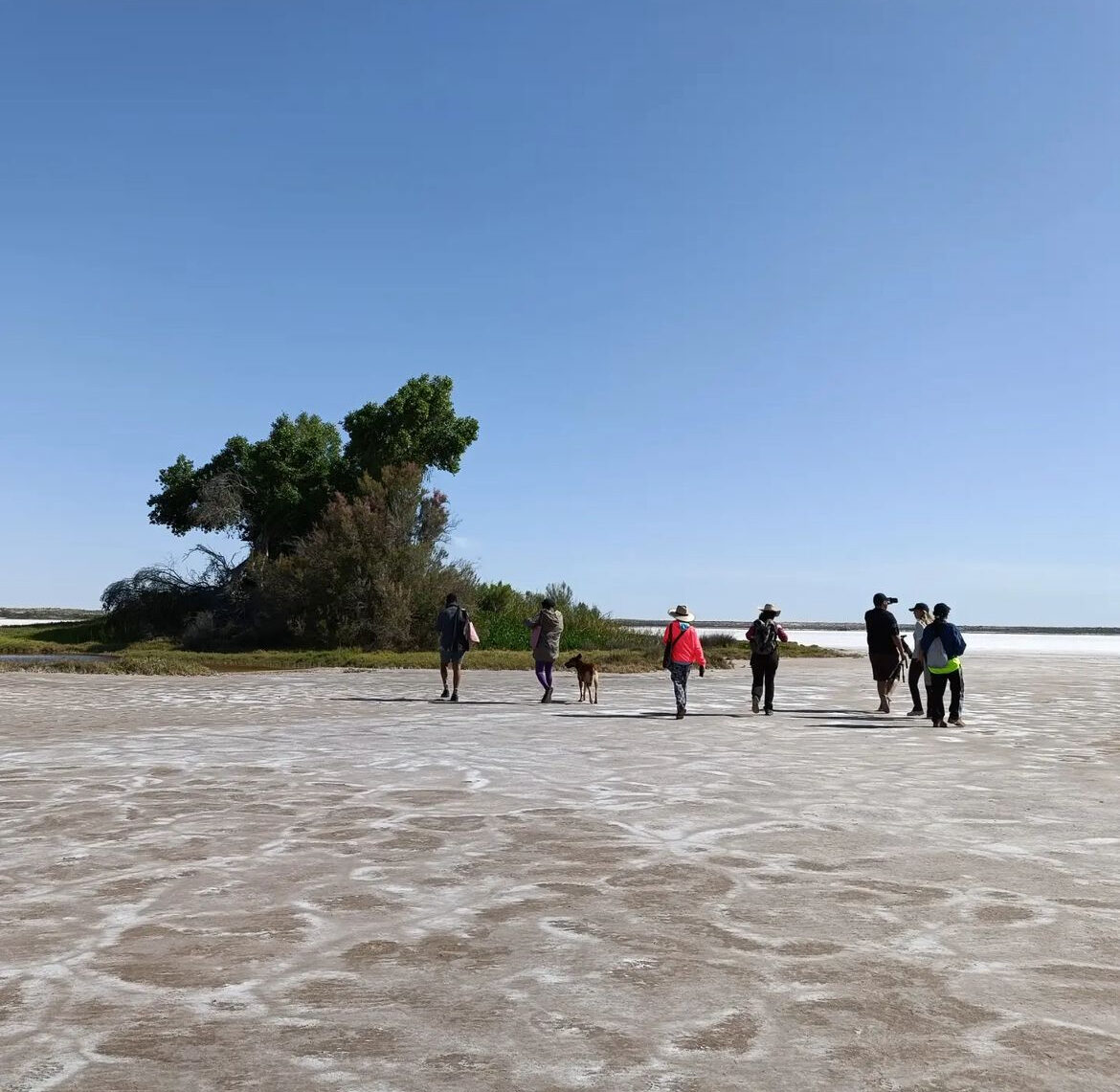
Among those who articulate the relentless struggle against the unrestricted violence of the cisheterosexual-colonial regime, calling themselves sexual dissidents, the figure and legacy of the visual artist-performer Hija de Perra is well known.[2] She was part of a scene filled with fury against the image that was rising between the 1990s and 2000s of the bloody reconciliation of the traditional male left with the perpetrators of one of the most devastating military dictatorships in Latin America, the military group headed by Augusto Pinochet Ugarte. Hija de Perra is an artist against compromise. Against the clean slate that left a society marked with more than one thousand disappeared detainees, making Chile the perfect geopolitical space for the rise of neoliberalism. A devastation with signs as clear as the collapse and silence of the political voice. Hija de Perra uses performance, sewing, and heels as sharp weapons that break the pact. She is an active participant that breaks through the fossilized industrial mantle of sexual memories. Sexuality as a political space, stressing the horror of cultural impositions from Columbus to Pinochet, from Pinochet to the fragmented supporters of cisheterosexual politics. Hija de Perra exposes the accomplices, the so-called pacifists who at gunpoint and with “morality” impose one of the most violent and bloody regimes in history. A regime that thinks about History. The artist of fissures, of escapes, of overflow, and of embraces. Not everything appears in the gesture of decomposing. It is about using the body as an insult, which embraces the insulted. A weapon of support and action. Hija de Perra opens a door, which was firmly closed with marble and machine guns, to rethink the status of the political in sexual dissidence, letting in all the little monsters thirsty for revenge. It deals with a body-prosthesis that shapes the traditional asphalt politics of capital into the dissident politics of sand. The dissident politics found in the desert. The given conceptualizations of capitalism in its functionality move in an architectural network with a solid support. This is how it compares to asphalt. A politics that crushes, a politics that solidifies as foundation, soil, and reality. Sexual dissidence operates in its production, resistance, and evolution in the desert, where solid constructions tend to fall down with the movement of the soil, in its characteristic change. Politics in the desert have no fixed conceptual frameworks, they are subject to historical evolution. They are mobile, molecular, without foundations. Desert bodies, of margin and abandonment. Hija de Perra is an outsider artist. A revolutionary artist of and from the margin.
It is in the writings of these exiled bodies that a matrix of cisheterosexuality is decomposed. It is not originally written with paper and pencil. Sexual dissident writings began from orality, from aesthetics. Writing is given when entering the public space without permission. The writings are executed in the frame where the sexual dissident body intercepts with the common. Then, as sexual dissidents learned to write on paper, another way of writing began to appear in the grammatical framework. This is where the state of things is endangered. To challenge this dominant writing is to challenge the order, thus, paraphrasing Pasolini, writing becomes meaningless. The thirst to write translates into a thirst to leave a trace, to stain.
Ultimately, the only place where sexual dissidence was not exiled was in writing.
That is to say, it was from the scriptural sidewalk that they entered the world of politics. Whether through orality, through their sublime images-writings, or handwritings.
Hija de Perra writes within all of these terms. Hija de Perra writes to live. She knows she lives inside a mass grave called the Southern Cone, but without writing there is no way to articulate a survival in the endless advance of the homogenization of sexual experience in geopolitical spaces.
Hija de Perra bombards us with writing, literally.


To write under
the pressure of war is not to write about the war but to write inside
its horizon and as if it were the companion with whom one shares
one's bed (assuming that it leaves us room, a margin of freedom).[1]
–Maurice Blanchot
Among those who articulate the relentless struggle against the unrestricted violence of the cisheterosexual-colonial regime, calling themselves sexual dissidents, the figure and legacy of the visual artist-performer Hija de Perra is well known.[2] She was part of a scene filled with fury against the image that was rising between the 1990s and 2000s of the bloody reconciliation of the traditional male left with the perpetrators of one of the most devastating military dictatorships in Latin America, the military group headed by Augusto Pinochet Ugarte. Hija de Perra is an artist against compromise. Against the clean slate that left a society marked with more than one thousand disappeared detainees, making Chile the perfect geopolitical space for the rise of neoliberalism. A devastation with signs as clear as the collapse and silence of the political voice. Hija de Perra uses performance, sewing, and heels as sharp weapons that break the pact. She is an active participant that breaks through the fossilized industrial mantle of sexual memories. Sexuality as a political space, stressing the horror of cultural impositions from Columbus to Pinochet, from Pinochet to the fragmented supporters of cisheterosexual politics. Hija de Perra exposes the accomplices, the so-called pacifists who at gunpoint and with “morality” impose one of the most violent and bloody regimes in history. A regime that thinks about History. The artist of fissures, of escapes, of overflow, and of embraces. Not everything appears in the gesture of decomposing. It is about using the body as an insult, which embraces the insulted. A weapon of support and action. Hija de Perra opens a door, which was firmly closed with marble and machine guns, to rethink the status of the political in sexual dissidence, letting in all the little monsters thirsty for revenge. It deals with a body-prosthesis that shapes the traditional asphalt politics of capital into the dissident politics of sand. The dissident politics found in the desert. The given conceptualizations of capitalism in its functionality move in an architectural network with a solid support. This is how it compares to asphalt. A politics that crushes, a politics that solidifies as foundation, soil, and reality. Sexual dissidence operates in its production, resistance, and evolution in the desert, where solid constructions tend to fall down with the movement of the soil, in its characteristic change. Politics in the desert have no fixed conceptual frameworks, they are subject to historical evolution. They are mobile, molecular, without foundations. Desert bodies, of margin and abandonment. Hija de Perra is an outsider artist. A revolutionary artist of and from the margin.
It is in the writings of these exiled bodies that a matrix of cisheterosexuality is decomposed. It is not originally written with paper and pencil. Sexual dissident writings began from orality, from aesthetics. Writing is given when entering the public space without permission. The writings are executed in the frame where the sexual dissident body intercepts with the common. Then, as sexual dissidents learned to write on paper, another way of writing began to appear in the grammatical framework. This is where the state of things is endangered. To challenge this dominant writing is to challenge the order, thus, paraphrasing Pasolini, writing becomes meaningless. The thirst to write translates into a thirst to leave a trace, to stain.
Ultimately, the only place where sexual dissidence was not exiled was in writing.
That is to say, it was from the scriptural sidewalk that they entered the world of politics. Whether through orality, through their sublime images-writings, or handwritings.
Hija de Perra writes within all of these terms. Hija de Perra writes to live. She knows she lives inside a mass grave called the Southern Cone, but without writing there is no way to articulate a survival in the endless advance of the homogenization of sexual experience in geopolitical spaces.
Hija de Perra bombards us with writing, literally.


Subscribe to our newsletter!
¡Gracias por suscribirte!











CALLE DEL ARTÍCULO 123 #116 INT. 100,
COLONIA CENTRO, CUAUHTÉMOC,
CDMX 06040, MÉXICO